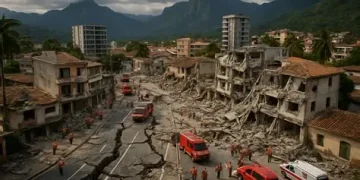


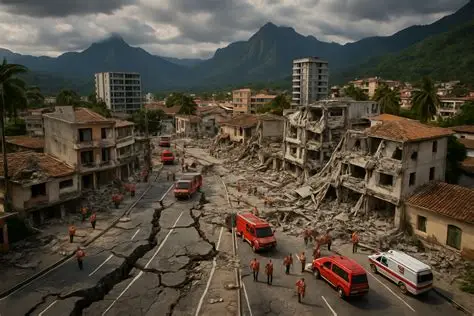
A powerful magnitude 7.4 earthquake has struck western Colombia, killing hundreds of people, injuring thousands and leaving rescue teams racing to find survivors beneath collapsed buildings.
The earthquake struck on Monday, with its epicentre in the Chocó department, according to Colombian authorities. It was described as the strongest earthquake to hit the country this century.
The disaster caused extensive damage across western and central Colombia, with Cali, Pereira, Manizales, Quibdó and Armenia among the areas badly affected. Buildings, hospitals and other infrastructure were damaged or destroyed, while emergency teams continued searching through the rubble for trapped residents.
The death toll has continued to rise as rescue operations progress. Reports on Tuesday placed the number of fatalities at more than 180, with thousands injured and several thousand people reported missing. Authorities warned that the figures could change as rescue workers gain access to affected areas.
Rescue Operations Underway
Emergency workers and volunteers have been working around the clock to locate survivors, with rescuers using heavy equipment and search teams to examine collapsed structures.
The first 72 hours after a major earthquake are considered critical for finding people trapped beneath rubble, increasing pressure on rescue teams to work quickly.
President Abelardo De La Espriella, who had only recently assumed office when the disaster struck, visited affected areas and promised government assistance to residents who lost their homes. His administration has declared an emergency and deployed personnel to support rescue and relief operations.
The government has also been coordinating the delivery of emergency supplies and assistance to communities affected by the disaster.
Power and Transport Disrupted
The earthquake has severely disrupted essential services in several parts of the country.
In Chocó, some indigenous communities remained without electricity and basic services, complicating relief operations and making it difficult for emergency teams to reach isolated areas.
Air travel was also disrupted following damage and safety concerns at several airports. Authorities began reopening facilities gradually, prioritising passenger and crew safety while attempting to restore air connectivity to affected regions.
Colombia’s Earthquake Risk
Colombia is located within the Pacific Ring of Fire, a seismically active zone where earthquakes and volcanic activity are common.
The scale of the latest disaster has revived memories of previous major earthquakes in the country, including the devastating 1999 Armenia earthquake, which killed about 1,900 people and caused widespread destruction in the country’s coffee-growing region.
The latest earthquake has left Colombia facing a major humanitarian challenge, with authorities now focused on rescuing survivors, providing emergency assistance to displaced communities and assessing the full extent of the destruction.