

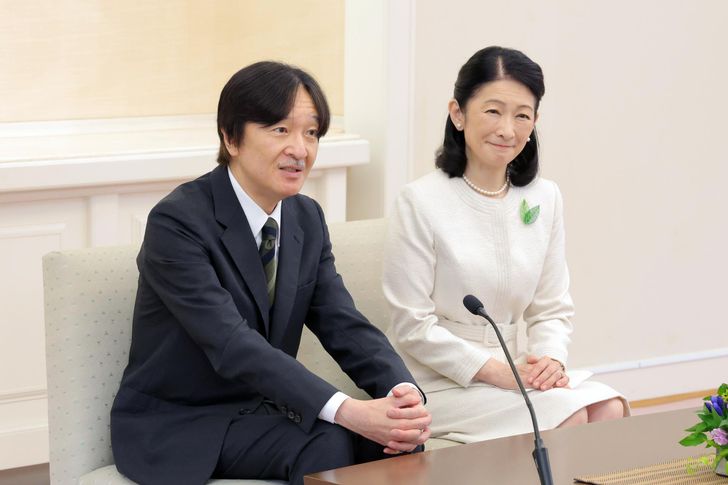
Japanese Crown Prince Akishino, younger brother of Emperor Naruhito and next in line to the throne, has expressed “mixed feelings” over the government’s recent decision to reinforce Japan’s male-only imperial succession rule.
Speaking at a news conference ahead of a planned visit to Paraguay, Akishino said he believed there was no difference between men and women when it comes to carrying out the responsibilities expected of members of the imperial family.
His remarks come weeks after Prime Minister Sanae Takaichi’s conservative government revised the Imperial House Law to reaffirm that only men descended through the paternal line can become emperor.
The rule has triggered criticism from opponents who argue that it is outdated and discriminatory, particularly because it prevents Princess Aiko, the only child of Emperor Naruhito, from succeeding her father despite her popularity among many Japanese citizens.
Under the current succession system, the throne would pass from Naruhito to Akishino and then to Akishino’s 19-year-old son, Prince Hisahito. After Hisahito, the next eligible male relative is the emperor’s 90-year-old uncle.
Akishino was cautious in discussing the issue because members of Japan’s imperial family are expected to avoid political statements. He said he had “mixed feelings” about the government’s decision but acknowledged that it was difficult for him to speak openly about the matter.
He also stressed the importance of society continuing to progress and encouraged people with different views to consider what is best for the future.
The revised law allows princesses to retain their imperial status and continue performing official duties if they marry commoners. However, their husbands and children would not become members of the imperial family.
Another controversial provision allows unmarried male descendants aged 15 or older from distant branches of the imperial family to be adopted into the immediate royal family in an effort to preserve the male line.
Critics argue that the changes could further shrink Japan’s already limited imperial family and effectively eliminate Princess Aiko from consideration for the throne.
Japan has had eight female monarchs in its history, although the last female emperor, Empress Gosakuramachi, ruled more than 250 years ago.
The male-only succession principle was formally established in the 1890 Imperial House Law and largely carried into the post-war 1947 law.
Akishino also spoke about his children, Princess Kako and Prince Hisahito, saying he hoped they would value their official responsibilities while also finding happiness in their personal lives.
The succession debate comes as Japan continues to grapple with the future of its shrinking monarchy and whether its traditional male-only system can remain sustainable in modern Japanese society.