UN Says 2.4 Million Afghan Girls Denied Secondary Education Under Taliban Rule – Landslide News
  • Latest
  • Trending
  • All
  • Business
  • Politics
  • Global
  • Lifestyle
  • Tech

UN Says 2.4 Million Afghan Girls Denied Secondary Education Under Taliban Rule

August 12, 2026

Sowore Alleges Adeleke Is Not in Charge of Osun, Says Family Controls Government

August 13, 2026

Nigeria Woos Canadian Investors as Government Pushes Fresh Investment Drive.

August 13, 2026

Delta North: APC Chieftain Chigbu Backs Nwoko, Predicts Victory at Appeal Court

August 13, 2026

APC Chieftain Backs Ned Nwoko, Predicts Court of Appeal Victory Over Delta North Primary

August 13, 2026

Osun 2026: APC’s Oyebamiji Gets Massive Support as Renewed Hope Ambassadors Hold ‘Walk to Victory’

August 13, 2026

Japan’s Crown Prince Breaks Silence on Male-Only Imperial Succession

August 13, 2026

Peter Obi Urges Peaceful, Credible Osun Election

August 13, 2026

Davido Should Apologise to Okpebholo, Lawyer Says

August 13, 2026

ADC Raises Alarm Over Alleged Aregbesola Arrest Plan

August 13, 2026

Peter Obi Urges INEC, World On Osun Poll

August 13, 2026

Atiku’s Camp Lists Conditions for Single Opposition Candidate

August 13, 2026

Presidency Sets Deadline for State Police Bill

August 13, 2026
Landslide News
  • Home
  • Breaking News
  • Global
  • Business
  • Entertainment
    • Movies
    • Music
  • Fashion
  • Health
  • Lifestyle
  • Politics
  • Sports
  • Advertise
Create a Channel
No Result
View All Result
Landslide News
  • Home
  • News Insights @ LandslideNews
  • Breaking News
  • Politics
  • Global
  • Business
  • Entertainment
    • Movies
    • Music
  • Fashion
  • Health
  • Lifestyle
  • Sports
  • Tech
  • Advertise

UN Says 2.4 Million Afghan Girls Denied Secondary Education Under Taliban Rule

byVictory Amah
August 12, 2026
in Education, Global
0

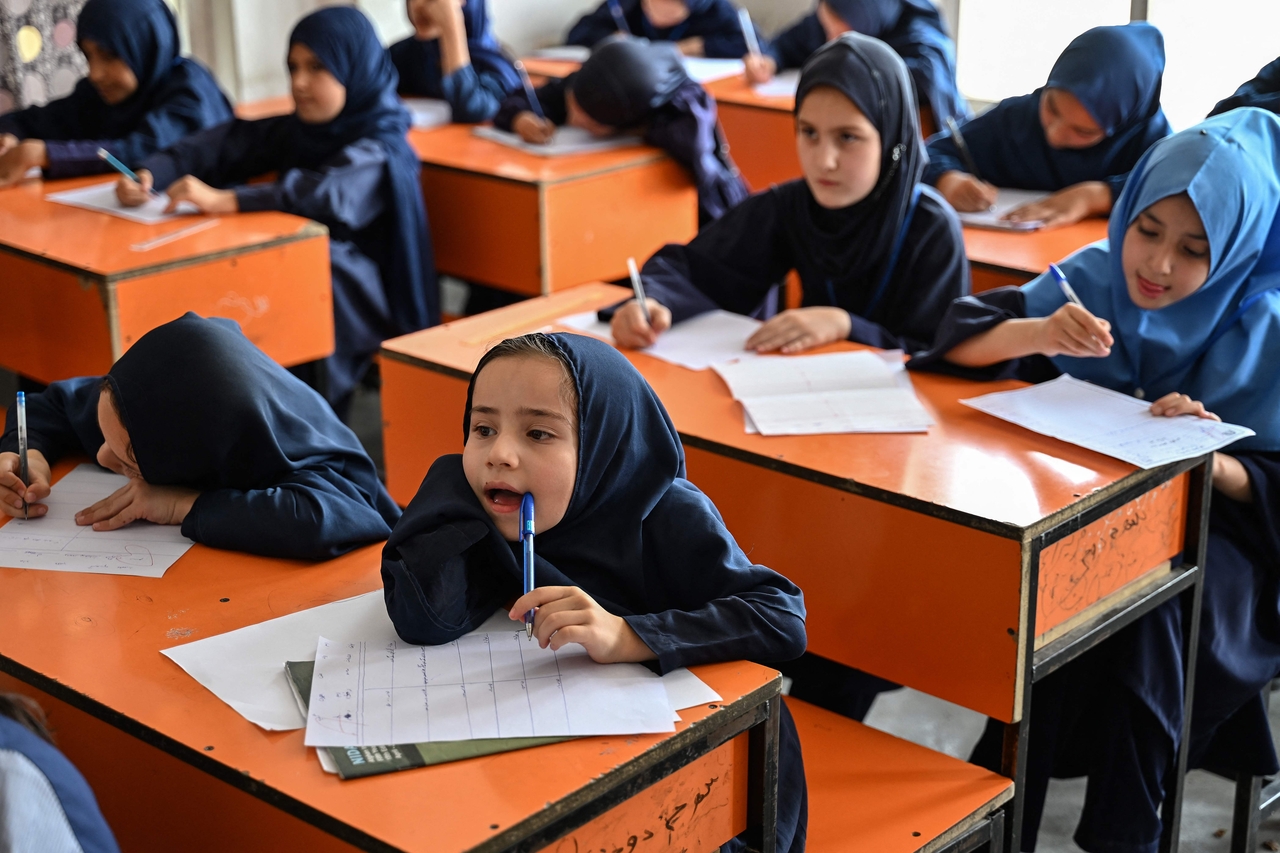
About 2.4 million girls in Afghanistan have been denied access to secondary education since the Taliban returned to power in 2021, the United Nations has said, calling for an immediate end to what it described as systematic discrimination against women and girls.

The UN Educational, Scientific and Cultural Organization (UNESCO) said the number of girls excluded from secondary school has increased by about 200,000 over the past year. It warned that the figure could rise to nearly four million by 2030 if the restrictions remain in place.

The Taliban authorities banned girls from attending secondary schools in March 2022, before extending restrictions on women’s access to universities later that year. Women and girls have also been barred from a range of public spaces and activities, including universities, public parks, gyms and beauty salons.

UNESCO urged the Taliban administration to immediately restore girls’ right to education, describing the restrictions as a major setback for Afghanistan’s social and economic development.

“Afghan girls and women have the right to learn, that’s a basic human right,” said Hoda Jaberian, UNESCO’s programme coordinator for education in emergencies. She also stressed that women should have the right to work and move freely.

According to UNESCO, the restrictions have reversed decades of progress in Afghanistan’s education sector. While access to secondary education for girls was severely limited in 2001, nearly one million girls were enrolled in secondary schools by 2021, shortly before the Taliban returned to power.

Economic Cost of Education Ban

The continued exclusion of women and girls from education is also expected to have significant economic consequences.

UNESCO estimates that restrictions affecting women and girls could cost Afghanistan approximately $9.6 billion by 2066, as limited access to education reduces women’s opportunities to participate fully in the country’s economy.

The UN has repeatedly criticised the Taliban’s policies toward women and girls, with UN officials describing the restrictions as a form of systematic gender discrimination.

Afghanistan’s Education Crisis Deepens

The crisis extends beyond the exclusion of girls from secondary and higher education.

UNESCO said more than half of primary school-age children in Afghanistan are currently out of school, while more than 90 per cent of 10-year-olds are unable to read a simple text.

Poor access to drinking water, sanitation and heating has further weakened the country’s education system. Natural disasters, including a series of devastating earthquakes in recent years, have also damaged schools and disrupted learning.

The return of millions of Afghans has placed additional pressure on an already struggling system. UNESCO estimates that more than seven million Afghans have returned or been forced to return to the country since 2023, increasing demand for limited educational resources.

The UN agency warned that unless access to education is restored and the wider education system receives urgent support, Afghanistan risks losing further progress made over the past two decades.


Victory Amah

Victory Amah

Related Posts

Japan’s Crown Prince Breaks Silence on Male-Only Imperial Succession

byVictory Amah
7 hours ago
0

Japanese Crown Prince Akishino, younger brother of Emperor Naruhito and next in line to the throne, has expressed “mixed feelings”...

Colombia’s Strongest Earthquake This Century Leaves Hundreds Dead

byVictory Amah
1 day ago
0

A powerful magnitude 7.4 earthquake has struck western Colombia, killing hundreds of people, injuring thousands and leaving rescue teams racing...

US Charges Four Alleged CJNG Members Over Weapons-for-Drugs Scheme

byVictory Amah
1 day ago
0

The United States Department of Justice has unsealed indictments against four alleged members of Mexico's powerful Jalisco New Generation Cartel...

South Korean Stocks Surge 3.68% as Chipmakers Lead Broad Rally

byVictory Amah
1 day ago
0

South Korean stocks surged for a third consecutive session on Wednesday, driven by strong buying of major semiconductor companies, while...

Leave a Reply Cancel reply

Your email address will not be published. Required fields are marked *

I agree to the Terms & Conditions and Privacy Policy.

This website uses cookies. By continuing to use this website you are giving consent to cookies being used. Visit our Privacy and Cookie Policy.