Students of the Faculty of Dental Science at the University of Jos (UNIJOS) have raised alarming concerns about their future after spending years in a programme that remains without full accreditation and a clear graduation path. In April 2024, they protested publicly, carrying placards that declared “We are tired of paying school fees without progress,” “Unijos is careless over students’ future,” and “Depression wan kill us, save us please.” The students claim that, despite the faculty’s existence for nearly a decade, not a single graduating set has emerged an extraordinary setback in a course of study designed to last six years.
According to the students, the core problem is the lack of accreditation for their dentistry programme by the Medical and Dental Council of Nigeria (MDCN), largely due to insufficient teaching staff, inadequate dental‑clinical equipment, and a curriculum that has failed to progress into its clinical phase. One student told reporters: “The course has not been accredited by the Medical and Dental Council of Nigeria due to a lack of proper structure in terms of staff and dental clinical equipment.” The situation has worsened over time, with the students saying they have paid fees, matriculated, attended lectures often alongside medical (MBBS) students but still cannot graduate or proceed to professional practice. In October 2025, the pioneer students announced they had spent 10 years in the programme, far beyond the expected six.
UNIJOS management has acknowledged the challenges and announced that approximately 50 % of its budget for the dentistry programme has been allocated toward accreditation efforts, including the recruitment of lecturers paid from internally‑generated revenue since the standard federal payroll system (IPPIS) was delayed. In addition, the university disclosed that it has engaged in frequent trips to Abuja seeking approvals for staff recruitment and equipment upgrade as part of efforts to meet MDCN standards. The Vice‑Chancellor, Prof. Tanko Ishayo, apologised to the students, saying: “We understand your pain. Dental students have stayed at the university more than necessary. We apologise on behalf of the university.”
Despite these assurances, the students remain sceptical—pointing to repeated delays, absence of fully functional infrastructure, and a lack of transparency on when they might finally graduate. One of them remarked: “We were off and on since then. Now, they don’t even know when they will graduate.” They are also deeply frustrated that they have followed basically the same courses as their MBBS peers in the early years, yet their path is stalled. A student explained: “When we were on the University of Jos main campus, we had no idea what was going on in the teaching hospital. … We never took [some required dental] courses… and never knew we had to.”
The implications are serious on several fronts. At the student level, those who entered the programme around 2015 expected to finish by 2021, but are now entering their tenth year without induction into the dental profession. The emotional toll is severe: students say they are “emotionally drained, deeply traumatised, and vulnerable to suicidal tendencies.” Professionally and regionally, the inability to graduate dentists from UNIJOS is striking — the faculty is reportedly the only dental school in Nigeria’s North‑Central geopolitical zone, a region already grappling with a dire dentist‑to‑patient ratio (quoted around 1 : 54,000, far worse than the World Health Organization’s recommended 1 : 5,000).
What the students are demanding is clearer than ever: a binding timeline for when full accreditation (including the clinical phase) will be secured, immediate scheduling of their professional exams and induction, transparent communication from the university and MDCN, and consideration of merging the dental programme with the medical (MBBS) track so that the students’ duplicated course work might lead to graduation sooner.
In sum, what began as a hopeful six‑year dental programme has stretched into a multi‑year limbo for students who invested time, money and ambition into becoming dentists. The university says it is working to resolve the bottlenecks, but until a concrete timeline is delivered, the students’ frustration and sense of injustice will continue unabated. Their plight raises broader questions about the operational capability of tertiary institutions to meet accreditation requirements, the oversight responsibilities of professional regulatory bodies such as MDCN, and the human cost of stalled academic programmes in Nigeria’s higher education sector.

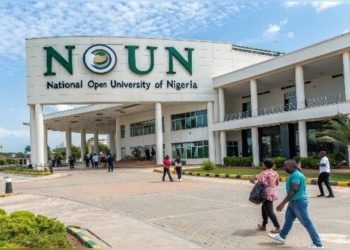
NOUN Admits 36 Inmates Into Degree Programmes in Lagos
The National Open University of Nigeria (NOUN) has enrolled 36 inmates at the Medium Security Custodial Centre in Ikoyi,...