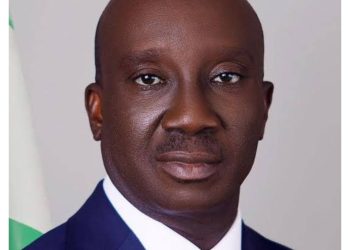



The Association of Legislative Drafting and Advocacy Practitioners (ALDRAP) has described the official announcement of Hon. Kingsley Chinda’s defection from the Peoples Democratic Party (PDP) to the All Progressives Congress (APC) as a “belated defection,” insisting that it strengthens its case for his disqualification from the 2027 Rivers State governorship election.
In a statement issued shortly after the announcement was made on the floor of the House of Representatives on Tuesday, the group argued that the timing of the declaration raises serious constitutional and electoral concerns.
ALDRAP, whose members include constituents from Chinda’s Obio/Akpor Federal Constituency in Rivers State, has already instituted a suit before the Federal High Court in Abuja seeking an order restraining the Independent National Electoral Commission (INEC) from recognising him as the APC governorship candidate for the 2027 election.
During plenary on Tuesday, Speaker of the House of Representatives, Tajudeen Abbas, read a letter announcing Chinda’s resignation from the PDP and defection to the APC. The letter also confirmed his resignation as Minority Leader of the House, a position he occupied by virtue of his membership of the opposition PDP.
However, the announcement came nearly two weeks after Chinda emerged as the APC governorship candidate in the party’s Rivers State primary election held on May 21, 2026.
According to ALDRAP, the defection letter was dated April 23, 2026, suggesting that Chinda had resigned from the PDP and joined the APC before participating in the APC governorship primary.
Sources within the National Assembly were also quoted as saying that Chinda had defected before lawmakers proceeded on recess, although the official notification to the House was only made public on June 2.
The development comes after ALDRAP submitted a Freedom of Information (FOI) request dated May 26, 2026, asking the Speaker of the House to provide evidence that Chinda’s defection had been formally announced during plenary before he participated in the APC primary election.
The group argued that, based on Supreme Court decisions, a legislator’s defection is only deemed complete when it is formally announced on the floor of the legislative chamber by the presiding officer.
ALDRAP further maintained that Chinda’s participation in the APC primary election and subsequent emergence as the party’s candidate may be inconsistent with the provisions of Section 68(1)(g) of the 1999 Constitution and judicial pronouncements governing the defection of lawmakers.
In a separate letter addressed to the Chairman of INEC and dated June 2, 2026, the association requested access to the APC membership register in Rivers State as of May 10, 2026, pursuant to the Freedom of Information Act, 2011.
The letter, signed by ALDRAP’s Administrative Secretary, Jesse Williams Amuga, Esq., stated that the register would be tendered as evidence in the ongoing lawsuit before the Federal High Court.
The association argued that Chinda’s membership status in the APC raises questions under the Electoral Act, 2026, particularly because the party had already submitted its membership register to INEC on May 10, before his defection was formally announced.
ALDRAP also questioned whether there was evidence that Chinda’s resignation from the PDP had been accepted at the ward level and whether he had been duly registered and issued membership documentation by the APC in accordance with party procedures.
Additionally, the group pointed to a Court of Appeal judgment delivered on May 29, 2026, which reportedly recognised the Emeka Beke-led faction as the legitimate leadership of the APC in Rivers State. ALDRAP claimed that Chinda registered through the faction led by Tony Okocha, raising further questions about the validity of his membership.
The association maintained that its actions are in the public interest and aimed at ensuring compliance with constitutional provisions, electoral laws and judicial decisions.
It reiterated its commitment to pursuing the matter in court and urged INEC to provide the requested documents to aid the determination of the issues raised in the lawsuit.