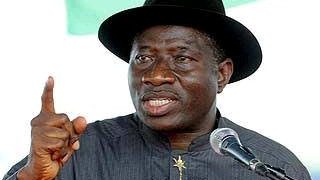


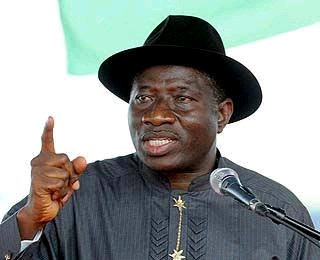
Former Nigerian President Goodluck Jonathan has reflected on the circumstances surrounding the death of former military Head of State, General Murtala Mohammed, describing the late military officer as one of the country’s notable leaders.
Jonathan made the disclosure while discussing aspects of Nigeria’s political and military past in a video published by Splash FM 105.5.
During the conversation, the former president recalled information he had previously received concerning events that might have preceded Mohammed’s assassination. Jonathan said he was aware of an account suggesting that a speech delivered by Mohammed in Addis Ababa could have provoked certain individuals and possibly played a role in the events that later resulted in the coup plot against him.
However, Jonathan stressed that he could not independently confirm the claim. He explained that he was not an eyewitness to the events and did not possess enough firsthand information to establish whether the speech had any connection with Mohammed’s death.
Describing the late military ruler, Jonathan said Mohammed was a forceful and active Head of State whose tenure left an important mark on Nigeria’s history.
“Late General Murtala Mohammed was one of our most dynamic military Heads of State, and he was assassinated in a military coup,” Jonathan stated.
Mohammed came to power in 1975 following the removal of General Yakubu Gowon from office. His administration subsequently introduced several measures aimed at restructuring the country and managing Nigeria’s political transition.
His leadership was cut short in February 1976 when he was killed during an unsuccessful military coup attempt in Lagos.
The assassination created a major change in the country’s leadership. Following Mohammed’s death, General Olusegun Obasanjo, who was then serving as Chief of Staff of the Supreme Military Council, succeeded him as Head of State.
Jonathan noted that Obasanjo would likely be better equipped to provide detailed information about the circumstances surrounding Mohammed’s assassination. He explained that Obasanjo occupied a senior position within the military government at the time and worked closely with Mohammed.
According to Jonathan, Obasanjo’s direct involvement in the administration placed him in a stronger position to discuss the events surrounding the coup and the killing of the former Head of State.
The former president further maintained that the account concerning Mohammed’s speech in Addis Ababa should be treated carefully. He clarified that the information was something he had heard from others rather than an incident he personally witnessed.
Jonathan therefore stopped short of presenting the Addis Ababa episode as the reason behind Mohammed’s assassination, stressing that there was insufficient evidence from his personal knowledge to establish such a connection.
His comments provide another reflection on one of the significant episodes in Nigeria’s military history, while also highlighting the need to distinguish between firsthand accounts and information passed down by others.
Mohammed’s assassination remains a notable event in Nigeria’s history, particularly because it resulted in an unexpected change of leadership and shaped the country’s subsequent political developments.
Jonathan’s recollection ultimately focused on Mohammed’s reputation as an influential military leader while maintaining that claims linking his Addis Ababa speech to the plot against him remain unverified based on the information available to him.