

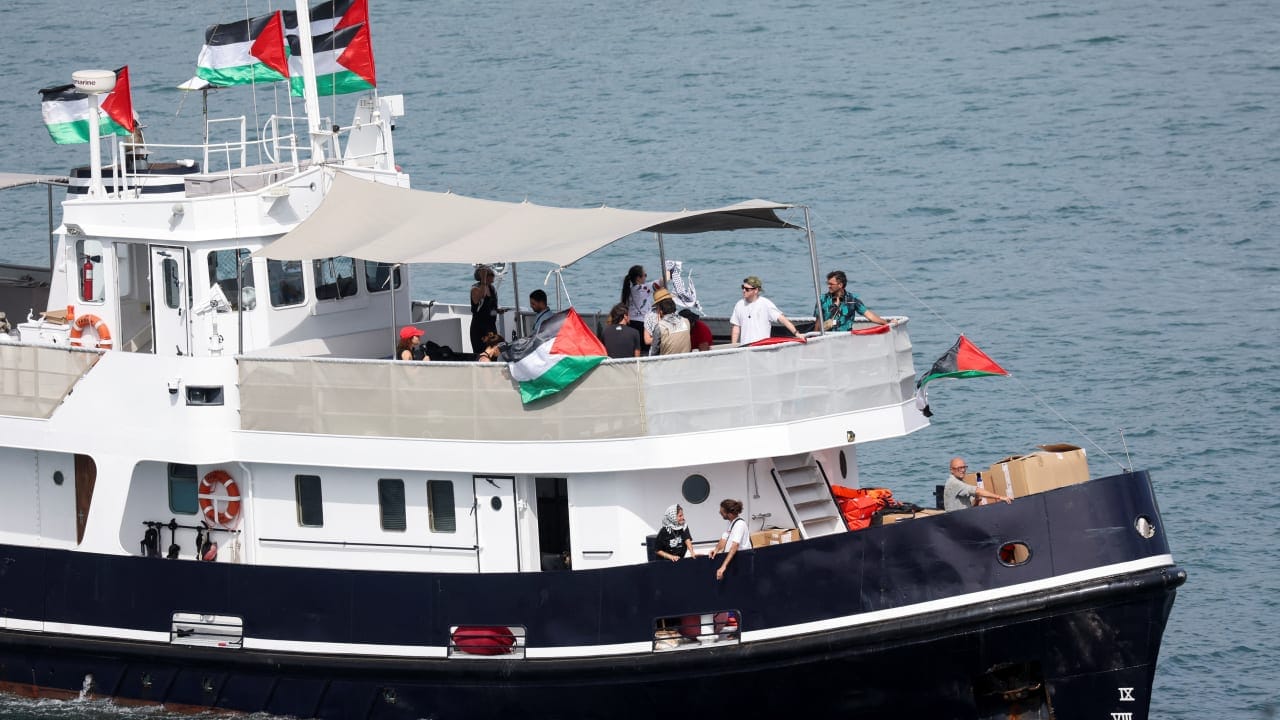
The Gaza-bound Global Sumud Flotilla is now roughly 300 nautical miles from the coast of Gaza and Israel, organizers announced Monday afternoon, marking the final phase of a month-long journey that began in Barcelona on September 1.
The international flotilla — which now numbers around 40 vessels, including sailboats and a large NGO support ship named Life Support, operated by the humanitarian organization Emergency — is sailing steadily toward the besieged Gaza Strip, moving at approximately 5 knots per hour.
With the flotilla averaging about 100 nautical miles per day, it could potentially reach the Gaza coast by October 2, which notably aligns with Yom Kippur, the holiest day on the Jewish calendar, beginning the evening of October 1.
Growing International Presence
The journey has garnered increasing attention and international involvement in recent days. Since leaving the waters near Crete on September 27, the Greek Coast Guard has shadowed the flotilla, while Italy and Spain have reportedly deployed naval ships to monitor the convoy following activists’ claims of being attacked on September 24.
Turkey has also escalated its involvement, with drones reportedly flying over the flotilla and at least one Turkish naval vessel spotted nearby. According to activists, the presence of these forces provides a measure of protection, with one flotilla-affiliated social media account stating that “Spanish and Italian Navy ships are alone with [the] Global Sumud Flotilla fleet for protection in case of Israeli aggression.”
Mixed Messages and Tensions
The precise intentions of the European naval deployments remain unclear. Officials in Rome and Madrid have framed their involvement as efforts to protect their citizens and prevent further violence at sea. Meanwhile, Israel has continued to call on the flotilla to dock in a third country or the port city of Ashkelon, where aid could be inspected and transferred to Gaza through established humanitarian channels.
Israel has also accused the flotilla of maintaining ties with Hamas, which it considers a terrorist organization, and has issued warnings against attempts to breach its naval blockade of Gaza.
Italian authorities have also urged the organizers to consider alternative methods for delivering humanitarian assistance to Gaza to avoid escalating regional tensions.
A Coordinated Civilian Effort
The flotilla, which began with a group of vessels departing Spain on September 1, was later joined by approximately 20 sailboats from Italy in mid-September. Six more boats from Greece merged with the group on September 24, forming a civilian convoy of activists and aid workers from across Europe.
Not all vessels have made it through unscathed. One ship, The Family, a pleasure craft, experienced engine trouble and had to remain behind off the southern coast of Crete.
Despite the challenges, organizers and participants appear determined to continue the journey, buoyed by what they perceive as growing international support and visibility.
High Stakes on the Horizon
As the flotilla approaches its final destination, all eyes are now on how Israel will respond — particularly given the sensitive timing around Yom Kippur, a day of national reflection, mourning, and religious observance in Israel.
The potential arrival of the flotilla during the holiday could dramatically heighten tensions in the region, especially if any confrontation occurs. The coming days are expected to be pivotal, with diplomatic, military, and humanitarian consequences hanging in the balance.