

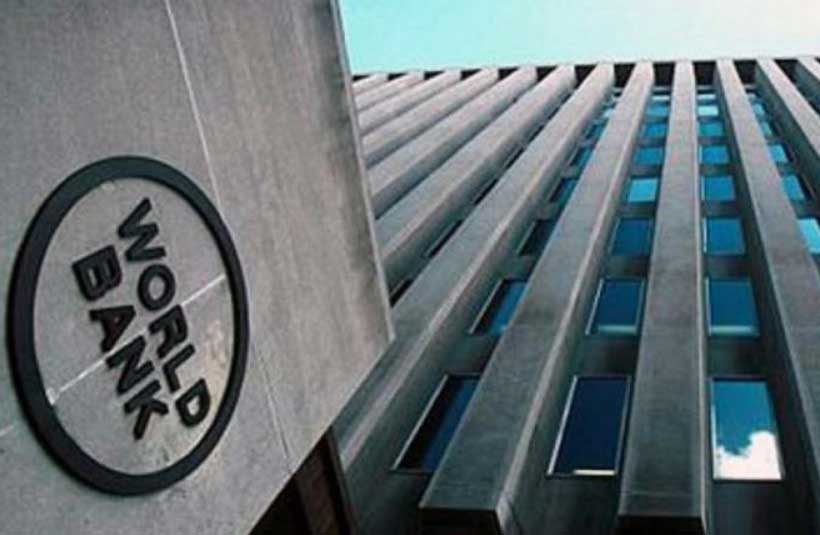
The Federal Government has withdrawn $717.7 million in undisbursed World Bank funding meant for Nigeria’s electricity reform programme, effectively ending the remaining portion of a $1.52 billion intervention aimed at stabilising the power sector. The decision comes amid worsening electricity shortages, tariff deficits, rising financial strain, and ongoing difficulties in implementing key reforms across the industry.
Reports obtained from the World Bank on Monday indicated that the cancellation followed an official request from the Nigerian government and a mutual agreement between both parties to discontinue the Power Sector Recovery Performance-Based Operation. The decision was taken due to changing sector conditions and the failure to meet several critical reform targets.
The World Bank explained that the entire unspent balance under the programme—totalling $717.7 million—has now been scrapped, with no further releases expected. It also confirmed that the programme’s lifespan has been shortened, moving the completion date from June 30, 2027, to May 31, 2026, effectively bringing the project to an early close.
Originally approved in June 2020, the Power Sector Recovery initiative was designed to strengthen Nigeria’s electricity industry by improving supply reliability, restoring financial stability, and enhancing accountability across key institutions. The programme initially received about $752.5 million in funding.
In June 2023, an additional financing package worth approximately $763.5 million was approved to expand the reforms and consolidate earlier progress. This brought total World Bank support for the programme to about $1.52 billion. The supplementary funding became active in June 2024 and was intended to extend reforms through 2027.
While the initial phase of the programme recorded notable progress and fully utilised its allocated funds, the additional financing struggled to meet essential performance benchmarks. As a result, disbursement remained limited, ultimately leading to the termination of the unused balance.
The World Bank noted that Nigeria’s electricity industry continues to suffer from deep structural problems despite several reform efforts and long-term external support. Key challenges include weak distribution efficiency, transmission constraints, insufficient power evacuation, and persistent financial instability within the sector.
The report further highlighted high levels of technical losses, commercial inefficiencies, and poor revenue collection across distribution companies. These issues, combined with inadequate tariff recovery, have created a recurring funding gap that places constant pressure on the entire electricity value chain.
It added that these inefficiencies have led to chronic liquidity challenges, disrupting the ability of sector operators to function effectively and weakening overall performance.
The Federal Government introduced the Power Sector Recovery Programme as part of efforts to restore financial discipline, reduce subsidies, and improve governance in the electricity industry. The framework also aimed to gradually eliminate tariff shortfalls and ensure that operators recover actual costs.
Under the original phase, the programme achieved measurable improvements. Tariff deficits reportedly dropped by 71 per cent between 2019 and 2022, falling from N581 billion to N166 billion. During the same period, cost recovery levels improved significantly, rising from 56 per cent to 94 per cent, while electricity supplied to the national grid increased by 13 per cent between 2018 and 2021.
The World Bank confirmed that all performance-based indicators under the initial operation were successfully met and fully disbursed, marking it as a relatively successful phase of the intervention.
Encouraged by those outcomes, the additional financing was introduced to deepen reforms, strengthen institutional performance, and support long-term sustainability in the power sector. It was also expected to improve governance within key agencies, including the Transmission Company of Nigeria.
However, implementation of the second phase faced major setbacks. The World Bank attributed these challenges partly to significant macroeconomic changes, particularly the liberalisation of Nigeria’s foreign exchange market in 2023, which triggered a sharp depreciation of the naira. This, in turn, increased the cost of gas used for electricity generation and worsened financial pressures within the sector.
Ultimately, the combination of unmet reform targets, worsening economic conditions, and persistent operational inefficiencies led to the decision to terminate the remaining funding and conclude the programme ahead of schedule.


Update: still using this after 3 months and honestly its become part of my regular rotation of sites I check. The content stays fresh and I appreciate how they keep things updated without making the whole thing feel cluttered or overwhelming. Really glad I stuck with it instead of abandoning it like I do with most things lol. [url=https://wcet2022.org/]inatogel demo[/url]
частные наркологические клиники нижний новгород [url=https://vyvod-iz-zapoya-v-staczionare-nizhnij-novgorod-23.ru]частные наркологические клиники нижний новгород[/url]
wonderful issues altogether, you just gained a new reader. What could you suggest about your submit that you just made some days ago? Any certain?