

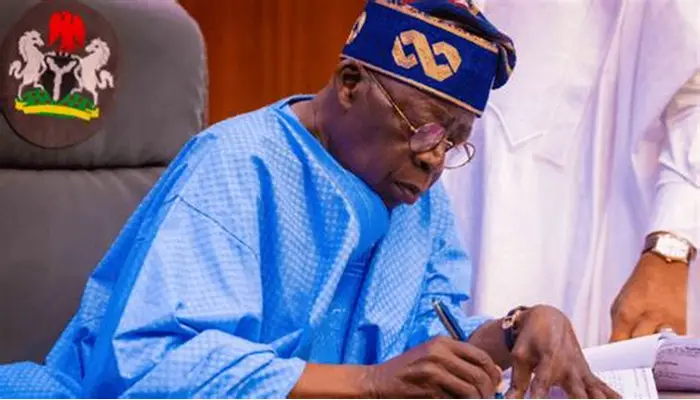
The administration of President Bola Ahmed Tinubu has obtained World Bank financing approvals valued at approximately $11.4 billion within three years, bringing it close to surpassing the total secured during the eight-year tenure of former President Muhammadu Buhari.
An assessment of figures published by the World Bank indicates that between June 2023 and June 2026, Nigeria received approvals amounting to $11.4 billion. By comparison, the country secured about $14.59 billion in World Bank financing throughout Buhari’s administration from 2015 to 2023.
The latest approvals mean Tinubu’s government has already obtained more than three-quarters of the funding approved during Buhari’s two terms and requires only about $3.19 billion in additional financing to exceed that total.
The records also show that the current administration has already surpassed the amount approved during Buhari’s first four years in office. Projects approved during Buhari’s initial term were valued at about $5.56 billion, making Tinubu’s current approvals more than double that figure.
Despite the large volume of approved financing, only $2.32 billion has been released so far under the current administration, representing roughly one-fifth of the total approved. More than $8.4 billion remains available for disbursement as various projects move through implementation.
In contrast, projects approved during Buhari’s presidency recorded much higher utilisation. Of the $14.59 billion approved during that period, about $11.94 billion had already been disbursed, reflecting substantial progress in project execution and completion.
The World Bank’s support for the Tinubu administration has focused on key sectors, including economic reforms, agriculture, education, healthcare, electricity, digital infrastructure, financial inclusion and social welfare programmes.
The largest financing package came in June 2024, when the World Bank approved $2.25 billion to support Nigeria’s economic reform agenda. The funding was designed to strengthen macroeconomic stability, improve government revenue generation, support fiscal reforms and cushion the impact of policy changes on vulnerable Nigerians.
According to the World Bank, the programme supports ongoing reforms such as exchange rate liberalisation, fiscal consolidation and measures aimed at improving public financial management.
The approval attracted widespread attention because it coincided with major economic policies, including the removal of fuel subsidies and reforms in the foreign exchange market, both of which contributed to rising inflation and increased living costs.
Another major approval came in June 2026, when the World Bank approved $1.25 billion under the Nigeria Actions for Investment and Jobs Acceleration programme. The initiative forms part of the bank’s Country Partnership Framework for Nigeria covering 2026 to 2032 and is expected to encourage private sector investment, create employment opportunities, improve electricity access, strengthen digital connectivity and boost agricultural productivity.
Agriculture has also benefited from significant financing. In March 2026, the World Bank approved $500 million for a project aimed at strengthening agricultural value chains, improving productivity and expanding market access for farmers.
The energy sector remains another major beneficiary. Since 2023, the World Bank has approved several projects to improve electricity supply, expand renewable energy access and strengthen irrigation and hydropower infrastructure across the country.
Education and healthcare have also received considerable support through programmes designed to improve learning opportunities for adolescent girls, empower women and strengthen human capital development.
Overall, the latest approvals reflect Nigeria’s continued reliance on concessional financing from the World Bank to fund economic reforms and development projects, although the pace of disbursement under the current administration remains considerably lower than that recorded during the previous government.