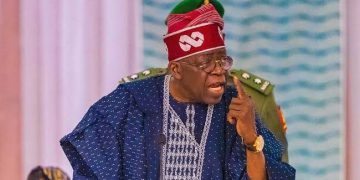


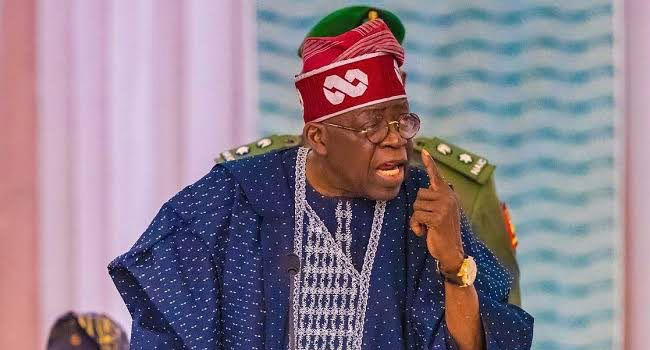
President Bola Tinubu, speaking on Sunday, urged Nigerians to act carefully in choosing their leaders, cautioning against handing power to politicians who do not present a clear and practical direction for national development. He warned that such a decision could undermine the progress the country has made and drag it backwards.
He made these comments after officially receiving his Certificate of Return and the flag of the All Progressives Congress (APC), confirming him as the party’s presidential candidate for the 2027 general election. The presentation ceremony took place at the Bola Ahmed Tinubu International Conference Centre in Abuja, where he was declared winner of the party’s primary election with 10.9 million votes.
Tinubu said his administration is determined to build on existing reforms and strengthen the foundations already laid. According to him, the aim is to ensure Nigeria moves steadily on a path of long-term stability, economic recovery, and institutional growth that cannot easily be reversed.
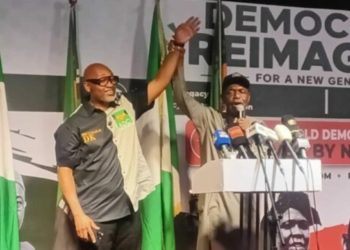
He also extended congratulations to his rival in the APC primary, Stanley Osifo, commending him for his conduct during the process and for accepting the outcome peacefully. The President emphasized that he holds no personal grievance against any contestant, stressing that competition is a normal and healthy part of democratic practice.
He explained that democracy is not based on everyone agreeing, but on the ability of citizens and leaders to coexist despite differing opinions. He added that his government remains open to discussions with critics and opposition figures, provided that such engagements are guided by sincerity and the goal of national progress.
Outlining his administration’s performance, Tinubu referenced several initiatives across different sectors. He mentioned progress in education financing through the Nigerian Education Loan Fund, which has distributed hundreds of billions of naira to millions of students, helping reduce financial pressure on higher education.
In the energy sector, he pointed to improvements in electricity infrastructure, including expanded metering efforts, debt settlement arrangements for power generation companies, and increased output levels compared to previous years. He also noted ongoing efforts to reform the sector into one that is more reliable and attractive to investors.
On infrastructure, he highlighted ongoing construction of major highways, coastal routes, and upgrades to airports and ports, describing them as long-term investments designed to support commerce and national connectivity.
He further stated that reforms in the oil and gas industry have encouraged renewed investor confidence, while fiscal adjustments have improved government revenue generation and strengthened economic stability. He acknowledged that inflation and global economic pressures continue to affect citizens, but insisted that the administration is actively working to manage these challenges.
Security was another key area of focus in his remarks. Tinubu said efforts are ongoing to modernize security operations, improve intelligence gathering, and equip security agencies more effectively. He also expressed support for constitutional changes that would allow the creation of state-level policing structures to improve local response to security threats.
The President also stressed the importance of unity, urging Nigerians to avoid divisions based on ethnicity, religion, or region. He said national progress depends on cooperation and shared commitment to building a stronger country.
He concluded by warning voters against choosing leaders without a defined plan for governance, saying the 2027 election should strengthen, rather than weaken, Nigeria’s democratic progress. He reaffirmed his commitment to continue reforms aimed at economic development, national security, and inclusive growth if given another term in office.