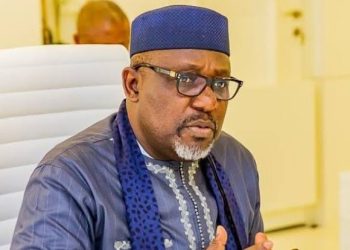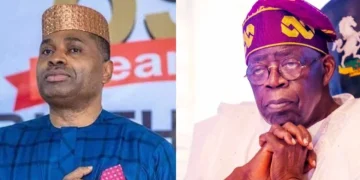


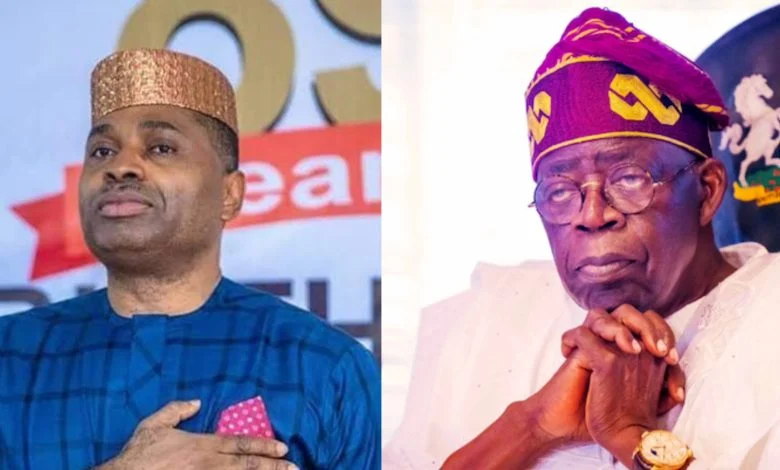
Lawyer and African Democratic Congress (ADC) chieftain Kenneth Okonkwo has accused President Bola Tinubu’s administration of effectively reintroducing fuel subsidy through its temporary petrol price discount, arguing that the government is avoiding the term despite introducing a measure intended to reduce costs for consumers.
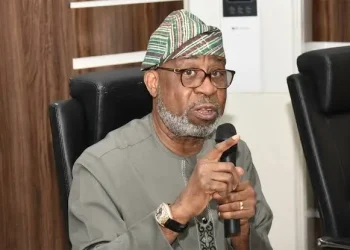
Okonkwo made the allegation during an appearance on Channels Television, where he challenged the explanation by the Minister of Finance and Coordinating Minister of the Economy, Taiwo Oyedele, that the Federal Government’s 30-day petrol discount did not amount to a return of fuel subsidy.
The lawyer argued that any financial intervention designed to reduce the cost of a product for consumers could be considered a form of subsidy, regardless of the name attached to it.
“Sorry to say this, Taiwo Oyedele lied when he said it was not subsidy. It was subsidy,” Okonkwo said.
He maintained that the government’s decision to lower petrol prices was evidence that the administration had recognised the pressure rising fuel costs were placing on households and businesses.
According to Okonkwo, the distinction between a discount and a subsidy does not change the underlying purpose of the intervention if it helps consumers pay less for petrol.
He also alleged that the government was reluctant to describe the arrangement as a subsidy because President Tinubu had repeatedly ruled out restoring the petroleum subsidy removed in May 2023.
The Federal Government, however, has rejected the claim that it is bringing back the former subsidy regime.
In its explanation of the policy, the Presidency said the Nigerian National Petroleum Company Limited (NNPC Retail) had agreed to forgo its retail profit margin and sell petrol at cost for a temporary period of 30 days. The government said the arrangement was intended to cushion the impact of rising international oil prices without reinstating a broad, government-funded subsidy. <Cite refs={[“turn483345search1″,”turn483345search2”]}/>
The initiative was announced amid concerns over increasing petrol prices and the resulting pressure on transportation costs and household spending. NNPC subsequently extended its N66-per-litre discount until October 31, 2026, although customers need to use the company’s mobile application and pay digitally to access the reduced price at participating outlets. <Cite refs={[“turn483345news4”]}/>
The debate centres on how the intervention is classified and funded. Okonkwo focuses on its effect in lowering the amount consumers pay, while the government maintains that NNPC’s decision to forgo its retail margin differs from the previous subsidy arrangement, in which public funds were used to cover part of the cost of petrol.
Okonkwo also referred to former Vice-President Atiku Abubakar’s position on measures to ease the burden of rising fuel prices, arguing that the government should focus on providing relief to Nigerians rather than disputing the terminology.
His comments add to the wider debate over the economic consequences of subsidy removal, the cost of living and the government’s response to rising energy prices.
While the opposition figure has described the discount as a return of subsidy, the administration continues to insist that the initiative is a temporary price-relief measure rather than a reversal of its 2023 policy.
The disagreement highlights the continuing debate over how best to reduce the burden of fuel costs on Nigerians while maintaining the government’s stated commitment to market-based petroleum pricing.