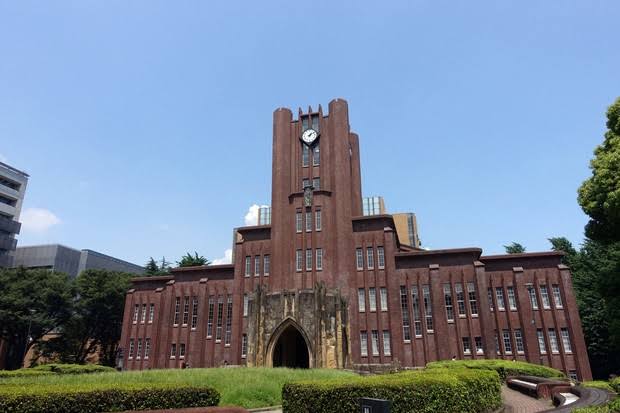
The University of Tokyo has suspended a professor after he allegedly embedded hidden references to China’s 1989 Tiananmen Square crackdown in the source code of several university websites.
In a statement released on Tuesday, the university said it had taken disciplinary action against the professor, who is in his 60s, for inserting the kanji phrase meaning “June 4 Tiananmen” into websites operated by his department and laboratory.
The phrase is widely recognised as a reference to the Chinese military’s crackdown on pro-democracy protesters in Beijing on June 4, 1989.
The hidden text was reportedly embedded in the source code of admissions-related webpages managed by the Department of Computational Biology and Medical Sciences within the university’s Graduate School of Frontier Sciences between 2020 and November 2023.
The issue first surfaced in December 2024, when Japanese newspaper Mainichi reported discovering the concealed character string in the source code of the graduate school’s English-language homepage and admissions pages.
Following an internal investigation, the university suspended the professor for three days on July 29, according to the report.
University Executive Vice President Ryuji Yamamoto condemned the professor’s actions.
“This was conduct unbecoming of a faculty member of this university and is absolutely unacceptable,” Yamamoto said.
The university also stated that any attempt to restrict access for prospective students from a particular country would be inconsistent with its values.
“Our school holds up the policy of welcoming a diverse body of students and faculty members from both at home and abroad and seeks to make us ‘a university where everyone in the world wants to enrol.’ If the keyword was inserted with the aim of inhibiting access from a specific country, it is an inappropriate act and is very regrettable,” the university said.
The institution added that it has since strengthened its website management systems to prevent similar hidden code from being inserted in the future.
The case has generated widespread debate online.
Some commentators argued that embedding the sensitive phrase in the website’s source code may have been intended to trigger China’s internet censorship system, potentially preventing users in China from accessing the admissions pages.
Others criticised the move, saying it would unfairly affect Chinese students rather than the Chinese government.
One Reddit user wrote that the hidden code “wasn’t teaching history” but instead appeared designed to discourage Chinese students from applying to a university where they could freely learn about the Tiananmen Square incident.
Another commenter said the action seemed aimed at discouraging Chinese international students from joining the programme, describing it as punishing students rather than the Chinese Communist Party.
The controversy comes as Chinese nationals remain the largest group of international students studying in Japan.
According to university data, the University of Tokyo had 5,104 international students enrolled as of May 2024, with Chinese students accounting for 60.5 per cent of the total and nearly 70 per cent of graduate students.
Figures from the Japan Student Services Organisation (JASSO) also show that Japan hosted a record 408,069 international students as of May 2026, surpassing the government’s target of 400,000 foreign students, a milestone originally set for 2033.