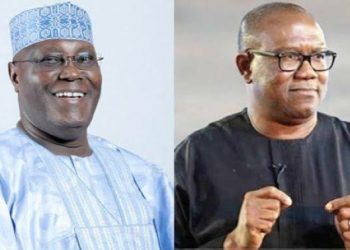


The Federal Government has dismissed former Vice President Atiku Abubakar’s criticism of President Bola Tinubu’s economic policies, insisting that the administration’s reforms are yielding positive outcomes and should be assessed using the country’s current economic performance rather than earlier figures.
Reacting through a statement titled “Facts, Not Fear: A Point-by-Point Response to Atiku Abubakar on Nigeria’s Reform Journey,” the President’s spokesman on Information and Strategy, Bayo Onanuga, accused the former vice president of relying on obsolete statistics to portray a negative image of Nigeria’s economy.
According to Onanuga, economic reforms cannot be judged solely by the difficulties experienced during their initial stages. He argued that policy changes take time to produce results and maintained that evaluating today’s economy with data from 2024 presents an inaccurate picture of the country’s progress.
He rejected allegations that the Tinubu administration had pursued an irresponsible borrowing policy, explaining that the sustainability of public debt should be measured by factors such as economic output, government earnings, debt servicing obligations and the purpose for which borrowed funds are utilised. He added that Nigeria’s debt level remains within acceptable limits compared with several economies around the world.
The presidential aide also stated that government efforts have improved fiscal management, noting that the proportion of revenue used to service debt has reduced significantly under the current administration.
On the economy, Onanuga said Nigeria has recovered from the disruptions that followed the exchange-rate reforms. He explained that both the country’s Gross Domestic Product measured in dollars and in naira have recorded noticeable growth, describing the improvement as evidence that the reform programme is beginning to deliver expected results.
Defending the removal of petrol subsidy, he described the decision as one many previous governments avoided despite acknowledging its financial burden. He argued that ending the subsidy has increased funds available to state and local governments, allowing them to undertake more development projects and meet financial obligations.
Speaking on the ongoing tax reforms, Onanuga said the objective is to establish a fairer tax structure that shields low-income earners and small businesses while ensuring wealthier individuals and profitable corporations contribute more to government revenue.
He also highlighted developments in the health sector, stating that thousands of primary healthcare centres have been upgraded, tens of thousands of frontline health workers have received additional training and three specialised cancer treatment centres are now operating in Kubwa, Enugu and Katsina. He added that free caesarean services are currently available in more than 100 healthcare facilities for women who cannot afford the procedure.
On education, the presidential spokesman said the Nigerian Education Loan Fund has provided financial assistance to over 1.6 million students across hundreds of tertiary institutions, while improved industrial harmony has reduced disruptions in public universities.
Responding to claims that the government failed to account for an alleged ₦7.98 trillion oil revenue surplus, Onanuga dismissed the allegation, explaining that lower crude oil production and existing financial commitments limited the expected earnings. He challenged Atiku to provide evidence supporting the figure.
While admitting that the reforms have created short-term hardship for many Nigerians, Onanuga insisted they are necessary to address long-standing structural weaknesses in the economy. He expressed confidence that inflation would continue to moderate and maintained that the administration remains committed to building a stronger economy, improving governance and creating lasting opportunities for citizens.