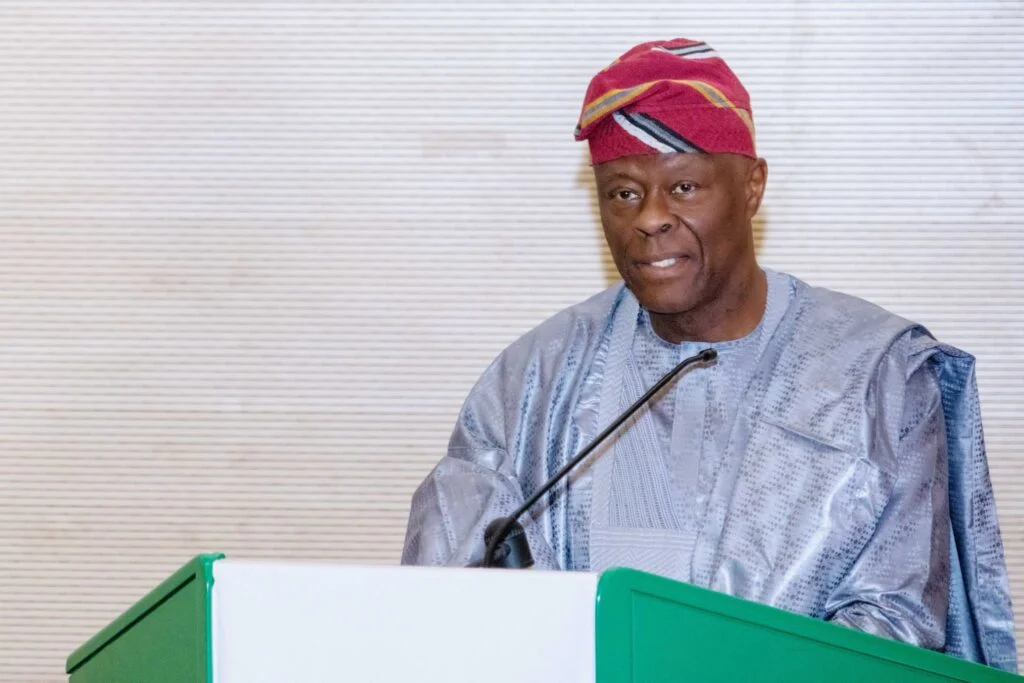
Nigeria’s Minister of Finance and Coordinating Minister of the Economy, Wale Edun, has announced that the country is intentionally moving away from costly external borrowing and adopting a growth strategy built on private investment and domestic reforms.
Speaking on Thursday at the opening of the G-24 Technical Group Meeting in Abuja, Edun delivered a keynote address on the state of the global economy and the importance of deeper South-South cooperation. He explained that Nigeria is replacing a development model heavily dependent on expensive foreign loans with a more sustainable framework driven by private capital, domestic reforms, and diversified financing options.
According to him, this shift aligns with changing global development finance priorities, which now emphasise innovative funding mechanisms, blended finance instruments, and expanded concessional financing windows. Edun noted that Nigeria is targeting an average medium-term economic growth rate of seven per cent. To achieve this, the country must raise its investment-to-GDP ratio to at least 30 per cent.
He explained that the public sector currently has limited financing capacity about five per cent of GDP making it essential to attract private capital. As a result, the government’s strategy focuses on structured public-private partnerships (PPPs), better utilisation of public assets, and the creation of de-risked, bankable investment opportunities that appeal to investors.
Edun further stated that Nigeria’s reform agenda under Bola Tinubu is based on a three-stage framework: market correction, economic stabilisation, and growth acceleration. Over the past two years, the administration has implemented what he described as bold and politically difficult reforms aimed at restoring macroeconomic stability. These reforms, he said, have laid a solid foundation for building a more competitive, resilient, and sustainable economy.
He added that early signs of progress are already visible, with investor confidence gradually improving and major capital commitments returning to the country. The reform programme, according to Edun, has gained international recognition, and renewed investor interest is being reflected in tangible investments. He cited Shell’s reported $20 billion investment commitment as a clear example of renewed private-sector confidence in Nigeria.
Describing the global environment, Edun warned that rising geopolitical tensions, economic fragmentation, and weakening multilateral institutions pose serious risks. He noted that increasing geoeconomic rivalry could reduce global output by two percentage points and cut global trade by 2.3 per cent. Emerging markets and developing economies, he said, are particularly exposed, with many already losing access to international capital markets and facing growing debt distress.
To strengthen Nigeria’s fiscal resilience, Edun said the government is pursuing a comprehensive domestic resource mobilisation strategy. This includes wide-ranging tax reforms, the implementation of a modernised tax framework, improved compliance systems, and greater automation. Through initiatives such as the National Single Window, the government aims to raise Nigeria’s tax-to-GDP ratio to 18 per cent in the medium term. Additional revenue reforms include improved treasury receipts, a central billing system, and the elimination of direct deductions by payment platforms.
Edun stressed that countries in the Global South must no longer rely on external capital flows to drive development. Instead, he urged stronger regional cooperation, innovation, and integration. He also called on the G-24 to push for reforms in the global financial system, including a stronger IMF safety net, expanded concessional lending, and greater use of local-currency financing.
Finally, he said Nigeria will continue linking major infrastructure projects, such as the Lagos Calabar Highway, and ongoing power sector reforms to job creation, inclusive growth, and long-term national development.