

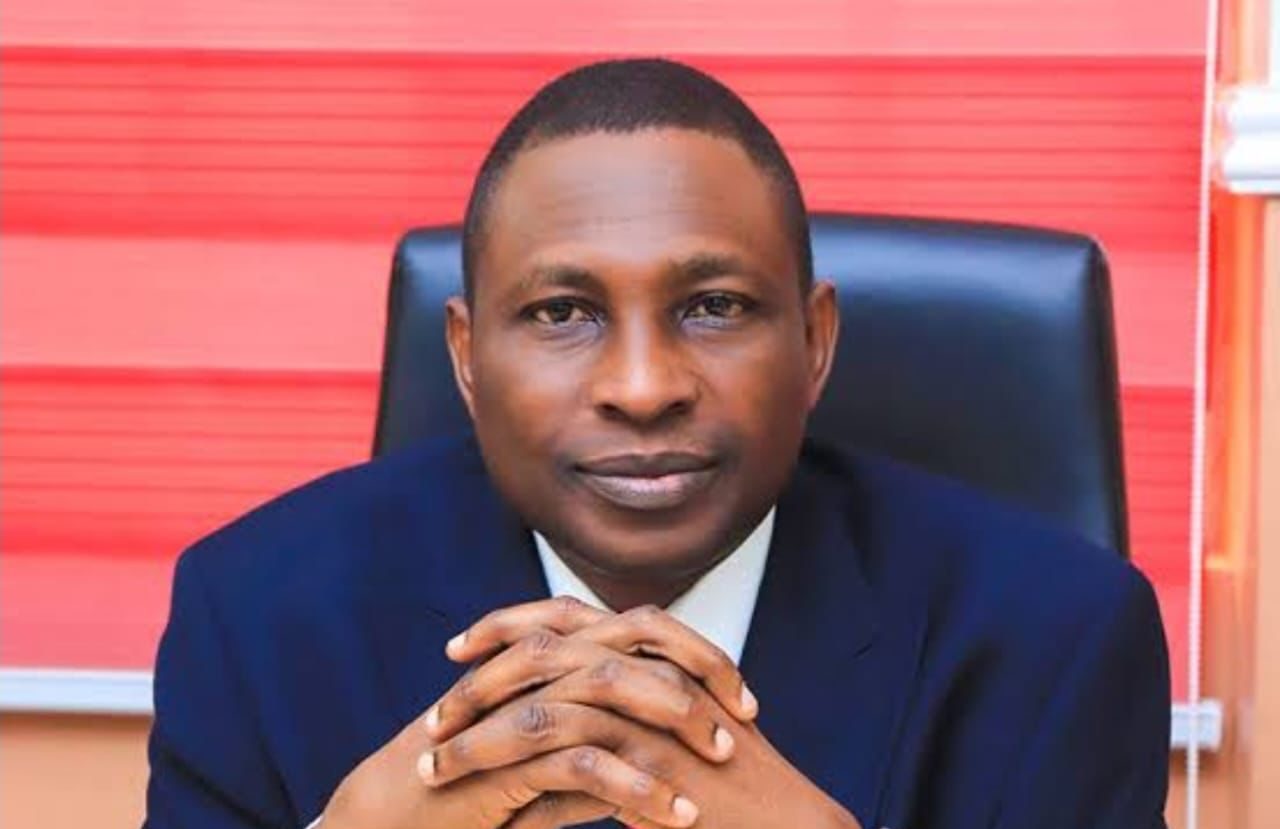
The Chairman of the (EFCC) Economic and Financial Crimes Commission,Ola Olukoyede, has expressed concern over the enormous sums allegedly spent by governorship candidates during election campaigns, revealing that some aspirants reportedly commit between N20 billion and N30 billion in pursuit of electoral success.
Speaking on Wednesday at the University of Ilorin in Kwara State, Olukoyede cautioned that excessive campaign expenditure poses a significant danger to Nigeria’s democratic system and contributes to the growth of corruption in public institutions.
The anti-corruption chief made the remarks while delivering the maiden edition of a distinguished guest lecture organised by the Centre for Peace and Strategic Studies of University of Ilorin. The lecture focused on strategies for promoting peaceful, transparent and credible elections ahead of the 2027 general polls.
According to him, the huge financial commitments associated with political contests often create incentives for elected officials to misuse public resources once they assume office. He explained that politicians who invest vast amounts of money in campaigns may feel compelled to recoup their expenses through questionable means after securing victory.
Olukoyede noted that the rising cost of seeking political office has become a major challenge to good governance. He argued that leaders who emerge through financially driven campaigns are more likely to prioritise recovering their investments rather than addressing the needs and expectations of citizens.
The EFCC chairman also reaffirmed the commission’s determination to combat vote-buying and other forms of monetary influence that threaten the credibility of elections. He stressed that the exchange of money for votes undermines the democratic process by distorting the selection of competent and accountable leaders.
He disclosed that the commission has arrested numerous individuals across different parts of the country for offences linked to vote-buying and electoral malpractice. Several of those cases, he added, have already resulted in successful prosecutions.
Those held accountable, according to him, include politicians, election officials and other persons found guilty of violating electoral laws. He maintained that strict enforcement of regulations is necessary to preserve public trust in democratic institutions.
Olukoyede further warned that allowing electoral offences to go unpunished could weaken democratic governance and threaten national cohesion. He insisted that all offenders, regardless of status or political affiliation, must face the consequences of their actions.
As part of efforts to strengthen election oversight ahead of 2027, he revealed that the EFCC intends to deploy modern technology, including drones and other monitoring tools, to detect and prevent vote-buying as well as financial inducements at polling centres nationwide.
The EFCC boss also appealed to political parties, candidates and their supporters to focus on policy discussions and constructive engagement rather than divisive statements capable of triggering unrest.
He called for stronger cooperation among key stakeholders such as the Independent National Electoral Commission (INEC), security agencies, civil society organisations, media practitioners and political actors to guarantee peaceful and transparent elections.
In his remarks, Vice-Chancellor Wahab Egbewole described electoral corruption as a serious obstacle to democratic progress and national security. He emphasised that credible elections remain vital for political stability, economic advancement and public confidence in government, while advocating greater collaboration between academic institutions and agencies tasked with protecting electoral integrity.