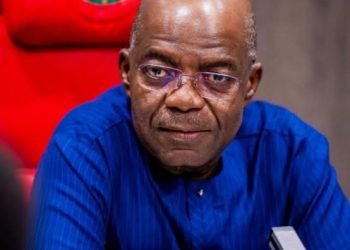
Nigeria’s prolonged monetary tightening has been a key factor in moderating inflation, with empirical research indicating that the Central Bank of Nigeria’s (CBN) policy actions contributed as much as 10 percentage points to the decline in headline inflation, according to the CBN Governor and Chairman of the Monetary Policy Committee (MPC), Olayemi Cardoso.
The disclosure was contained in Cardoso’s personal statement published on the CBN’s website on Wednesday, following the November 2025 MPC meeting. In the statement, he described the findings as compelling evidence that monetary policy has remained effective despite persistent domestic constraints and challenging global conditions.
Cardoso said the results underscore the importance of maintaining firm and consistent policy actions to protect price stability. He noted that research outcomes provided reassurance that the CBN’s restrictive stance is yielding measurable results in curbing inflationary pressures.
According to him, estimates show that the tight monetary stance accounted for up to 10 percentage points of the recent disinflation in headline inflation. He described this as strong counterfactual proof that monetary tools are working in the current economic environment and stressed the need for continued decisiveness in policy implementation.
Recent data show that headline inflation eased to 16.05 per cent in October 2025, down from 18.02 per cent in September. Inflation has now fallen 8.43 percentage points from the 24.48 per cent peak recorded in January 2025. Cardoso observed that the slowdown has been broad-based, affecting headline, food, and core inflation, with the pace of improvement accelerating in recent months.
He attributed the disinflation trend to a combination of reduced foreign exchange volatility, declining food prices, and improved inflation expectations, all supported by a relatively stronger and more stable naira. The governor noted that the exchange rate has become less volatile and has shown signs of market-led appreciation.
Cardoso also pointed to strengthening external buffers, explaining that foreign reserves have continued to rise following policy reforms that boosted capital inflows and encouraged structural improvements in Nigeria’s balance of payments position.
Beyond price stability, the governor said overall macroeconomic conditions have improved. He highlighted growing investor confidence, enhanced external resilience, and improved business and household sentiment as factors supporting long-term investment in key sectors of the economy.
However, he cautioned that downside risks remain significant. These include global economic uncertainty, geopolitical tensions, and Nigeria’s recent designation by the United States as a Country of Particular Concern, which, although security-related, could have indirect economic implications. Domestically, Cardoso identified the 2026 political cycle as a major risk, citing the historical tendency for pre-election fiscal expansion to fuel inflation, weaken the exchange rate, and strain the external sector.
He also noted that while fiscal reforms are essential, they often take time to produce results and can introduce short-term challenges, making it necessary for monetary policy to remain vigilant and proactive.
At the November MPC meeting, Cardoso said discussions supported retaining a tight monetary stance, with excess liquidity identified as a key threat to price stability. He argued that maintaining current policy rates would reinforce stability and signal confidence in the effectiveness of existing measures.
Based on this assessment, he supported keeping the Monetary Policy Rate at 27 per cent, adjusting the standing facilities corridor to +50/-450 basis points, retaining the 45 per cent cash reserve ratio for commercial banks, maintaining a 75 per cent CRR on non-TSA public sector deposits, and leaving the liquidity ratio unchanged at 30 per cent.
While acknowledging that monetary policy alone cannot deliver sustainable growth, Cardoso stressed that the current stance remains essential for maintaining stability and enabling broader structural reforms to take hold over time