The Nigeria Customs Service (NCS), Port Harcourt II Area Command, has announced that it generated a total revenue of ₦731 billion in 2025, while also intercepting 75 containers linked to various violations of customs laws during the same period.
The disclosure was made in a statement issued on Tuesday by the Command’s Public Relations Officer, Chief Superintendent of Customs Theophilus Duniya, who described the achievement as a major milestone in the command’s operational and revenue performance. According to him, the result reflects sustained improvements in revenue generation, enforcement, and compliance monitoring within the command.
Duniya explained that the Port Harcourt II Command was given a revenue target of ₦700.01 billion for 2025, following its strong performance in previous years. However, the command exceeded this benchmark by collecting ₦731.2 billion, representing a 4.46 per cent increase above the target. He noted that the outcome underscores the effectiveness of the command’s strategies and leadership approach.
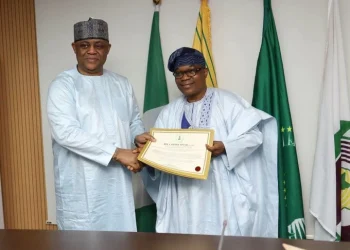
He attributed the strong performance largely to the leadership of the Customs Area Controller (CAC), Comptroller Aliyu Alkali, who ensured the effective implementation of the policy direction of the Comptroller-General of Customs. According to Duniya, the adoption of the Unified Customs Management System, popularly known as the B’Odogwu platform, played a key role in improving operational efficiency, particularly by enabling faster and more transparent cargo clearance processes.
The spokesperson further stated that Comptroller Alkali prioritised strict compliance with standard operating procedures, reinforced discipline among officers, and promoted continuous engagement with key stakeholders in the maritime and trade sectors. These measures, he said, helped to enhance voluntary compliance, reduce revenue leakages, and strengthen enforcement outcomes.
In his remarks, Comptroller Alkali expressed appreciation to the management of the Nigeria Customs Service, led by the Comptroller-General of Customs, Adewale Adeniyi, for creating an enabling environment that supported the command’s achievements. He noted that institutional support, clear policy direction, and access to modern technology were critical to the successes recorded in 2025.
Alkali also acknowledged the cooperation and support received from critical stakeholders, including port operators, shipping companies, licensed customs agents, and other security agencies. He described the synergy among stakeholders as an important factor in achieving both revenue and enforcement goals.
Commending officers of the command, the CAC praised their dedication, professionalism, and commitment to duty. He said their firm stance against illegal activities and their sense of patriotism were instrumental in the interception of 75 containers during the year, with a combined duty-paid value of ₦47.6 billion.
Providing further details on the seizures, Alkali revealed that 30 of the intercepted containers were found to contain expired, illicit, and unregistered pharmaceutical products, posing serious risks to public health. The remaining containers, he said, were seized for violating various provisions of the Customs and Excise laws, including improper documentation and false declarations.
He stressed that the seizures were intended to send a strong warning to smugglers and other individuals seeking to undermine the nation’s trade and regulatory framework. According to him, enforcement actions taken by the command would continue to serve as a deterrent to future violations.
The CAC urged importers and customs-licensed agents to ensure honest and accurate declarations, noting that compliance with regulations remains the most effective way to avoid sanctions. He reaffirmed the command’s commitment to facilitating legitimate trade while maintaining strict enforcement of customs laws, guided by integrity and professionalism.
The Port Harcourt II Area Command remains one of the strategic commands of the Nigeria Customs Service, playing a critical role in revenue generation, trade facilitation, anti-smuggling operations, and the enforcement of national trade and border regulations.