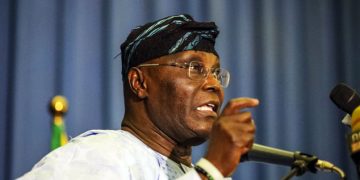


Former Vice President Atiku Abubakar has described the Federal Government’s recent acknowledgement that Nigeria cannot continue depending mainly on large-scale central power stations as a delayed acceptance of the decentralised electricity generation approach he has promoted for more than two decades.
In a statement issued by his Senior Special Assistant on Public Communication, Phrank Shaibu, Atiku said the administration of President Bola Tinubu had eventually recognised the need for a different power strategy after what he described as years of poor decisions and inadequate planning that contributed to the country’s worsening electricity challenges.
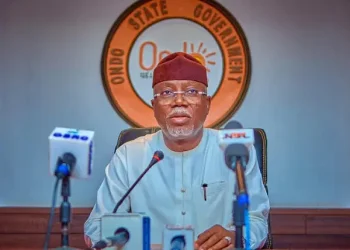
The statement followed remarks by the newly appointed Minister of Power, Joseph Tegbe, who said Nigeria must move away from relying entirely on centralised electricity generation and embrace alternative models, including distributed power systems and mini-grid solutions.
Reacting to the development, Atiku, who is the African Democratic Congress (ADC) presidential candidate for the 2027 election, expressed disappointment that the government took several years to adopt an idea he said had long been necessary for improving Nigeria’s power sector.
He accused the current administration of focusing on increasing electricity costs before introducing the reforms needed to improve supply, arguing that the government should have prioritised fixing the system before placing additional financial pressure on consumers.
According to him, a properly planned electricity reform programme would have strengthened generation, transmission and distribution networks before asking Nigerians to pay higher tariffs. He claimed that the government’s approach had resulted in increased costs for citizens and businesses without delivering a corresponding improvement in power availability.
The former Vice President recalled that while serving under President Olusegun Obasanjo, he repeatedly advocated for a broader electricity framework that would allow Nigeria to generate power from different sources across various regions of the country.
He said his proposal was based on using the nation’s available energy resources, including natural gas, hydroelectric power, solar energy and other renewable options, rather than depending heavily on a limited number of major power plants.
Atiku explained that his commitment to reforming the electricity sector was demonstrated when the Obasanjo administration created the Power Sector Reform Committee, which focused mainly on gas-powered electricity generation. Despite being appointed as chairman of the committee, he said he chose not to lead it because he believed the country required a more diversified strategy.
He maintained that Nigeria’s long-standing reliance on a centralised electricity model had always been impractical due to the country’s size, resources and infrastructure limitations. According to him, decentralised generation would have provided a more reliable and efficient solution if implemented earlier.
The ADC presidential hopeful stressed that access to steady and affordable electricity is essential for economic development, industrial expansion, job creation and improving Nigeria’s competitiveness globally.
He criticised the government’s handling of the power sector, claiming that the last few years had brought increased electricity expenses, difficulties for businesses, pressure on manufacturers and continued hardship for households that still struggle with unreliable supply.
Atiku argued that the major concern was not the government’s decision to embrace decentralised power generation, but the delay in adopting a policy direction that he believes could have improved the lives of Nigerians much earlier.
He promised that an ADC-led government under his leadership would implement a comprehensive electricity strategy based on multiple energy sources, including gas, hydro and solar power.
He added that such an administration would focus on expanding transmission capacity, improving distribution systems, supporting private sector investment and creating conditions that would guarantee dependable and affordable electricity for homes and businesses across Nigeria.