

The Federal Government has confirmed the deaths of 13 people and the disappearance of two others after a mining pit collapsed in Kadauri village, Maru Local Government Area of Zamfara State. The tragedy, which occurred following heavy rainfall, has once again drawn attention to the dangers of illegal mining in Nigeria.
According to the Ministry of Solid Minerals Development, at least 15 itinerant mine workers were trapped when the pit caved in. Thirteen bodies have since been recovered, while search efforts are ongoing to locate the remaining two. Federal mines officers were immediately deployed to the scene to support state emergency teams in coordinating the rescue operation.
A statement from Segun Tomori, media aide to the Minister of Solid Minerals Development, explained that the collapse was worsened by unlawful mining activities carried out with crude tools and without adherence to safety standards. “The collapse, triggered by heavy rainfall and aggravated by the unlawful activities of illegal miners, trapped at least 15 itinerant workers. Thirteen of them have been recovered, tragically with no survivors,” the statement read.
Minister of Solid Minerals Development, Dr. Dele Alake, described the incident as both “unfortunate and avoidable.” He expressed shock over the loss of lives and reiterated that the government would continue to intensify its clampdown on illegal mining. “Our first responders have been mobilised to the site and are working with state government officials on rescue operations, after which the site will be sealed off,” he stated.
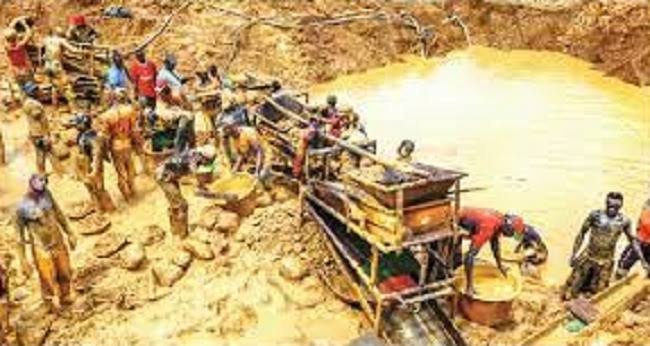
Preliminary investigations show that the Kadauri area is rich in gold deposits and characterised by loose sandy soil, making it vulnerable to collapses. Illegal miners, lured by traces of gold, had reportedly exploited the site using rudimentary tools, disregarding environmental concerns and basic safety precautions.
To combat such hazards, the Federal Government introduced the Mining Marshals initiative over a year ago. Since then, more than 300 illegal miners have been arrested across 10 states and the Federal Capital Territory, while 98 illegal mining sites have been shut down. The ministry has pledged to expand operations nationwide by strengthening manpower and logistics.
Zamfara, however, presents unique challenges due to its long-standing insecurity and history of banditry. Mining activities in the state had previously been suspended, but the Tinubu administration lifted the ban in December 2024 following improved security clearance operations. This allowed a gradual return of regulated exploration, though illegal miners continue to operate.
In a bid to tighten surveillance, the ministry disclosed that satellite monitoring systems are being installed across Nigeria’s mining regions. The technology will enable real-time monitoring of sites, faster responses to emergencies, and improved tracking of illegal operators.
Alake reaffirmed the government’s zero-tolerance approach: “We will not relent until we rid this country of the nefarious activities of illegal miners. With satellite surveillance and other enforcement measures underway, we aim to drastically reduce mine collapses and tighten the noose around the sponsors of illegal mining.”
The Kadauri disaster has once again highlighted the urgent need for stricter regulation, modern mining practices, and stronger community awareness on the dangers of illegal mining, as Nigeria seeks to develop its solid minerals sector responsibly.