

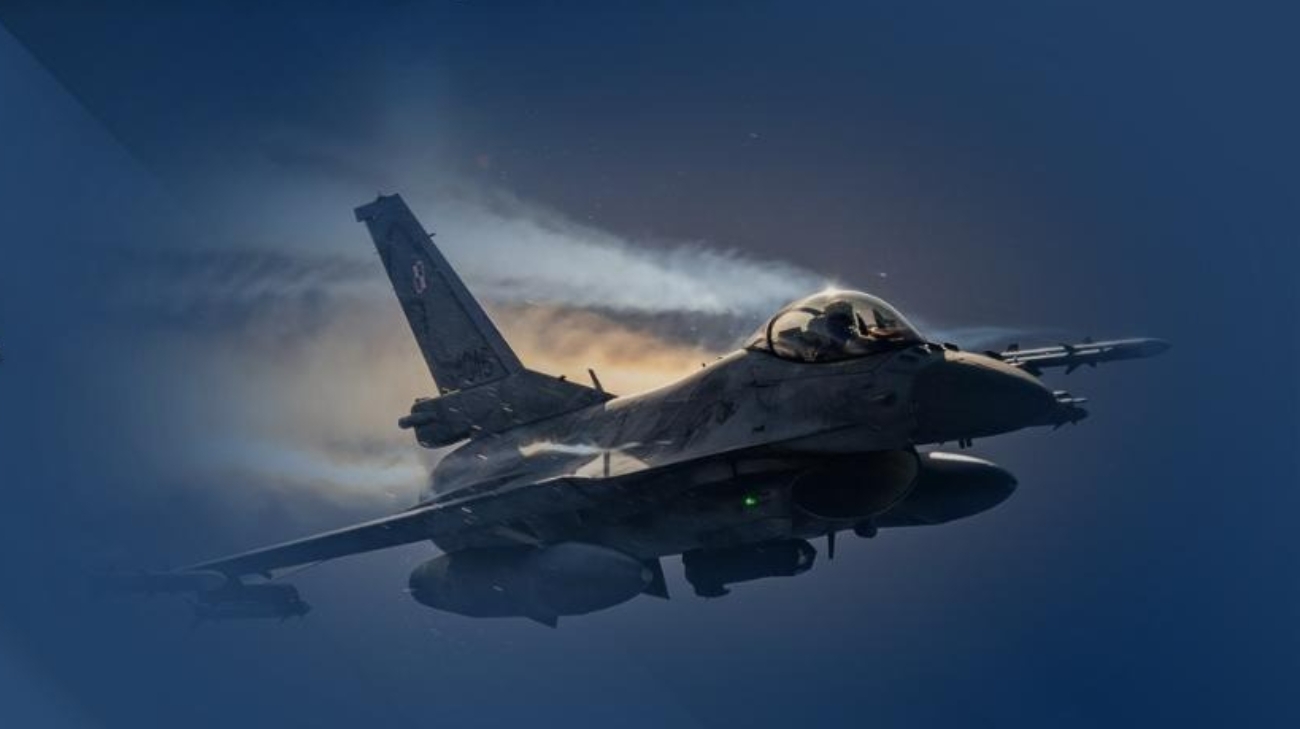
Polish and allied fighter jets were scrambled early Saturday after Russia carried out one of its largest overnight aerial assaults on Ukraine, including strikes near the country’s western border with Poland. The alert underscored growing fears in Eastern Europe after a series of Russian airspace violations in recent weeks.
According to the Polish military, Russian long-range aviation launched strikes across Ukraine, prompting Polish and NATO aircraft to operate in Polish airspace. “Duty fighter pairs have been scrambled, and ground-based air defense systems as well as radiolocation reconnaissance have reached maximum readiness,” the military said in a statement posted on X.
Ukraine’s Air Force reported that Russia deployed 579 attack drones and various decoy drones overnight, alongside eight ballistic missiles and 32 cruise missiles. President Volodymyr Zelensky confirmed that three civilians were killed and dozens injured in the shelling, condemning the strikes as deliberate attempts to terrorize the population and destroy infrastructure. “Every such strike is not a military necessity but a deliberate strategy of terror,” Zelensky said, calling for a stronger international response. Regional authorities later reported that at least eight people were killed and 32 injured in Russian attacks over the previous 24 hours.
The escalation came just hours after NATO jets intercepted three Russian MiG-31 fighters over Estonian airspace in what Tallinn described as an “unprecedentedly brazen” violation. Estonia’s military said the Russian jets, flying with transponders off and without flight plans, entered the Gulf of Finland and remained in Estonian territory for 12 minutes, posing risks to civilian air traffic. Italian F-35s stationed in Estonia under NATO’s Eastern Sentry mission responded, supported by Swedish and Finnish aircraft.
Moscow denied the violation, insisting its flights were conducted “in strict accordance with international rules” and without crossing foreign borders. Estonia’s foreign ministry has requested NATO Article 4 consultations, a mechanism allowing a member state to raise security concerns with the alliance’s political leadership. A meeting is expected early next week.
Tensions over Russian provocations have been mounting for months. Earlier in September, Russian drones entered both Polish and Romanian airspace during strikes on Ukraine, forcing NATO jets to shoot them down,the first time the alliance fired at Russian assets since the war began in 2022. NATO condemned Moscow’s actions as “absolutely dangerous,” while member states pledged to reinforce defenses along the alliance’s eastern flank.
The renewed Russian strikes also come as efforts toward peace remain stalled. Ukraine’s allies have shifted focus to long-term security guarantees for Kyiv. Zelensky announced he will meet U.S. President Donald Trump on the sidelines of next week’s UN General Assembly in New York to discuss the status of those guarantees. Trump has attempted to convene a joint summit with Zelensky and Russian President Vladimir Putin, but those efforts have so far failed.
As Russia intensifies its aerial campaign and NATO confronts rising airspace threats, Europe faces a volatile security environment that continues to test the alliance’s unity and Ukraine’s resilience.




купить диплом техникума строительного [url=http://educ-ua7.ru/]http://educ-ua7.ru/[/url] .