

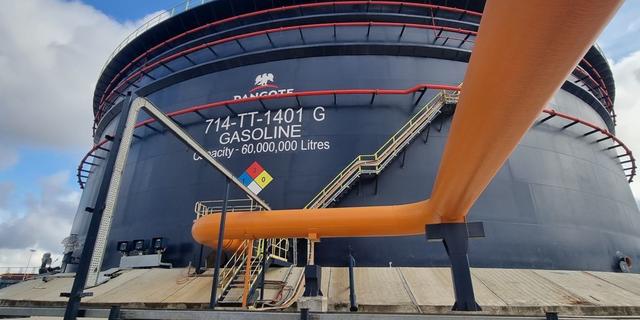
Canadian aerospace powerhouse Bombardier Inc. has hailed the Dangote Petroleum Refinery as a world-class project set to reshape Africa’s energy landscape and redefine fuel supply in the global aviation industry.
A high-powered Bombardier delegation, led by Chairman of the Board Pierre Beaudoin, visited the refinery in the Lekki Free Zone, Lagos. Speaking after the tour, Beaudoin said he was struck by the scale, advanced technology, and ambition behind what is officially the world’s largest single-train refinery. He noted that its ability to produce environmentally friendly jet fuel in massive volumes marks a turning point for aviation.
“The refinery makes jet fuel in large quantities, and that is good for the industry. From what I understand, their jet fuel is environmentally friendly, taking the sulphur out, and that is exceptional,” Beaudoin said.
Beaudoin, who was accompanied by Regional Vice Presidents Hani Haddadin and Chris Davey and Corporate Director Jean Bernier, praised Dangote Group President Aliko Dangote for his foresight, calling the facility “the best refinery project in the world.” He added that, as an aircraft manufacturer, Bombardier values dependable fuel sources and sees the refinery as a major driver of innovation in Africa.
In a symbolic gesture, Beaudoin presented Dangote with a prototype Bombardier aircraft to highlight potential synergies between the aviation and energy sectors. He described the project as a global benchmark and predicted it would position Nigeria as a key hub for aviation fuel.
Responding, Aliko Dangote emphasised that the refinery was deliberately designed to meet strict international standards. Joined by Group Vice President for Oil & Gas, Devakumar Edwin, he explained that its products comply with benchmarks set by the World Bank, the US Environmental Protection Agency, the European Union, and Nigeria’s Department of Petroleum Resources.
“Our products meet international specifications. We have the capacity to satisfy local demand and still export to Europe, Asia, America, and beyond,” Dangote said. He stressed that the refinery doubles as a national energy reserve, protecting Nigeria from global supply shocks or domestic shortages.
He further explained that the refinery is among the few worldwide executed as a fully integrated engineering, procurement, and construction (EPC) project, combining refining and petrochemical operations under one roof. This approach, he said, guarantees efficiency, quality control, and long-term competitiveness.
“The refinery is not just for exports; it is for Nigeria’s energy independence. It will ensure stable supply, shield the economy from shocks, and stimulate jobs and industrial growth,” Dangote added.
Industry observers note that Bombardier’s endorsement underscores the refinery’s global significance, particularly its role in sustainable aviation fuel supply. With airlines worldwide seeking cleaner and more reliable energy, the facility is seen as a strategic asset that could reduce costs for African carriers, improve regional fuel reliability, and boost connectivity.
Located in Lagos’s Lekki Free Zone, the refinery has already been touted as a game-changer for Nigeria’s oil economy, expected to cut fuel imports drastically and save billions in foreign exchange. Now, Bombardier’s recognition adds a new aviation dimension, strengthening its reputation as both a national economic pillar and a global energy hub.
Beaudoin summed up his impressions: “This project is not only impressive in size but also in vision. It represents innovation, sustainability, and a brighter future for Africa and the aviation industry.”