The Nigeria Customs Service (NCS) has spent more than ₦70 billion on Corporate Social Responsibility (CSR) projects across the country in less than two years, Comptroller-General Adewale Adeniyi has disclosed.
Adeniyi made the disclosure while highlighting the service’s contributions to communities beyond its core responsibility of revenue collection and enforcement of customs regulations.
According to the Comptroller-General, the NCS has increasingly used its Customs Cares initiative to support communities and provide interventions in areas considered important to national development.
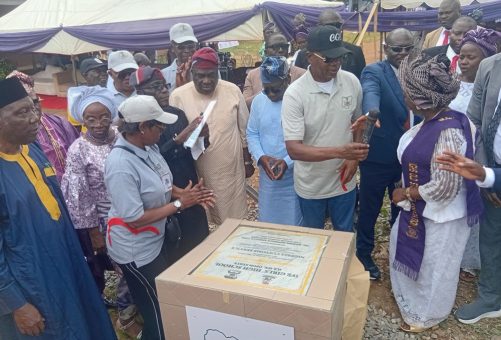
The projects reportedly cover several sectors, including education, healthcare, infrastructure and other community-based interventions. The initiative is designed to complement government efforts and respond to identified needs in communities across the country.
Adeniyi explained that the service’s social interventions form part of its broader approach to improving its relationship with communities where customs operations take place.
He said Customs could not focus solely on revenue generation and enforcement while ignoring the welfare and development needs of the communities surrounding its operations.
The Customs boss noted that stronger engagement with host communities was necessary to build trust and encourage cooperation with the service.
He also stressed the importance of ensuring that the agency’s activities produce benefits that extend beyond its traditional mandate.
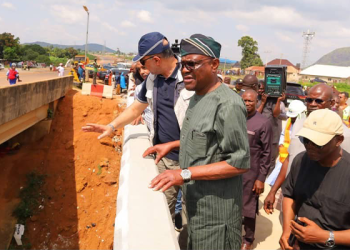
The interventions reportedly include the provision and rehabilitation of public facilities, particularly in communities where infrastructure gaps remain a concern.
Education has remained one of the areas receiving attention under the initiative, with projects aimed at improving learning environments and supporting students and schools.
Healthcare interventions have also formed part of the service’s community engagement efforts, alongside projects targeted at improving basic amenities.
The NCS has increasingly promoted Customs Cares as part of its institutional reforms under Adeniyi’s leadership.
The initiative is intended to demonstrate that customs administration can contribute to community development while carrying out its statutory responsibilities.
The disclosure comes against the backdrop of increased attention on the revenue-generating capacity of the Nigeria Customs Service.
The service recently reported strong revenue performance as the Federal Government continues to rely on improved collections from its revenue-generating agencies.
Beyond revenue collection, however, Adeniyi has repeatedly emphasised the need for the NCS to operate as a modern institution capable of contributing to wider national development.
The CSR spending has consequently become part of the service’s broader public engagement strategy.
The initiative also reflects a growing emphasis on corporate responsibility among government agencies, particularly those whose operations directly affect communities.
By investing in community projects, the Customs Service is seeking to strengthen relations with residents and stakeholders while improving public perception of its operations.
However, transparency and accountability in the implementation of such projects remain important to ensuring that public resources and institutional funds achieve their intended objectives.
The NCS maintains that its community interventions are aimed at addressing genuine needs and supporting development across different parts of Nigeria.
With the Customs Cares programme continuing to expand, the service is expected to sustain its focus on interventions that complement its revenue, trade facilitation and enforcement responsibilities.
The disclosure by Adeniyi therefore places the agency’s social responsibility activities alongside its traditional customs functions as part of its broader contribution to Nigeria’s development.