

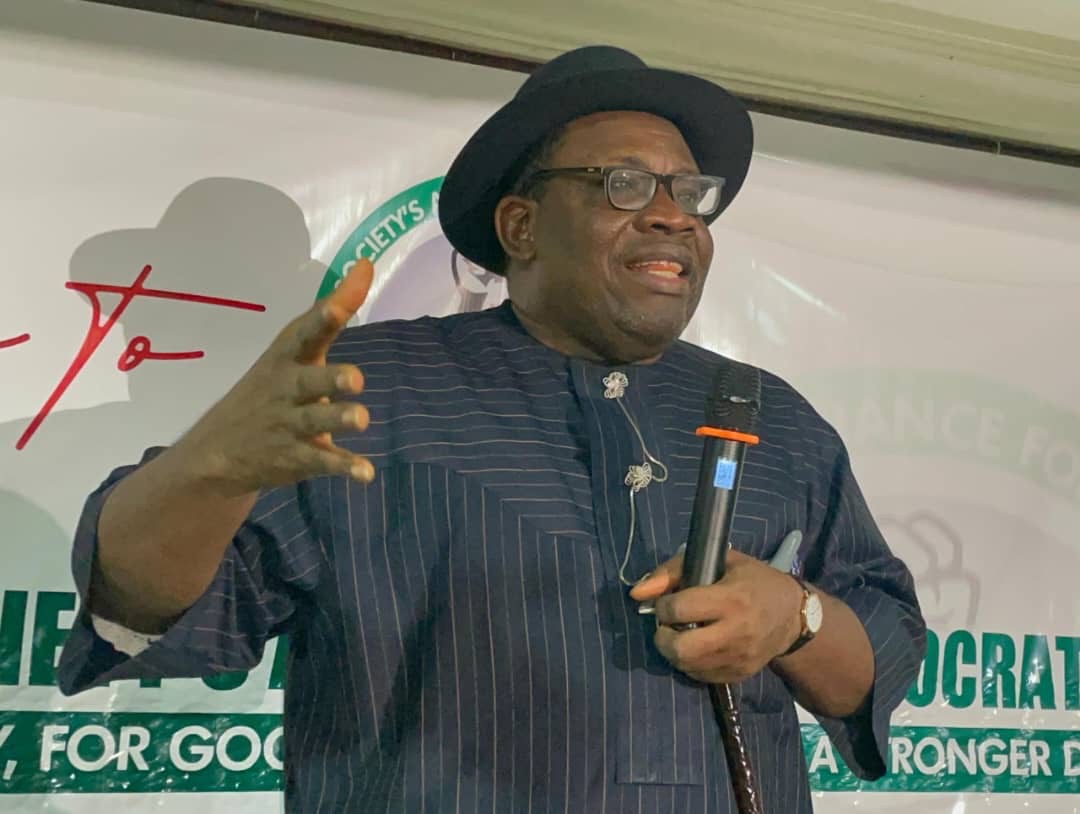
Senator Seriake Dickson, a former chief executive of Bayelsa State, has strongly refuted assertions that the Nigeria Democratic Congress (NDC) distributes electoral nominations according to financial influence. However, he conceded that the party’s recently completed candidate selection exercise experienced several operational difficulties.
During a televised appearance on Arise News on Wednesday, the lawmaker addressed concerns surrounding the conduct of the primaries, noting that party authorities were reviewing petitions submitted by dissatisfied members from different parts of the country. He specifically referenced complaints originating from Edo and Imo states, where some contestants alleged procedural violations and questioned the integrity of the exercise.
Dickson explained that the organization never portrayed the primaries as flawless and acknowledged that shortcomings emerged during implementation. He disclosed that party leaders had explored the possibility of introducing a digital voting platform to enhance openness and credibility. Nevertheless, logistical obstacles and time limitations prevented the initiative from being deployed before the elections took place.
The senator further stated that the direct primary model prescribed under Nigeria’s electoral regulations posed significant challenges. He noted that the NDC, still developing its nationwide structures, had to coordinate a large-scale process involving numerous aspirants seeking various elective positions.
According to him, competition became particularly intense because multiple individuals were vying for limited opportunities. In many constituencies, a single ticket attracted a substantial number of contenders, creating an atmosphere of rivalry that inevitably generated disagreements and post-primary disputes.
Reacting to allegations that powerful actors had seized control of party machinery in certain states and were determining outcomes behind the scenes, Dickson argued that such claims had not been substantiated at the national level. He maintained that there was no verifiable evidence linking the party’s central leadership to any form of undue interference.
Addressing accusations that governorship nominations were reserved for wealthy aspirants, he firmly rejected the suggestion. Dickson insisted that neither nomination forms nor candidacies are awarded on the basis of personal wealth. He challenged critics to provide proof that senior party officials or members of the National Working Committee received payments in return for granting electoral tickets.
Despite rejecting claims of monetisation, the former governor acknowledged the practical realities of electioneering. He explained that every political organization must consider whether prospective candidates possess the necessary means to sustain campaigns, mobilize supporters, and effectively communicate their message to voters.
He emphasized that evaluating a contestant’s ability to finance campaign activities should not be mistaken for selling nominations. In his view, financial preparedness is merely one of several factors considered when assessing electoral viability.
While admitting that tensions arose during the primaries, Dickson stressed that disagreements are common in competitive democratic processes. He stated that the party has established channels for resolving complaints and reconciling aggrieved members.
The senator concluded by expressing confidence in the NDC’s internal structures, arguing that ongoing disputes do not signify institutional failure. Rather, he said, the organization remains committed to addressing concerns, improving future exercises, and preserving confidence among its members as it prepares for upcoming electoral contests.