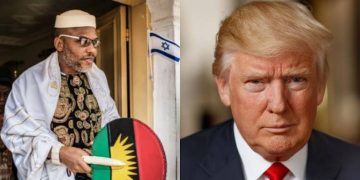


The United States Congress has urged the American government to begin diplomatic discussions with Nigeria concerning the legal situation of Indigenous People of Biafra (IPOB) leader, Nnamdi Kanu.
This followed the approval of a resolution by members of the US House of Representatives, who expressed concerns over Kanu’s prosecution, detention conditions, and access to rights guaranteed under both Nigerian and international law.
The measure, known as H.Res. 1321, was passed on May 22, 2026, after being sponsored by Congressman John James. Through the resolution, lawmakers called on Nigerian authorities to ensure that all court proceedings involving Kanu comply with constitutional requirements and globally accepted human rights principles.
The resolution also requested that the US Secretary of State engage Nigerian officials in discussions focused on due process, the treatment of detainees, and the protection of civil liberties.
Kanu, the leader of the outlawed IPOB movement, is currently serving a life sentence following his conviction on terrorism-related charges. The judgment was delivered by Justice James Omotosho of the Federal High Court in Abuja on November 20, 2025, after the court ruled in favour of the Federal Government’s case against him.
Since the ruling, Kanu has remained behind bars and is being held in a correctional facility located in Sokoto State.
Despite the conviction, Kanu’s legal representatives have continued to challenge the verdict. They argue that aspects of the prosecution relied on legislation that was no longer in force, raising questions about the validity of the proceedings. His lawyers subsequently filed an appeal seeking to overturn the judgment, although the appellate court has yet to commence hearings on the matter.
In its resolution, the US Congress highlighted concerns that have attracted international scrutiny over the years. Among them are issues surrounding Kanu’s arrest in Kenya and his return to Nigeria in 2021. Several legal analysts and human rights organisations have questioned whether the process complied with established legal and international standards.
American lawmakers also referred to the findings of the United Nations Working Group on Arbitrary Detention. In 2022, the UN body concluded that Kanu’s detention violated international human rights obligations and recommended corrective actions.
The resolution further encouraged Nigerian authorities to guarantee Kanu uninterrupted access to his lawyers, adequate healthcare services, and detention conditions that meet humanitarian standards.
According to the lawmakers, respect for freedom of expression, the right to a fair trial, and the humane treatment of detainees remain essential obligations under international law. They stressed that these principles should be upheld regardless of the nature of the allegations against any individual.
The House of Representatives noted that the United States has consistently advocated for human rights, justice, and the rule of law across the world. It added that Washington has previously engaged with foreign governments whenever concerns emerged regarding detention practices and judicial proceedings.
The resolution ultimately reaffirmed America’s commitment to safeguarding fundamental freedoms globally while encouraging constructive dialogue with Nigeria on issues relating to justice, legal rights, and adherence to due process.