

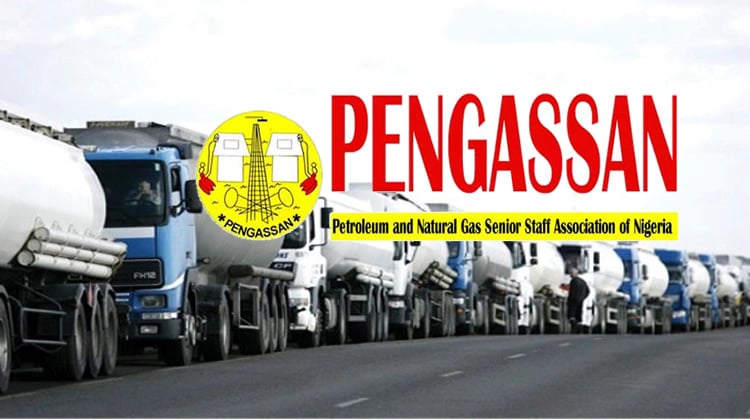
Nigerians face fresh hardship as the Petroleum and Natural Gas Senior Staff Association of Nigeria (PENGASSAN) begins a nationwide strike today, a move expected to trigger fuel price hikes and widespread power outages.
The strike order, which took effect at 12:01 a.m. on Monday, September 29, follows the dismissal of over 800 Nigerian workers at the Dangote Petroleum Refinery. The union accused the refinery of violating labour laws and International Labour Organisation conventions by sacking employees for union membership and replacing them with foreigners.
In a resolution signed by General Secretary Lumumba Okugbawa, PENGASSAN directed members to halt crude oil and gas supply to the Dangote Refinery and petrochemicals facilities. It further alleged that military personnel had been deployed to prevent workers from cutting off supply lines.
Union president Festus Osifo confirmed on Sunday that the strike had already shut down the refinery and fertiliser plant, though the diesel unit was still operating. He vowed that the strike would continue until the sacked workers were reinstated, declaring, “We will not surrender unless the affected workers are re-employed by Dangote.”
The strike has heightened fears of disruptions in Nigeria’s fragile energy sector. The Independent Petroleum Marketers Association of Nigeria (IPMAN) warned that halting supply to the refinery could destabilise prices, force marketers to import fuel, and worsen inflation. IPMAN spokesperson Chinedu Ukadike urged the government to intervene urgently, stressing that the crisis could cause “galloping inflation” if not addressed. He also called on the Minister of Petroleum to abandon his foreign trip and return immediately to broker peace.
The power sector is also on edge. The Association of Power Generation Companies (APGC) revealed that gas suppliers had instructed thermal power plants to shut down. Executive Secretary Joy Ogaji warned that with thermal plants generating over 70 percent of the nation’s electricity, hydropower alone could not sustain the grid, raising the risk of a nationwide blackout. She confirmed that key gas pipelines, including the Escravos–Lagos system, had already been shut, leaving only residual reserves.
While PENGASSAN enjoys the backing of the Trade Union Congress (TUC), which demanded reinstatement of the workers and an independent probe, consumer groups have accused the union of playing politics with the economy. The Forum of Concerned Nigerian Consumers condemned the strike as an attempt to undermine the multi-billion-dollar Dangote facility, warning that it could worsen scarcity and economic instability.
Dangote Group, in its response, accused PENGASSAN of sabotage and acting out of selfish interests. It insisted the dismissals were linked to safety and efficiency concerns rather than anti-union victimisation. The company stressed that it remains Nigeria’s largest private employer, with over 3,000 Nigerians on its payroll, and described the strike as “reckless, lawless and dangerous.”
The Federal Government, through Labour Minister Muhammad Dingyadi, has convened an emergency meeting for Monday in a bid to defuse the crisis. With fuel distribution disrupted, power generation under threat, and inflation pressures looming, the outcome of the talks may determine whether Nigeria averts a deeper economic shock or sinks further into crisis.

стоимость смартфона samsung [url=http://kupit-telefon-samsung-1.ru]http://kupit-telefon-samsung-1.ru[/url] .