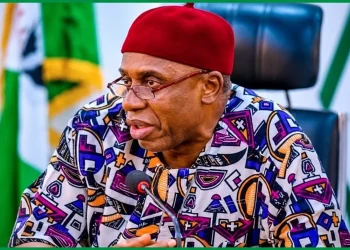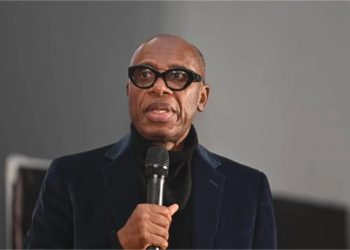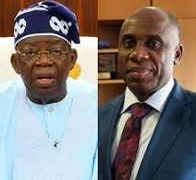


Rotimi Amaechi, the African Democratic Congress (ADC) vice-presidential candidate, has said he would withdraw from the 2027 presidential race and campaign for President Bola Tinubu if the price of petrol drops to ₦600 per litre from Saturday.
Amaechi made the statement on Friday during an appearance on Politics Today, a current affairs programme on Channels Television, while reacting to claims by the Tinubu administration that Nigeria was entering an era of economic prosperity.
The former Rivers State governor questioned whether the Federal Government’s economic policies had translated into tangible improvements in the lives of ordinary Nigerians, particularly in the cost of fuel, transportation and other essential goods and services.
He challenged the administration to demonstrate the practical benefits of its economic reforms, arguing that government assurances about an improving economy should be reflected in the daily experiences of citizens.
According to Amaechi, despite President Tinubu’s Independence Day address and assurances that the country had turned the corner, many Nigerians were yet to experience a significant reduction in the cost of living.
He maintained that the price of petrol remained an important indicator of the economic situation, given its impact on transportation costs, food prices and the general cost of doing business.
Amaechi said he intended to visit a filling station on Saturday morning to verify the prevailing price of petrol personally rather than rely on information provided by his staff.
He stated: “If fuel has come down to 600, I will campaign for President Tinubu. If fuel comes down tomorrow to 600, I will campaign for President Tinubu.”
The ADC chieftain also challenged the programme’s host to accompany him to a filling station with a camera to independently verify the price.
“Tomorrow, if you doubt, come with your camera in the morning to the house and I will go to the fuel station and I will buy fuel,” he said.
His remarks framed the price of petrol as a test of the administration’s claims that its economic policies were beginning to yield positive results.
The statement also comes against the backdrop of political preparations ahead of the 2027 general elections, in which the Tinubu administration’s management of the economy is expected to remain a major subject of public debate.
Since the removal of the petrol subsidy in May 2023, Nigerians have faced substantial changes in fuel prices, with the cost of petrol influencing transportation fares, food distribution and household expenses. The removal of the subsidy was part of the Federal Government’s broader economic reform agenda, which the administration has defended as necessary to address longstanding fiscal challenges.
However, the reforms have also attracted criticism over their immediate effects on purchasing power and the rising cost of living.
Amaechi’s challenge places the focus on whether the administration’s claims of economic recovery are being matched by improvements that Nigerians can readily observe, particularly at filling stations.
His proposed visit to a petrol station would provide an opportunity to verify the pump price at a particular location. However, petrol prices may vary between locations and marketers, meaning that a single purchase would not, on its own, establish the prevailing price nationwide.
As of the time of his remarks, Amaechi had made the proposed petrol-price test conditional: if the price fell to ₦600 per litre by Saturday, he said he would campaign for Tinubu.
The statement places the burden on the administration to demonstrate the extent to which its economic policies have reduced the financial pressures facing Nigerians as political attention increasingly shifts towards the 2027 elections.