

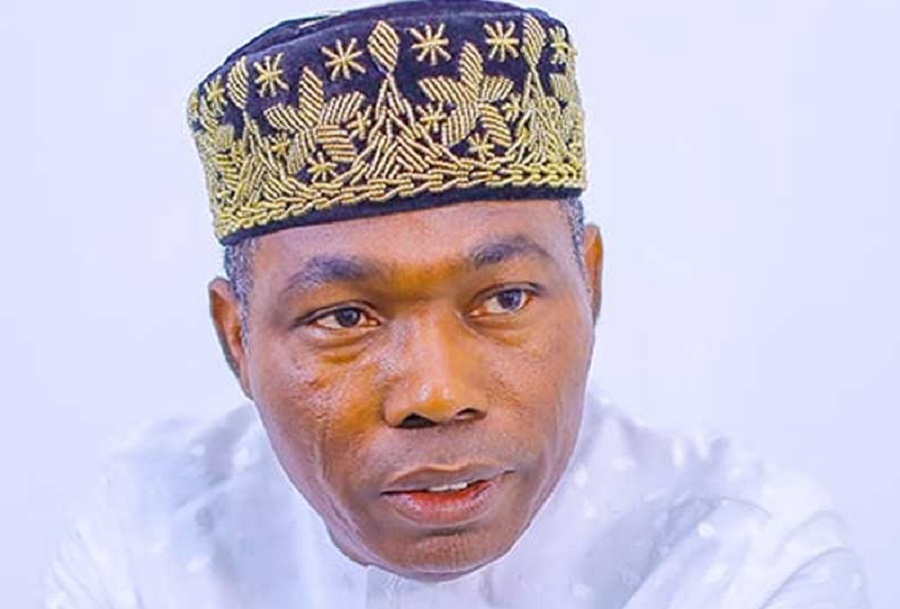
The Social Democratic Party (SDP) presidential candidate, Adewole Adebayo, has vowed to wage a direct war against illegal mining cartels, describing the criminalisation of Nigeria’s mineral resources as a major driver of insecurity across the country.
Speaking at a presidential interactive session in Abuja, Adebayo said ending the criminal networks surrounding the mining sector would be a key step towards addressing violence in the Middle Belt and other affected regions.
He alleged that armed bandits often operate as enforcers for illicit mining syndicates, contributing to the persistent attacks on local communities.
“I will stop the criminalisation of mining, where bandits are the ones acting as the police for the miners. That’s what is killing our people,” Adebayo said.
He maintained that Nigeria could generate significantly more revenue from its mineral resources, particularly those in the Middle Belt, than it currently earns from crude oil.
Adebayo also linked insecurity in the Federal Capital Territory (FCT), the Middle Belt and surrounding areas to what he described as long-standing alliances between political structures and criminal groups.
According to him, ending government-sponsored or government-enabled criminality would be central to restoring peace and improving the effectiveness of the nation’s security forces.
“We have to end insecurity in Nigeria starting from the Middle Belt,” he said. “The idea is to have a very sound Commander-in-Chief who will restructure the Armed Forces in a way that they can emanate from the communities and deal with the problems in the community.”
He added, “What is sustaining criminality and violence in Nigeria is that it is either government-sponsored or government-enabled. Once they don’t have partners in my presidency, that is the end of it.”
On foreign policy, the SDP candidate proposed an approach centred on Nigeria’s national interest, strategic technology acquisition and the protection of Nigerians living abroad.
He promised to transform Nigerian diplomatic missions into active citizen-welfare centres, with diplomats mandated to monitor the welfare and safety of Nigerians in their host countries.
“Our foreign policy is simple: it is the external projection of the internal priorities of Nigeria,” Adebayo said.
He explained that his administration would seek international partnerships that would strengthen Nigeria’s security, education and technology sectors while ensuring fair access to foreign markets for Nigerian products.
Adebayo further pledged that in countries with at least 5,000 Nigerians, consular officers would be required to monitor the welfare of Nigerian families and intervene where citizens face unlawful detention or other serious difficulties.
“Where laws are broken, we will cooperate to bring them home. Nigerians will once again be welcomed globally as highly productive and decent people,” he said.