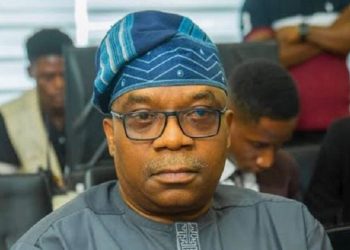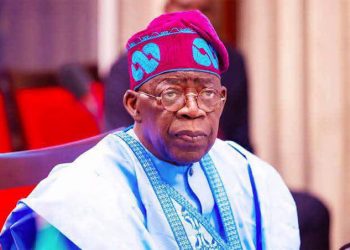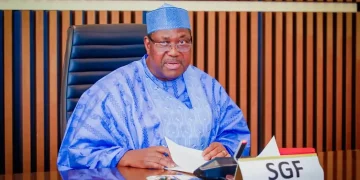


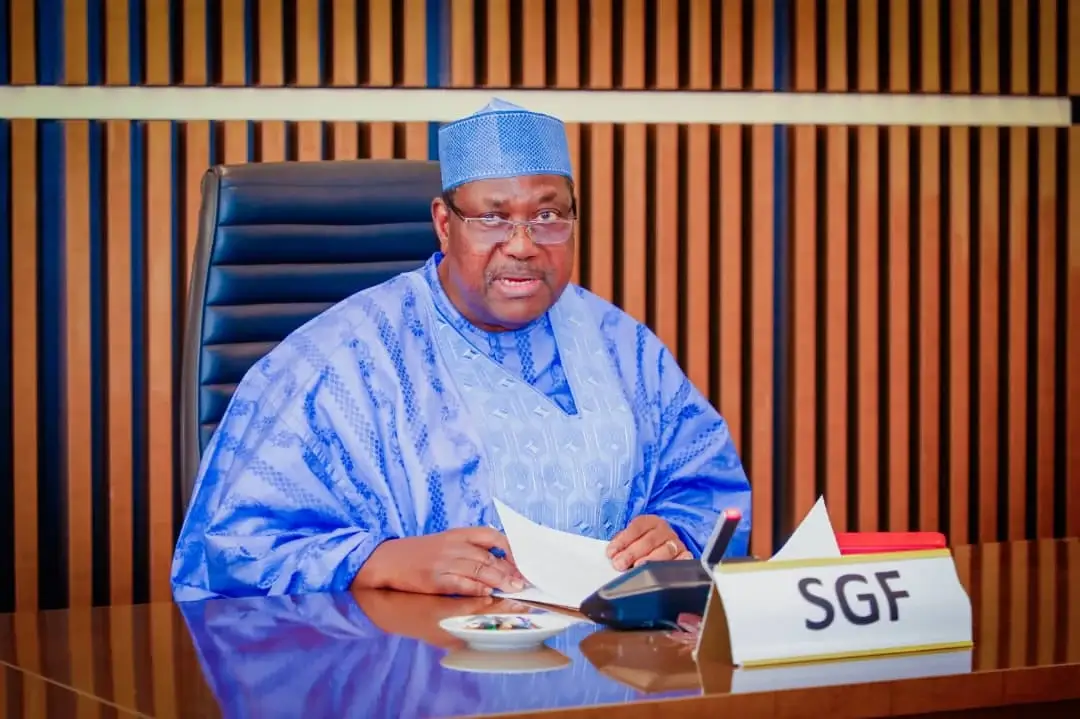
The (SGF), Secretary to the Government of the Federation George Akume, has revealed that President Bola Tinubu’s administration is set to intensify engagements with the Catholic Bishops’ Conference of Nigeria (CBCN), religious organisations, civil society groups and other key stakeholders as part of efforts to tackle the country’s security, economic and social challenges.
Akume made this known in a statement he personally signed following public reactions to President Tinubu’s recent meeting with the leadership of the Catholic Bishops’ Conference of Nigeria.
The SGF dismissed claims that the administration was attempting to establish a one-party system in Nigeria, describing such allegations as unfounded. He assured citizens that the government remained committed to democratic principles, political diversity and the conduct of credible elections.
According to Akume, the Federal Government values constructive criticism and will continue to rely on dialogue, transparency, accountability and policies driven by evidence in addressing national issues.
“The Federal Government neither seeks nor supports a one-party state,” Akume stated, adding that the administration respects the independence of the Independent National Electoral Commission (INEC) as a key institution in ensuring democratic governance.
He explained that his office would continue consultations with the Catholic Bishops, religious leaders and other relevant groups to promote understanding and develop shared solutions to challenges facing the country.
Akume stressed that addressing Nigeria’s problems requires cooperation among different sectors of society. He noted that faith-based organisations, traditional leaders, civil society groups, businesses and citizens all have significant responsibilities in promoting peace, unity and national development.
He described engagement between the government and these groups as necessary for building trust and creating effective responses to issues affecting Nigerians.
The SGF praised the Catholic Church for its long-standing contributions to national development, particularly in the areas of education, healthcare delivery, humanitarian services, peacebuilding and moral guidance.
He described President Tinubu’s meeting with the Catholic Bishops as productive and meaningful, noting that discussions focused on several important national concerns, including insecurity, economic challenges, education, public services, electoral reforms, political inclusion and religious freedom.
Akume said both parties recognised some achievements recorded by the administration, including the Nigerian Education Loan Fund (NELFUND) initiative and security operations that resulted in the rescue of abducted students and teachers.
Speaking on the state of the economy, Akume acknowledged the difficulties currently experienced by many Nigerians but explained that the challenges were linked to reforms introduced to address deep-rooted economic problems.
He maintained that the government’s policies were aimed at stabilising the economy, attracting investment, restoring confidence and creating conditions for long-term growth.
According to him, the reforms, although challenging, were necessary steps to correct structural weaknesses and rebuild the nation’s economic foundation.
Akume also highlighted several government projects and initiatives designed to improve citizens’ welfare, including major infrastructure developments such as the Lagos-Calabar Coastal Highway, Sokoto-Badagry Super Highway, road rehabilitation projects across the country, agricultural support programmes, electricity sector reforms and expanded social intervention schemes.
He reiterated that the administration would continue working with various stakeholders to promote peace, strengthen social cooperation and achieve sustainable national development.