

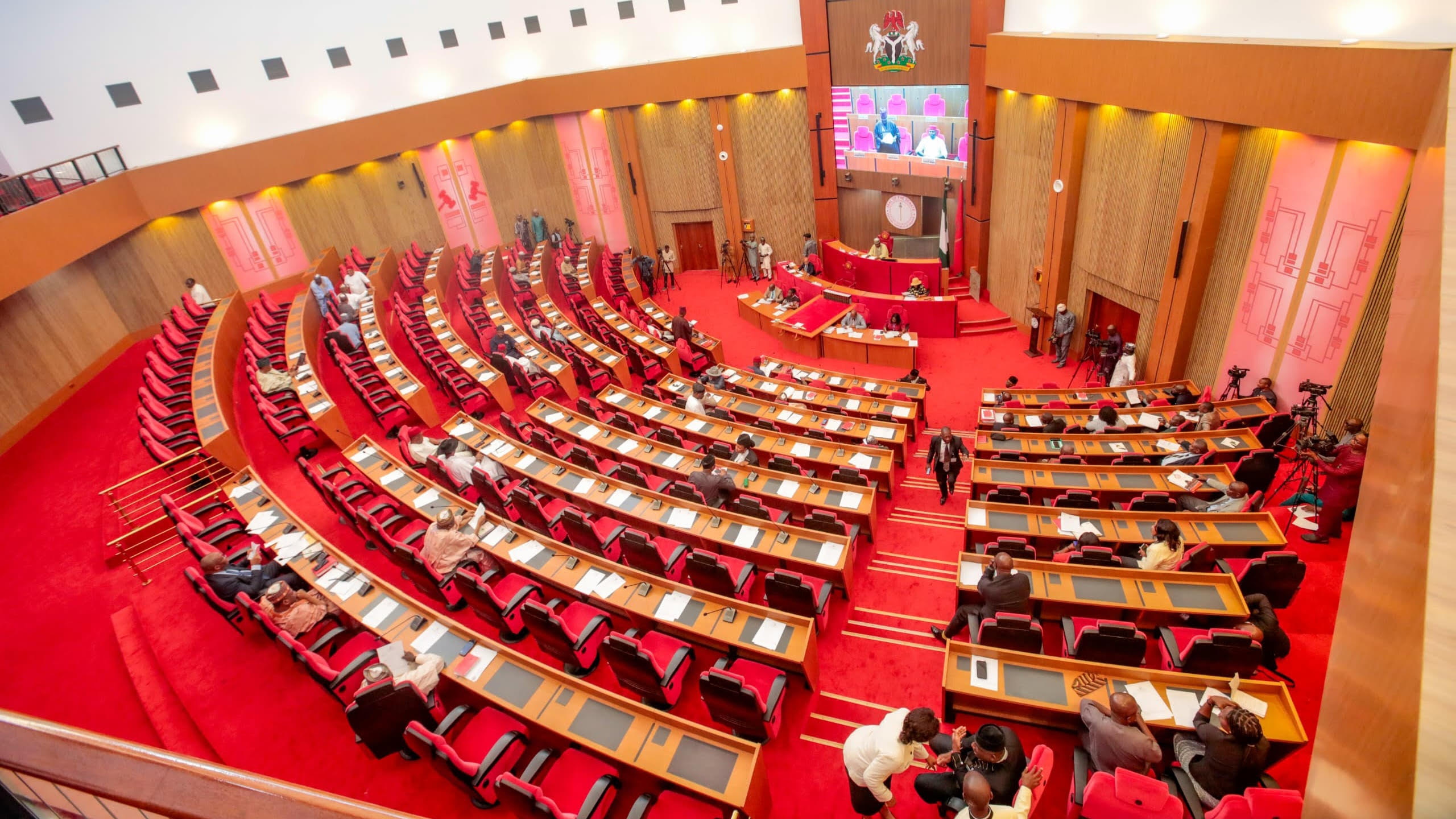
The Senate has indicated that legislative action on the long-debated establishment of state police is expected to reach a crucial stage this week, with plans already underway to fast-track the constitutional amendment required for its implementation.
Senate Leader Opeyemi Bamidele disclosed that the proposal has been placed at the forefront of the National Assembly’s agenda due to growing security concerns across the country. According to him, lawmakers are determined to ensure that the amendment progresses without unnecessary delays.
Speaking through a statement issued by his media office, Bamidele explained that discussions involving major stakeholders have intensified in recent days. He noted that representatives of both chambers of the National Assembly have been engaging relevant government officials and security authorities to finalise the framework needed to move the proposal forward.
The consultations reportedly involved Deputy Senate President Barau Jibrin, who heads the Senate Constitution Review Committee, and Deputy Speaker Benjamin Kalu, who leads the corresponding committee in the House of Representatives. Other participants included Attorney-General of the Federation Lateef Fagbemi, Presidential Chief of Staff Femi Gbajabiamila, senior police officials and several interested parties.
Bamidele stated that the widespread insecurity affecting various parts of the federation has strengthened calls for a decentralised policing structure. He observed that many Nigerians, including political leaders and community stakeholders, now view state-controlled police formations as a practical solution to the nation’s security challenges.
To accelerate the process, lawmakers have reportedly agreed to separate the state police amendment from the broader package of constitutional review bills currently before the National Assembly. The move is intended to allow legislators to focus exclusively on the proposal and secure its passage within the shortest possible time.
According to the Senate leader, there is a clear determination among federal lawmakers to transform public demands for state policing into law. He maintained that the prevailing security realities make the proposal both necessary and urgent.
Bamidele expressed optimism that the amendment would receive approval before the end of the week, stressing that postponing the matter further would serve no useful purpose. He added that once the National Assembly completes its work, the bill will immediately be forwarded to the 36 state Houses of Assembly for consideration.
Under Nigeria’s constitutional amendment procedure, support from at least two-thirds of state legislatures will be required before the measure can be transmitted to President Bola Tinubu for final assent.
The Senate leader also voiced confidence that both the President and state governors would back the initiative. He said indications from ongoing engagements suggest broad political support for the proposal across the federation.
According to him, many state assemblies are already anticipating the arrival of the amendment and are prepared to consider it once it is transmitted by the National Assembly.
Meanwhile, Chief of Staff to the President, Femi Gbajabiamila, recently revealed that President Tinubu is expected to receive a detailed report on the proposed state police framework in the near future. He noted that consultations surrounding the legal and constitutional structure of the initiative are approaching completion.
The development signals renewed momentum for one of Nigeria’s most debated governance reforms, with supporters arguing that state police could significantly improve local security operations and enhance the fight against crime nationwide.