

Hon. Ifeanyi Uzokwe, who serves in the House of Representatives for the Nnewi North/Nnewi South/Ekwusigo Federal Constituency of Anambra State, has explained why he and several fellow lawmakers chose to leave the African Democratic Congress (ADC) for the Nigeria Democratic Congress (NDC), as reported by News.ng.
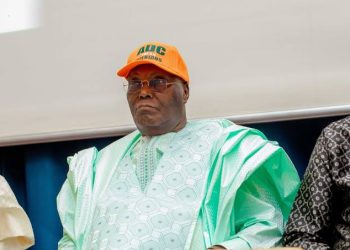
During a Tuesday evening interview on Channels Television, Uzokwe alleged that former Vice President Atiku Abubakar had assumed overwhelming influence over the ADC coalition framework. He argued that the party’s internal system had effectively been taken over, leaving little space for shared leadership or balanced participation.
According to Uzokwe, the decision to exit the party followed remarks attributed to Atiku, in which he reportedly claimed that the coalition arrangement originated from his personal initiative and that the ADC operated under his control. Uzokwe suggested that such statements reinforced concerns that the party was no longer functioning as a collective political platform.
He disclosed that he and some colleagues had earlier met with Atiku in an effort to encourage a more open and competitive process ahead of the party’s primaries. Their proposal, he said, was for Atiku to step aside and allow other aspirants such as Peter Obi and Rotimi Amaechi to contest without undue influence. However, he noted that their appeal did not yield any positive response.
Uzokwe maintained that demonstrating true commitment to democratic principles would require Atiku to withdraw from the race and permit a fair contest among interested candidates. In his view, such an approach would enhance transparency and restore confidence in the party’s internal processes.
He also criticised the leadership of the ADC, accusing them of misrepresenting the reasons behind the departure of Obi and other stakeholders. Uzokwe contended that the explanations offered to the public were inaccurate and failed to reflect what actually transpired within the party. He dismissed references to standard primary procedures as misleading, given the alleged level of control already exercised within the structure.
Expressing dissatisfaction with what he described as a lack of openness, Uzokwe urged party officials to provide a truthful account of how the coalition was formed and managed. He insisted that Nigerians deserve clarity rather than narratives that obscure the underlying issues.
In the midst of the shifting political landscape, Uzokwe confirmed that a large segment of Obi’s supporters, popularly known as the Obidient movement, is now gravitating toward the NDC. He further indicated that the Kwankwasiyya group, linked to Rabiu Kwankwaso, shares a similar position, particularly regarding support for a presidential candidate from the southern region.
Uzokwe ultimately portrayed the defection as part of a broader push for equity, internal democracy, and a more balanced political arrangement as Nigeria moves toward future elections.