


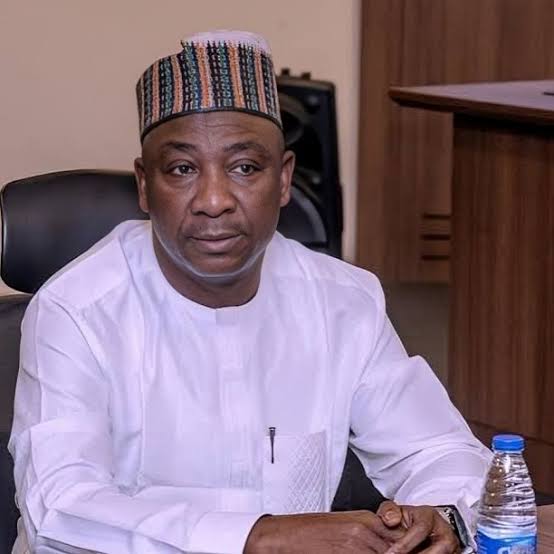
Nigeria Football Federation (NFF) President Ibrahim Gusau has raised alarm over the poor state of football facilities in the country, noting that the Super Eagles and other national teams are being forced to cope with a shortage of standard venues for training and competitive matches.
According to Gusau, the Godswill Akpabio International Stadium in Uyo remains the only reliable ground in Nigeria that consistently meets CAF requirements. He added that even that facility depends on continuous maintenance to remain in top condition.
In an interview with veteran journalist Osasu Obayiwuana, he described it as disappointing that the nation’s capital, Abuja, still lacks a fully functional and well-maintained stadium suitable for the national team.
He said, “It is disappointing for us as a country and as a football body that we still don’t have a proper playing surface in Abuja that meets international standards for the Super Eagles and other national teams.”
Gusau further explained that, at present, Uyo is the only dependable option for Nigeria’s international fixtures due to the sustained upkeep of the stadium.
He also disclosed that the maintenance arrangement for the Uyo facility almost ended when the current Akwa Ibom State Governor, Umo Eno, initially considered discontinuing it because of the financial commitment involved.
Gusau said he had to personally appeal to the governor to reverse the decision, stressing the importance of maintaining facilities that previous administrations had worked hard to develop.
“I had to intervene firmly when the governor considered stopping the maintenance agreement. His concern was the cost, and he almost scrapped it,” he said.
“I made him understand that abandoning it would damage the progress already achieved, and that consistent maintenance is crucial for Nigerian football. I’m glad he later agreed to continue.”
Currently, the Godswill Akpabio International Stadium is one of only two Nigerian venues approved by CAF for the 2025/26 season, the other being the Moshood Abiola National Stadium in Abuja.
However, the Abuja stadium is not presently in use for matches, leaving Uyo as Nigeria’s primary international football venue.
Commissioned in 2014 with a seating capacity of about 30,000, the Uyo stadium has become the regular home ground for the Super Eagles and a key location for the country’s international football activities.