


A Federal High Court order directing proceedings that could threaten the registration of the newly registered National Democratic Congress (NDC) of Nigeria has, ironically, triggered a wave of public sympathy and a surge in party membership across the country — all within 24 hours.
The order, issued by Justice Isah Dashen of the Federal High Court sitting in Lokoja in Suit No. FHC/LKJ/CS/49/2025, set aside its December 10, 2025 judgment which had ordered the Independent National Electoral Commission (INEC) to recognise and register the NDC. The bombshell ruling sent shockwaves through the political establishment on Saturday morning, jolting party leaders, candidates, and members of the public. But rather than dampening the spirits of NDC faithful, the development appears to have galvanised Nigerians who rushed to register as members of the party in a massive show of solidarity.
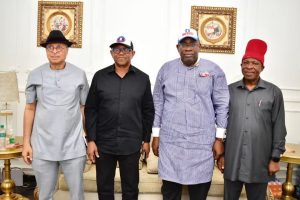
Sen. Seriake Dickson, the party’s founder and prominent leader, confirmed the development in a strongly worded statement, describing the court order as lacking legal merit and calling it “anti-democratic in nature.”
“Thousands of Nigerians across the country registered as NDC members today to show their solidarity, sympathy, and support for our party,” Dickson stated, framing the public’s response as a resounding rebuke of what he called a judicially sanctioned attack on multi-party democracy.
The Court Order, The Questionable Future of Nigerian Democracy
The Lokoja court set aside its December 2025 judgment that recognised the NDC as a registered political party, throwing the party’s status into uncertainty few months to the 2027 general elections. The court upheld an application by the Peace Movement Party (PMP), an unregistered and unknown entity to the law, which argued that it was a necessary party to the suit. The judge held that the failure to include the PMP amounted to a denial of fair hearing and rendered the previous judgment invalid, and ordered all parties to return to the position they were in before the December 10, 2025 judgment.
The practical implication is stark. With the court’s order, the legal basis for the NDC’s registration has been nullified if not appealed. INEC would be required to treat the NDC as if the December 2025 judgment had never been made, until a new determination is reached after a proper hearing. Candidate nominations, party structures, and campaign activities undertaken under the NDC platform are now legally exposed, unless the court’s decision is reversed on appeal or the party is re-registered after the fresh hearing.
Justice Dashen’s order has drawn sharp criticism from across the globe, especially from NDC leadership, who argue it was obtained through questionable legal standing. According to Dickson, the application was brought by an unregistered association — one that is not a recognised political party and holds no exclusive legal rights to any logo. He further noted that the applicant was not among the 171 associations that applied for registration in 2025, nor among the 21 shortlisted for consideration.
“It was not a necessary party to the suit because it had no interest in the subject matter,” Dickson said, adding that the party’s legal team had been immediately assembled to pursue all available channels to set the order aside.
The NDC, which was granted registration within the last five months, has made rapid strides across Nigeria’s political landscape — a trajectory its leaders say has unsettled established interests. Dickson pointed to the party’s swift growth as the very reason it has come under attack.
“We are not naive to expect that the tremendous progress we have achieved in the last five months would go without attack,” he said, “but this particular development came from a very unlikely source.”
The party is fielding candidates in elections across the country, and its leadership is insisting that all candidates, supporters, and voters should remain calm and continue their political activities uninterrupted. The NDC noted that it has already participated in by-elections in Nasarawa and Enugu states and has concluded primaries across all levels in compliance with INEC’s timetable.
“First They Ignore You…”
Channelling the spirit of resilience, Dickson invoked a well-known quote often attributed to Mahatma Gandhi: “First they ignore you, then they laugh at you, then they attack you, then you win.” He said the NDC was now firmly in the attack phase — and that victory was imminent.
“We are under attack, as I have repeatedly said we should prepare for challenges such as this. But thereafter, we shall win,” he declared.
The NDC Responds: “We Have Not Been Deregistered”
The NDC’s National Chairman, Senator Moses Cleopas Zuwoghe, addressed journalists in Abuja, stating that the ruling neither directed its deregistration nor invalidated the nominations of its candidates for the 2027 general elections, urging members and supporters across the country to remain calm.
The NDC argued that the proper legal remedy available to PMP was to appeal the original judgment, adding that the statutory window for such an appeal had already expired. The party maintained that the Federal High Court had become functus officio after delivering its final judgment and therefore lacked jurisdiction to revisit the matter through a motion.
Describing the move as “illegal and an outright abuse of court process,” Zuwoghe insisted: “We assure the general public, and particularly our candidates at all levels, that our party is on course. The NDC has not been deregistered, and we are challenging today’s order at the Court of Appeal as soon as possible. We have no doubt that justice will be done.”
Barr. Ikenna Morgan Enekweizu, NDC National Secretary, reinforced that position in a live television appearance on Channels Television’s Politics Today. He was unequivocal: “The ruling said the judgment earlier given by the court has been set aside. But there was no part of that ruling where an order was made deregistering NDC. So, as far as we are concerned, our party is still subsisting, has not been deregistered and will continue to operate as NDC.”
Enekweizu also confirmed that the legal team had commenced the process of appealing the judgment. “There are no issues about our candidates and their candidature in the elections. Since no order was made deregistering the party, we remain a registered political party until any competent court expressly says otherwise,” he added.
Peter Obi: “A Setback for Democracy”
Peter Obi, the NDC’s presidential candidate, described the development as a setback for the country’s democracy. “Every Nigerian committed to the country’s progress should be deeply concerned. It is regrettable that some who claim to champion democracy now appear determined to weaken the very institutions that sustain it. In doing so, they are undermining public confidence and endangering the future of millions of Nigerians,” he stated.
Obi expressed concern over what he described as the weakening of key democratic institutions, warning: “The legislature and the judiciary are increasingly being drawn into this pattern of institutional decline. Democracy cannot thrive where institutions lose their independence and credibility.”
The former Anambra Governor, who left the Labour Party and later the ADC before finding a home in the NDC, was equally defiant. Speaking hours after the ruling, Obi vowed he would be on the ballot for the 2027 elections, describing the court’s decision as a detour incapable of preventing the party from reaching its destination.
Obi maintained that his intervention was based on principle rather than political interest. “Those who seek to weaken Nigeria’s democratic foundations will not ultimately prevail. When a similar situation recently affected the ADC, I condemned it without hesitation. I do so again today because my position has always been guided by principle,” he said.
The spokesman for the Kwankwasiyya Movement, Habibu Muhammed, questioned the legality of the ruling outright. “We know this is a deliberate attempt to ensure that only President Bola Tinubu remains on the ballot. Outside that, how can you justify a court of the same jurisdiction undoing itself? It doesn’t happen anywhere. I think it’s only a higher court that can actually change a particular judgment. So, if you look into it, you will discover that it’s just another gimmick — a plot by hirelings who are directly involved in ensuring that the APC is the only sole political party standing. And I assure you, it’s not going to stand. We are, however, optimistic both Obi and Kwankwaso will be on the ballot in 2027.”
The Obidient Movement condemned the court decision, vowing to resist what it described as attempts to turn Nigeria into a one-party state. In a statement, the group argued that the latest development reinforced public concerns that the judiciary was being deployed as an instrument of partisan politics rather than an impartial arbiter. “These developments only reinforce the growing public concern that the judiciary is being deployed as an instrument of partisan politics rather than an impartial guardian of justice,” it stated.
National Coordinator of the Obi/Kwankwaso (OK) Movement, John Ughulu, said the ruling was not a surprise. “We saw it coming. We know where they are going, and I believe the legal team is ready to respond to whatever measures the government is planning,” he said.
The House of Representatives caucus of the NDC also rejected the judgment, accusing the APC of orchestrating a “judicial coup against democracy.” In a statement signed by the caucus leader, Afam Ogene, the lawmakers described the ruling as “judicial banditry” and vowed to challenge it up to the Supreme Court if necessary. “For us and many Nigerians, this is not an error of law. It is an assault on democracy. This is a calculated pattern of judicial harassment,” the lawmakers stated.
“If this order stands, it will trigger a major political crisis and destroy public confidence in the judiciary and INEC.”
The Interim National Working Committee (INWC) of the Peoples Democratic Party, chaired by Dr Tanimu Turaki, condemned the court’s decision as a setback for democracy. “While we await the Certified True Copy of the judgment, we express our profound condemnation of the implications of the court order, which further constricts the democratic space in our country. This is particularly disturbing, coming after Nigerians had expended their resources to aspire to various elective offices under the platform of the NDC.”
The PDP faction’s National Publicity Secretary, Comrade Ini Ememobong, did not mince words, describing the ruling as “not only an asphyxiation of multiparty democracy in Nigeria but also an economic crime against Nigerians who invested in the party.” He further alleged that the situation “fits neatly into the playbook of the APC-led Federal Government, which appears unwilling to allow the survival of a genuine opposition ahead of the 2027 general elections, in order to pave the way for the President’s unchallenged re-election.”
Rivers State governorship aspirant of the NDC, Blessing Fubara, assured supporters that the party would participate in the 2027 governorship election despite the court judgment. “We just saw it. Seeing a judgment like this, we know the depth of the legal implications and clarifications that will be in it. The judgment is not the final. There are other windows and options as per the party,” he said.
The NDC’s legal team is reportedly moving swiftly to challenge the order at the Court of Appeal, with Dickson describing Justice Dashen’s ruling as a “judicial anomaly” that will be corrected through due process. The party’s national leadership has called on supporters not to be deterred, reaffirming that the court order would not stall its march toward the forthcoming elections.
A Senior Advocate of Nigeria (SAN), Chief Ifedayo Adedipe, told The Nation that he does not believe the circumstances of the NDC case justify a rehearing. “My understanding is that a court may rehear a case subject to fraud being committed against one of the parties or if a party obtains judgment by fraud. In that case, the court before whom that fraud is committed reserves the jurisdiction to reverse the judgment,” he said.
INEC, which had originally rejected the NDC’s letter of intent before the December 2025 court judgment overruled that decision, said on Friday it had applied for the Certified True Copy of the latest ruling and would act accordingly upon receipt. INEC National Commissioner in charge of Information, Mohammed Kudu Haruna, stated: “The position that existed before the December 20, 2025 judgment was that INEC rejected NDC’s letter of intent to be registered as a party.”
Bigger Pattern: Opposition Under Siege?
Earlier this month, a Federal High Court in Abuja ordered the deregistration of five political parties, including the African Democratic Congress. Although the Court of Appeal in Abuja later halted the enforcement of the judgment, some Nigerians say the move could be an attempt to stifle opposition parties ahead of the 2027 general election.
The NDC’s legal challenge is now headed to the Court of Appeal, with the party insisting it will pursue the matter to the Supreme Court if required. As Nigeria’s political season heats up, the NDC’s resilience in the face of this legal challenge — and the unexpected membership surge it has triggered — may well become a defining story of democratic tenacity in the 2027 election cycle.
As Nigeria inches closer to its 2027 elections, the battle over the NDC’s registration has become far more than a procedural legal dispute — it is shaping up as one of the defining confrontations over the future of multi-party democracy in Nigeria.