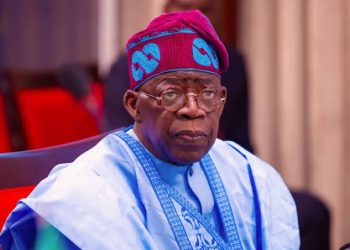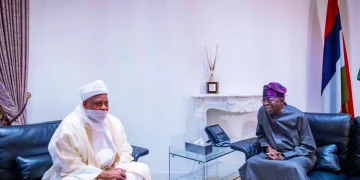


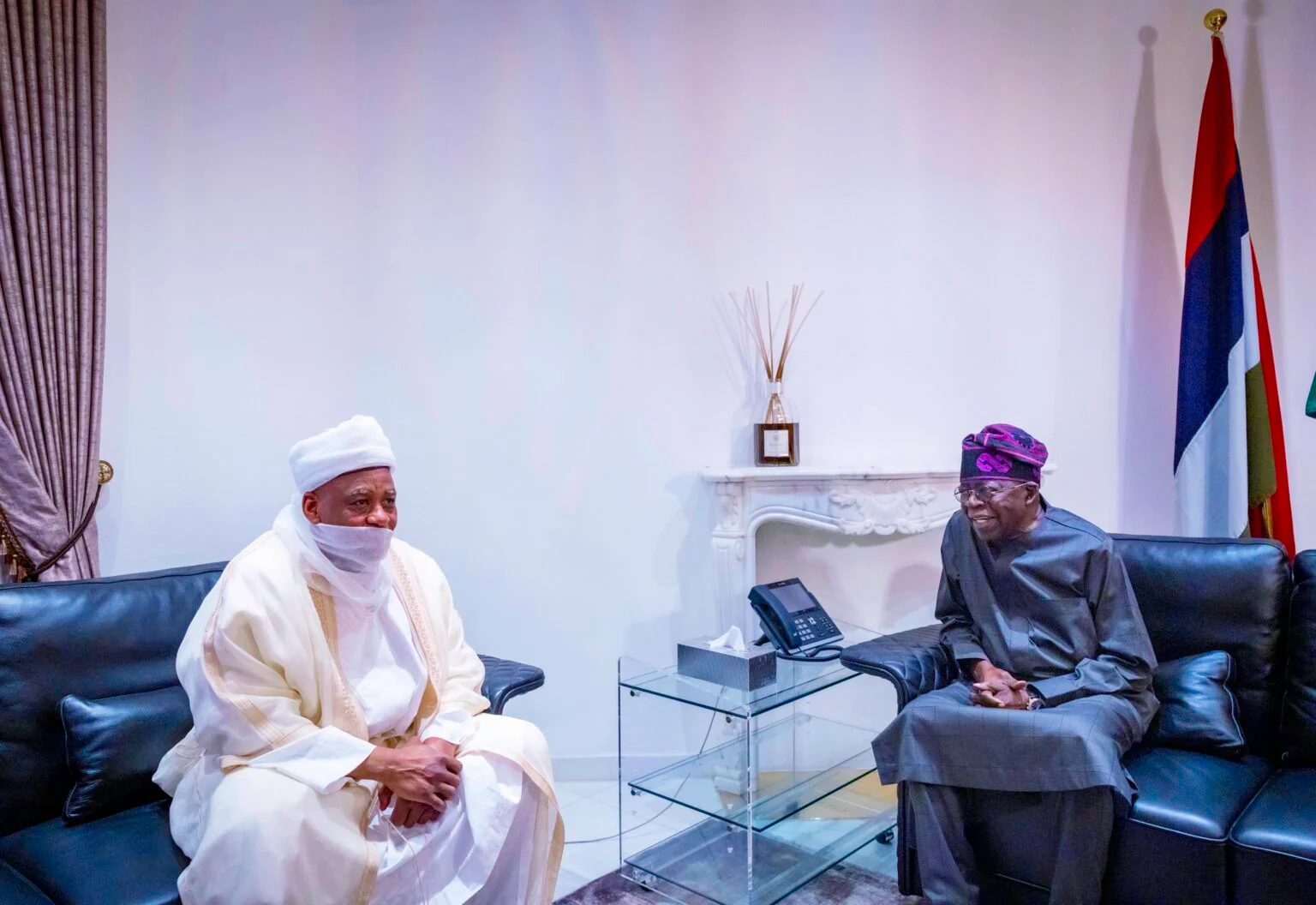
Bola Ahmed Tinubu on Sunday welcomed the Sa’ad Abubakar III to the Aso Rock Presidential Villa for a private discussion.
The meeting occurred several days after the Sultan did not personally attend the President’s interfaith Iftar gathering organised at the Presidential Villa on March 9. The dinner formed part of activities marking the ongoing observance of Ramadan and brought together prominent religious figures and traditional rulers from across Nigeria.
During the earlier event, the Sultan was represented by the Etsu Nupe, Yahaya Abubakar. He attended on behalf of both the Nigerian Supreme Council for Islamic Affairs and the Sultan, who serves as the organisation’s President-General. His absence from the gathering drew attention because of his important position within Nigeria’s Muslim community.
Sunday’s visit took place only a few days before the end of the Ramadan fasting period. While the purpose of the meeting was not publicly revealed, photographs released by the State House media team showed the President and the Sultan greeting each other warmly before holding their private talks.
As the spiritual head of Muslims in Nigeria and leader of the Nigerian Supreme Council for Islamic Affairs, the Sultan has continued to maintain regular engagements with the federal government on national matters. He is widely regarded as one of the country’s most influential traditional and religious leaders and frequently participates in discussions focused on unity, peace, and interfaith harmony.
Since the start of Ramadan, President Tinubu has hosted several Iftar dinners at the Presidential Villa for different groups of political and security leaders. These gatherings have included state governors, members of the Senate and the House of Representatives, top military and security officials, as well as leaders of various political parties.
The interfaith Iftar held on March 9 stood out because it brought together leaders from both Muslim and Christian communities, along with traditional rulers representing the six geopolitical zones of the country. The event served as an opportunity for dialogue and reflection during the holy month.
While addressing attendees at the gathering, the President reaffirmed his administration’s determination to confront security challenges facing the country. He stressed that Nigeria would not yield to terrorist threats and emphasized the importance of national solidarity in overcoming such challenges.
According to Tinubu, the country’s strength lies in its unity despite differences in religion or ethnicity. He assured the religious and traditional leaders present that his government would continue to pursue policies aimed at protecting citizens and preserving peace.
Among those represented at the event was the President of the Christian Association of Nigeria, Daniel Okoh. He was represented by the President of the Evangelical Church Winning All, Stephen Baba-Panya.
As of the time the meeting between Tinubu and the Sultan concluded, no official statement had been issued explaining the reason for the visit or what issues were discussed during the closed-door engagement. However, such consultations are often part of ongoing interactions between government authorities and respected traditional or religious figures on matters affecting national stability and governance.