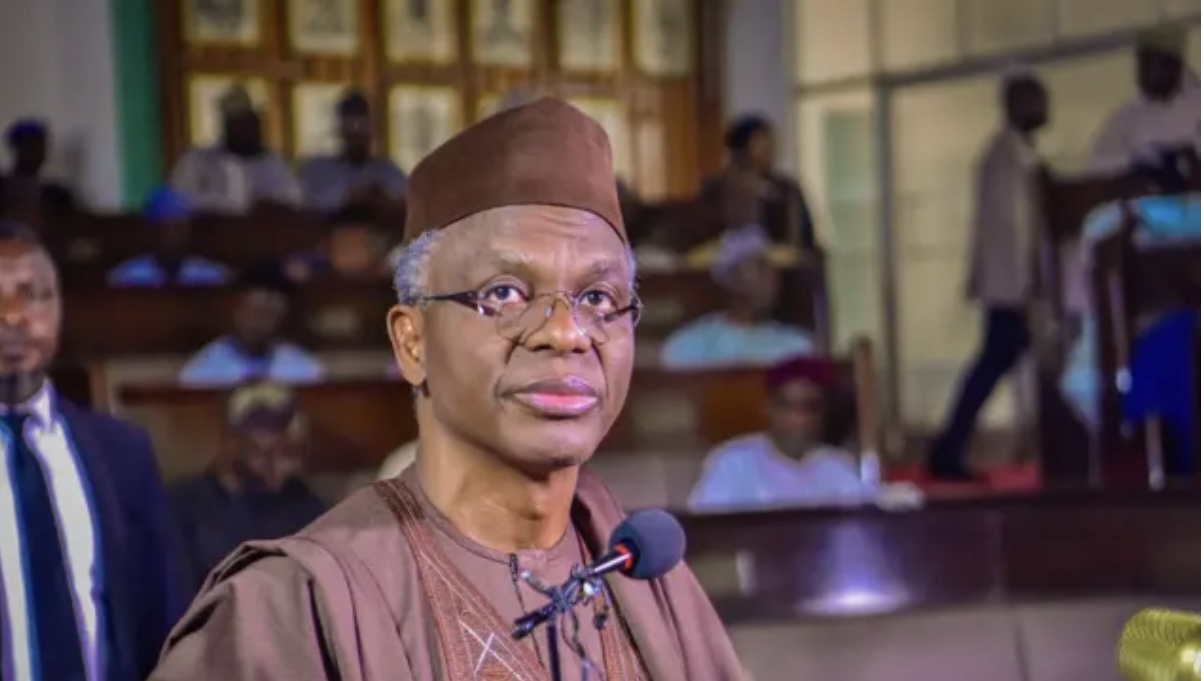
Nasir Ahmad El-Rufai has given further insight into his refusal to engage with investigators from the Independent Corrupt Practices Commission (ICPC), stressing that his stance is rooted in constitutional safeguards and not an attempt to obstruct the process.
The ex-Kaduna State governor is presently facing scrutiny from the anti-corruption body. On February 19 and 20, 2026, he provided two handwritten submissions to ICPC officials. These were recorded under caution and in the company of his attorney, Ubong E. Akpan.
Within the statements, El-Rufai contended that the inquiry is politically influenced and asserted that he would only address accusations before a properly constituted court. He maintained that after close to two years of examination, the commission should move to file its conclusions before a judicial authority instead of persisting with questioning.
In his first submission dated February 19, he acknowledged understanding the caution read to him and chose to outline personal and professional details while accompanied by his lawyer. He noted that he was born in 1960 in Dandawa, Katsina State, and raised largely in Kaduna State.
He recounted his educational path, stating that he studied Quantity Surveying at Ahmadu Bello University before undertaking further academic programmes at Harvard University and the University of London, where he pursued Business Administration, Public Administration, and Law.
El-Rufai also summarised his career across consultancy, telecommunications, and public administration. His public service roles included Director-General of the Bureau of Public Enterprises (1999–2003), Minister of the Federal Capital Territory (2003–2007), and two-term Governor of Kaduna State (2015–2023). He said he is currently retired and resides mainly in Egypt with members of his family and his elderly mother.
He further described himself as a senior figure in the African Democratic Congress (ADC), which he portrayed as the country’s principal surviving opposition party. According to him, this political affiliation has made him a focus of pressure.
Regarding the ICPC’s inquiries, El-Rufai explained that, acting on legal advice, he invoked his right to remain silent and declined to answer additional questions. He argued that the investigation amounts to political persecution rather than a legitimate exercise of authority and stated that only a judge can make such a determination.
In a follow-up statement dated February 20, 2026, after being presented with more documents and queries, he reiterated his earlier position. He again reserved his constitutional right to silence and insisted he would respond only if the issues are formally brought before a court of law.
Addressing the commission’s questions, El-Rufai stated that, on legal advice, he chose to invoke his right to remain silent and would not answer further inquiries. He expressed the view that the ongoing probe did not amount to a lawful exercise but rather constituted political harassment, a matter