


Rivers Assembly Renews Impeachment Push Against Fubara Amid Political Realignments
The Rivers State House of Assembly has once again commenced impeachment proceedings against Governor Siminalayi Fubara, reopening a political battle that has defined governance in the oil rich state for months. At plenary on Thursday, lawmakers formally accused the governor and his deputy, Ngozi Odu, of gross misconduct, a constitutional step that activates the impeachment process and deepens uncertainty within the state’s political environment.
This latest move marks the second attempt by the Assembly to remove Fubara within ten months. A similar impeachment drive in 2025 plunged Rivers State into crisis, prompting President Bola Tinubu to declare a state of emergency in March. The declaration led to the suspension of the governor, his deputy, and all members of the House of Assembly, a rare federal intervention aimed at restoring order amid escalating tensions.
Many political observers believed the emergency rule effectively halted the impeachment, buying time for negotiations and preventing a complete breakdown of governance. At the center of the crisis was Fubara’s bitter fallout with his former political benefactor, Nyesom Wike, now Minister of the Federal Capital Territory. Their rivalry fractured the political structure of the state and split loyalties within the Assembly.
Since then, the political landscape has shifted significantly. Governor Fubara has defected to the All Progressives Congress, while Wike has remained in the Peoples Democratic Party. Despite staying in the opposition party, Wike has openly championed a broad coalition in Rivers State to support President Tinubu’s re election ambitions in 2027, further complicating alignments ahead of the next general polls.
The renewed impeachment effort raises fresh questions about stability, legality, and the balance of power in Rivers State. Analysts warn that another prolonged confrontation between the executive and legislature could stall development, unsettle investors, and distract from governance. They also caution that federal authorities may again be forced to intervene if the crisis escalates beyond constitutional control.
As proceedings begin, attention now turns to the specific allegations of gross misconduct and the Assembly’s adherence to due process. Under the constitution, impeachment requires detailed investigations, legislative consensus, and judicial oversight. Whether this latest attempt will succeed or collapse under political pressure remains uncertain, but it has undeniably returned Rivers State to the center of national political debate.
For residents, the unfolding drama revives memories of uncertainty and administrative paralysis experienced during the previous crisis. Civil society groups are urging restraint, dialogue, and respect for democratic institutions, warning that repeated power struggles erode public trust. As events unfold, Nigerians will be watching closely to see whether political actors prioritize stability over rivalry.
The outcome of the impeachment process will shape Rivers State’s governance trajectory and influence broader calculations ahead of 2027. With alliances shifting and stakes rising, the state remains a critical battleground in Nigeria’s evolving political landscape, where decisions taken today may carry consequences far beyond its borders. Lawmakers, party leaders, and citizens alike now await developments that will determine whether reconciliation, confrontation, or constitutional resolution ultimately defines the next chapter for Rivers State politics and governance.

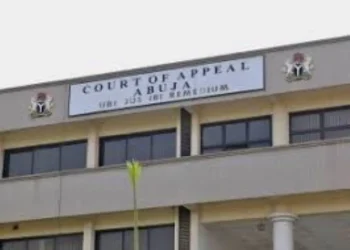
Appeal Court Voids Electoral Act Sections Ahead Of 2027 Elections
The Court of Appeal sitting in Abuja has declared some provisions of the Electoral Act 2026 unconstitutional, ruling that certain...
**back biome**
Mitolyn is a carefully developed, plant-based formula created to help support metabolic efficiency and encourage healthy, lasting weight management.