


Speculation is intensifying that Rivers State Governor Siminalayi Fubara may soon abandon the Peoples Democratic Party (PDP) for the ruling All Progressives Congress (APC), as the political temperature in the state escalates following a dramatic shift in allegiance by lawmakers in the state House of Assembly.
Last Friday, 17 members of the Rivers State House of Assembly — all reportedly loyal to former governor Nyesom Wike and led by Speaker Martin Amaewhule — announced their defection from the PDP to the APC, instantly upending the legislature’s balance of power. Only three lawmakers historically considered loyal to Fubara remain — but they have not resumed sitting since the state’s six-month emergency rule ended, deepening uncertainty around the governor’s political future.
A Pattern Across the South-South — And Rising Pressure on Fubara
Political observers and PDP insiders tell The PUNCH that the move aligns with a broader trend of defections among southern governors and lawmakers. As one former House of Representatives member from Rivers, Ogbonna Nwuke, argued: “When a party is bedevilled by crisis, people will naturally look for alternatives.” He pointed out defections in states such as Bayelsa, Delta, and Akwa Ibom — suggesting Fubara may also “follow the pull.”
Nwuke described recent actions within the PDP — including the issuance of what he called an “unprecedented expulsion certificate” — as evidence of deep internal disarray. In his view, “there are clear indications” that the party is fractured.
While one cannot rule out Fubara’s defection, a senior Government House official (who asked not to be named) dismissed the rumours. According to him, there is no indication the governor plans to leave the PDP. He challenged the defecting lawmakers to produce registration evidence at their wards — a constitutional requirement — before their move can be considered legitimate.
PDP Pushback, APC’s Silence — And a Legislature Operating from Assembly Quarters
Leaders of the Rivers State PDP, including state chairman Robinson Ewor, have downplayed the defections, describing them as unwarranted and stressing the party’s determination to reclaim its mandate. Ewor rejected the defections as lacking a justifiable basis, and insisted that the party would work to recover lost seats. “There is no division in PDP that justifies their action,” he told reporters.
On the APC side, the state chairman, Tony Okocha, said the party has not been contacted by Governor Fubara. “If I have the opportunity of talking to him, I will advise him to follow his mind. Why put the cart before the horse?” he said.
Meanwhile, the 17 defected lawmakers, led by Amaewhule, have already resumed sittings — but not in the official Assembly complex. They are meeting in their residential quarters along Aba Road. The move comes despite the governor’s earlier assurances that the newly reconstructed Assembly building would be ready this month. Fubara has also signaled his intention to present the 2026 budget there.
At their most recent sitting, the Assembly, under Amaewhule, criticised the governor’s delay in submitting a full list of commissioner-nominees, accusing him of running the state with only eight commissioners — a move they argue contravenes constitutional requirements.
Political Crisis Is Far from New — Impeachment, Twin Houses and Emergency Rule
The current wave of defections and legislature tensions is yet another chapter in an ongoing crisis that has rocked Rivers State for more than a year. After Fubara assumed office in 2023, a major falling out with his political godfather, Nyesom Wike, triggered a split in the House of Assembly — eventually producing two rival Speakers. The Assembly complex was bombed, intensifying the crisis.
In March 2025, the Assembly served Fubara and his deputy a notice of gross misconduct — the first step toward impeachment. The implication by critics is that the shift of allegiance by lawmakers and the swelling of APC support could be part of a broader strategy to remove Fubara from power.
Although a period of emergency rule declared by the federal government in March 2025 temporarily suspended legislative and executive activity in the state, the hiatus ended in September. Both the governor and the Assembly resumed functions — but tensions remain raw.
What’s Next — A Governor Caught Between Party Loyalty and Survival
At the center of this political storm stands Governor Fubara. For now, he has not confirmed any intention to leave PDP. Earlier in 2025, his media office insisted he remained fully committed to the party, even as he serves as Deputy Chairman of the PDP Governors’ Forum.
But with defections deepening the crisis, Assembly proceedings continuing under an APC-aligned majority, and important constitutional deadlines being missed — including the presentation of commissioner-nominees — Fubara appears politically isolated. The question looming large is whether he will pivot: abandon PDP for APC, attempt reconciliation with the defectors, or fight to reassert control within his party.
Political watchers note that if Fubara does decamp to APC, it would mirror a rising trend of former PDP stalwarts jettisoning ship in the South-South — a move that, some analysts say, could reshape the region’s political map ahead of the 2027 general elections.
Whether defectors legitimise their new affiliations under constitutional provisions, or whether Fubara resists moves to sideline him, will depend not only on internal calculations but also on how the national leadership of both major parties chooses to respond. For Rivers State — an oil-rich region with a volatile mix of politics, ethnicity, and economic stakes — the consequences could reverberate broadly.

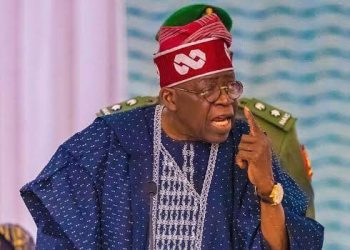
Tinubu says opposition without clear vision won’t be allowed to take Nigeria backward in 2027
President Bola Tinubu, speaking on Sunday, urged Nigerians to act carefully in choosing their leaders, cautioning against handing power to...



**backbiome**
Mitolyn is a carefully developed, plant-based formula created to help support metabolic efficiency and encourage healthy, lasting weight management.