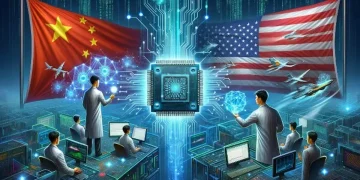


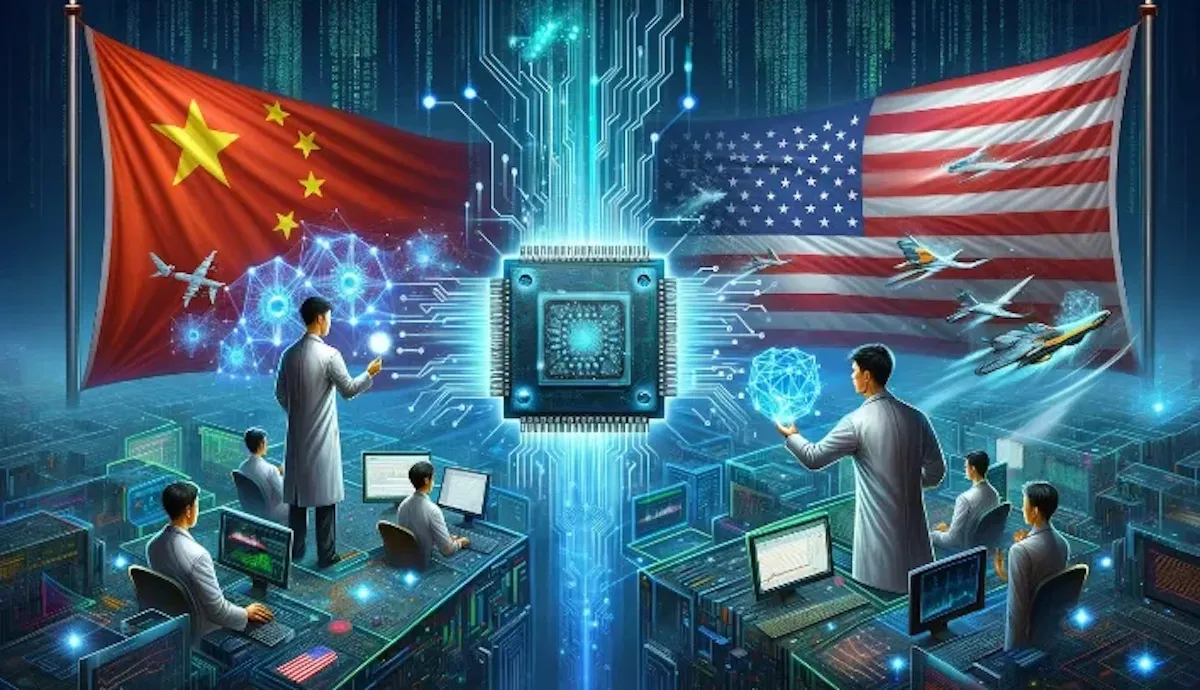
Hong Kong, The United States is facing a growing “reverse brain drain” as top scientific talent leaves its institutions for research opportunities in China, raising questions about America’s long-term ability to maintain its dominance in global science and technology.
A CNN review found that at least 85 scientists,spanning fields from nuclear physics to artificial intelligence,have taken fulltime positions at Chinese research institutions since early last year, with more than half making the move in 2025. Among them are a Princeton nuclear physicist, a NASA-linked engineer, NIH neurobiologists, and prominent AI specialists. Experts say the trend is set to accelerate as Washington cuts research budgets, tightens visa rules, and increases scrutiny of foreign talent, while Beijing expands investment in homegrown innovation.
For decades, the U.S. has relied on its ability to attract and retain foreign scientists, a key driver of its post-World War II leadership in science, technology, and military innovation. But China is now seizing the opportunity. With U.S. President Donald Trump pushing for deep cuts to federal research funding, raising visa costs, and increasing government oversight of universities, Chinese institutions are intensifying recruitment efforts. One Princeton sociologist, Yu Xie, described the changes in the U.S. as “a gift from Trump,” noting that Chinese universities are moving quickly to strengthen programs across multiple fields.
Recruiters in China confirm that interest from overseas scientists is rising. Government-backed programs, including those targeting semiconductors and artificial intelligence, offer incentives such as housing support, family benefits, research stipends, and grants worth up to $400,000. These initiatives form part of Beijing’s long-standing effort to attract global talent, especially Chinese scholars educated abroad, many of whom became leading figures in U.S. science and technology.
The political climate in Washington is also fueling uncertainty. Earlier this year, visas for Chinese students were used as bargaining tools in trade talks, while lawmakers pushed to reinstate the controversial “China Initiative,” a program criticized for stoking suspicion of Chinese academics. The result has been a chilling effect on U.S. campuses, especially for researchers of Chinese heritage, long the largest group of foreign PhD students in American science and engineering programs.
China, meanwhile, has positioned itself as a welcoming alternative. A recent People’s Daily editorial described the country as a “safe harbor” for scholars targeted by what it called the “reckless interference” of Western governments. Quiet outreach from Chinese universities has increased, with job offers spreading through academic networks and at conferences. At Fudan University, protein chemist Lu Wuyuan, who left a tenured post at the University of Maryland in 2020, told CNN there is a “clear surge” in applicants. He described the trend of overseas-trained scientists returning to China as “robust, perhaps irreversible.”
Other examples include Harvard statistician Liu Jun, who returned to Beijing’s Tsinghua University for family reasons, and AI and robotics experts courted through targeted recruitment drives. Industrial sectors are also involved: Jiangsu province headhunters say professionals with semiconductor experience are in particularly high demand as U.S. export restrictions squeeze China’s chip industry.
The implications are significant. As Beijing ramps up efforts to attract worldclass talent, and Washington signals cuts and tighter controls, the global contest for innovation in fields like AI, biotech, quantum computing, and semiconductors may be shifting. For China, it is an opportunity; for the U.S., a warning that its scientific edge may no longer be assured.