

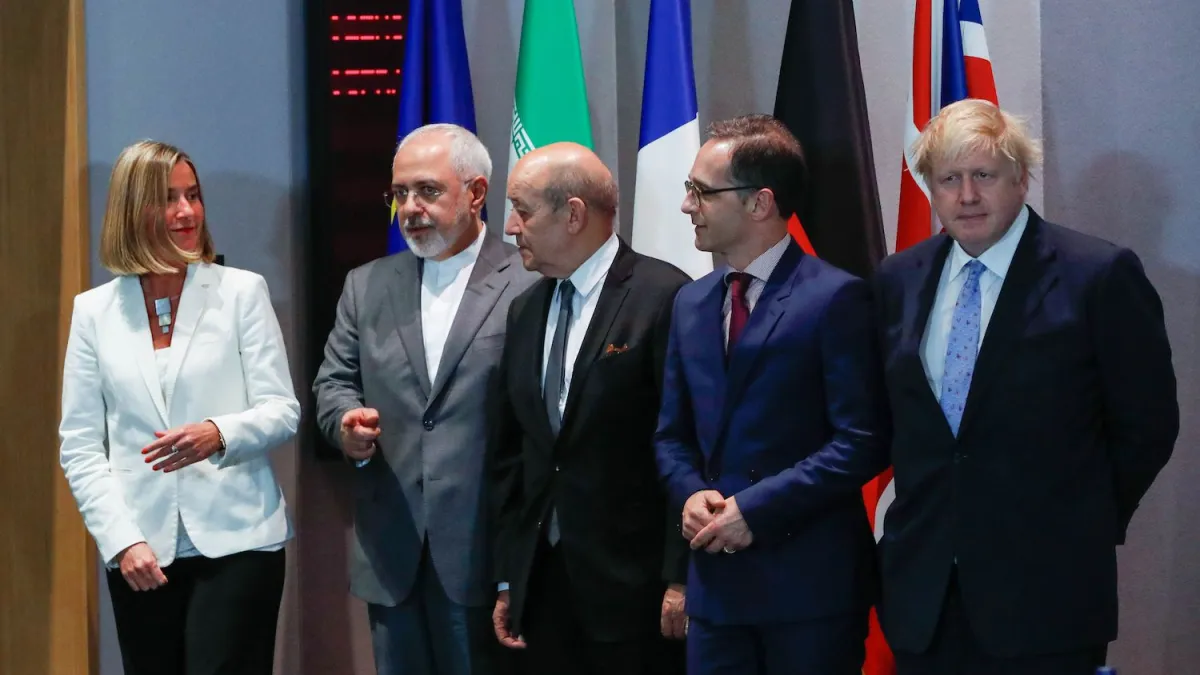
Iran is once again facing “snapback” sanctions, reimposed by European powers on Sunday amid escalating tensions in the Middle East. The term “snapback” refers to the automatic reinstatement of United Nations sanctions that were suspended a decade ago under the 2015 Joint Comprehensive Plan of Action (JCPOA), the landmark nuclear deal aimed at curbing Iran’s controversial program.
France, Germany, and the United Kingdom announced that they had “no choice” but to trigger the mechanism, accusing Tehran of failing to uphold its commitments. The sanctions were set to expire permanently on October 18, but the JCPOA allowed any signatory to reimpose them earlier if Iran was found in breach. In August, European negotiators told the UN Security Council that Iran had violated nearly all of its obligations and began laying the groundwork for snapback, warning Tehran a month in advance.
Diplomatic efforts in recent weeks, including meetings with Iranian foreign minister Abbas Araghchi, failed to produce progress. Europe’s key demands included proof of Iran’s willingness to pursue a diplomatic path, compliance with inspections by the International Atomic Energy Agency (IAEA), and accountability for more than 400 kilograms of highly enriched uranium. The Europeans also pressed for renewed direct talks between Iran and the United States.
Although Iran reached a tentative agreement with the IAEA earlier this month, European officials dismissed it as vague and insufficient. Araghchi stated publicly that inspections would be limited under terms set by Iran’s Supreme National Security Council, while enriched uranium stockpiles could remain hidden.
Snapback brings back the UN sanctions imposed between 2006 and 2010, including an arms embargo, restrictions on ballistic missile technology, and measures targeting Iran’s oil and financial sectors. However, the move only binds Europe and not other JCPOA parties such as China and Russia, both of which maintain close ties with Tehran.
The decision pushes Europe closer to the U.S. position. Washington left the JCPOA under former President Donald Trump, pursuing a “maximum pressure” campaign of heavy sanctions. While Europe has tried to keep the deal alive, the reimposition of UN sanctions signals that patience has run out.
Iran reacted angrily, recalling its ambassadors from Paris, Berlin, and London. In a letter to the UN Security Council, Araghchi condemned the move as an “abuse of process.” President Masoud Pezeshkian added a defiant note, insisting that sanctions could not stop Iran’s ambitions: “They may block the road, but it is brains and ideas that build the road.”
The European Council on Foreign Relations (ECFR) noted that the economic impact of the snapback is limited since U.S. sanctions already severely restrict Iran’s oil exports and financial dealings. However, the political consequences are more serious. If future negotiations were to lift UN sanctions, it is unclear whether Europe would follow suit after having reimposed them.
Iranian officials have warned that the snapback could push Tehran to end cooperation with the IAEA or even withdraw from the Nuclear Non-Proliferation Treaty (NPT), removing the last vestiges of international oversight. Western governments, along with Israel, fear such a move would accelerate Iran’s ability to pursue nuclear weapons,a claim Tehran continues to deny, insisting its program remains peaceful.