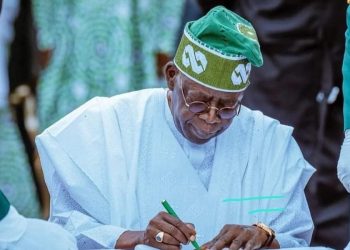
President Bola Ahmed Tinubu returned to Abuja on Tuesday evening after ending his private vacation in Europe. The trip, which was originally scheduled to last 10 days in Paris and London, was cut short for reasons not officially disclosed by the presidency.
The presidential aircraft, an Airbus A330, landed at the Nnamdi Azikiwe International Airport at about 6:50 p.m. local time. Tinubu, who had departed Nigeria on September 4, was expected to remain abroad until later this week. His early return, therefore, came as a surprise to many observers both within and outside political circles.
Although no official reason was provided for his decision to cut short the trip, the timing coincides with the expiration of the six-month emergency rule in Rivers State, due to lapse on Thursday. The development has led to speculation that the President wanted to be physically present in the country as his government prepares for the next steps in managing the political and security situation in the oil-rich state.
At 73, President Tinubu has maintained a demanding travel schedule since assuming office. Between January and mid-September 2025, he has embarked on 15 foreign trips, often combining official meetings with private rest periods. His latest journey was officially described as a vacation, following similar trips earlier in the year. In April, for instance, he spent about 14 working days in Paris and London, mixing rest with informal consultations with political allies and international contacts.
These frequent travels have drawn mixed reactions at home. Supporters argue that Tinubu’s trips help foster stronger diplomatic ties, attract foreign investment, and allow the President to take needed breaks from the pressures of office. Critics, however, have questioned the frequency and cost of such journeys, suggesting that they sometimes appear insensitive given Nigeria’s current economic and security challenges.
The decision to end his Paris leave early has, however, sparked fresh debate. Some analysts believe the move reflects the urgency of domestic issues requiring his direct attention. Others suggest it could be linked to health or personal reasons, though no evidence has been provided to support such claims. Still, in a political climate where information is often limited, speculation about presidential movements tends to gain traction quickly.
Tinubu’s presidency so far has been marked by efforts to stabilize the economy, strengthen national security, and reposition Nigeria in global affairs. His foreign trips have taken him across Europe, North America, Asia, and Africa, where he has engaged world leaders on issues such as security cooperation, trade partnerships, and climate action. These engagements, his aides argue, are essential for Nigeria to maintain relevance on the international stage.
As he resumes duties in Abuja, attention now shifts to how he will handle the aftermath of the Rivers State emergency rule and other pressing domestic issues. His government faces growing expectations from citizens who want concrete results in areas such as job creation, infrastructure, and national unity.
Tinubu’s early return underscores both the unpredictability of leadership and the immense weight of national responsibility. Whether for governance, diplomacy, or political strategy, his movements continue to capture public interest, reflecting the high stakes of Nigeria’s political landscape at this critical period.