The African Development Bank (AfDB) has warned that Africa’s economic growth will remain limited unless governments and institutions significantly improve how they design and execute infrastructure and development projects.
At the PMI Global Summit Series Africa in Kigali, AfDB officials and nearly 1,000 delegates stressed that poor planning and weak execution continue to undermine the continent’s ability to unlock its vast economic potential. The gathering the largest project management summit ever held in Africa highlighted the need for bankable projects, stronger professional project management, and partnerships that deliver measurable, long-term impact.
“The world is becoming more African,” former AfDB President Akinwumi Adesina said in a statement, noting that one in four people globally will soon be African. He added that the continent holds unique advantages, including 65 percent of the world’s uncultivated arable land, rich reserves of critical minerals needed for the green transition, and 13 of the world’s fastest-growing economies.
Adesina argued that Africa could drive global prosperity if its projects are designed to be technically sound, financially viable, and operationally effective. He cited the AfDB’s High 5 development priorities Light Up and Power Africa, Feed Africa, Industrialise Africa, Integrate Africa, and Improve Quality of Life which have already benefitted over 565 million people.
“Projects must not just exist on paper; they must change lives,” Adesina said, recalling the testimony of a Kenyan beneficiary who told him, “We once were in darkness. Now we have light.”
Echoing this message, Armand Nzeyimana, Director of the AfDB’s Development Impact and Results Department, highlighted Africa’s shortage of “bankable” projects. He defined such projects as those that combine proven technical designs, financial models that attract investors, and strong risk management to address political, market, and currency uncertainties.
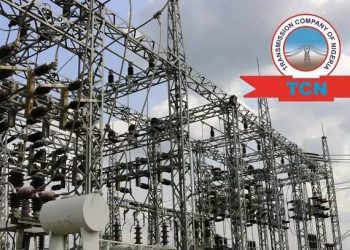
Nzeyimana warned that poorly prepared projects often face delays of up to 50 percent, reducing their impact. “The cost of delay is not just financial; it is developmental,” he said. “Every missed deadline slows progress on the Sustainable Development Goals and leaves millions without essential services. Today, 600 million Africans still live without electricity. That will not change without bankable projects.”
Rwanda was highlighted as a case study for effective execution. Kigali’s transformation through modern infrastructure, tourism, innovation, and sports facilities was presented as evidence of how disciplined planning and delivery can drive rapid development.
“Kigali is changing by the day,” Adesina observed. “It shows what is possible when vision aligns with planning and execution.”
Delegates agreed that project management must be recognised as a strategic tool for Africa’s transformation. They called for embedding global standards, certifications, and methodologies into African projects to strengthen delivery capacity across the continent.
Adesina also proposed a stronger alliance between the AfDB and the Project Management Institute (PMI) to raise project delivery standards. “Even as I near the end of my term, I see extraordinary opportunities for the AfDB and PMI to forge an alliance that blends PMI’s global methodologies with the Bank’s expertise, while developing the next generation of African project professionals,” he said.