


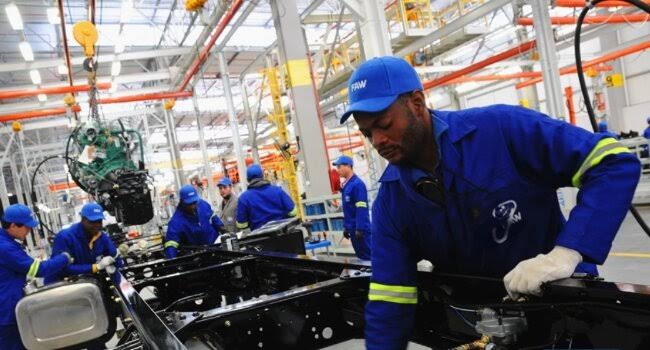
Nigeria’s manufacturing sector is increasingly turning inward as the impact of the naira’s devaluation and foreign exchange scarcity reshapes supply chains across the country. A new report by the Financial Times highlights how volatility in the foreign exchange market is pushing companies to reduce their dependence on dollars and embrace local sourcing for raw materials.
For decades, many Nigerian manufacturers relied heavily on imports to sustain production. But that model has become unsustainable since the Central Bank’s decision to float the naira in mid-2023, a move tied to President Bola Tinubu’s reform agenda aimed at boosting growth and attracting investment. The policy, while intended to liberalize the currency market, triggered historic volatility. With the naira tumbling and dollar inflows shrinking, manufacturers who account for about nine per cent of Nigeria’s GDP faced severe disruption.
The fallout has been stark. The Manufacturers Association of Nigeria disclosed that nearly 800 companies shut down in 2023 due to soaring input costs and lack of access to dollars. Even multinational corporations, including Procter & Gamble, Unilever, GlaxoSmithKline, PZ Cussons, Bayer, and Sanofi, scaled back operations in response to the worsening macroeconomic environment. For those that stayed, the reforms have been painful but transformative.
Chemical and Allied Products (CAP), one of Nigeria’s leading paint producers, describes 2024 as a turning point. “From a supply chain point of view, it was the worst period I have ever witnessed,” said Chief Supply Officer, Lekan Aluko, recalling how purchase orders were frequently rejected due to unstable forex prices. The company’s leadership admitted the crisis forced them to rethink long-standing reliance on imports. “In an environment where FX is so volatile, it was a nudge to us as costs were rising and the naira was depreciating a lot,” noted Chief Executive Officer, Bolarin Okunowo.
This shift was not without precedent. Under former President Muhammadu Buhari, the naira had been pegged against the U.S. dollar, a policy intended to shield ordinary Nigerians from the harsh effects of devaluation. However, the artificial exchange rate distorted the market, discouraged foreign inflows, and created a scarcity of dollars. Tinubu’s team, upon assuming office in 2023, acknowledged the flaws of the policy and chose to float the naira. But the sudden transition created immediate turbulence.
For manufacturers, the devaluation meant buying raw materials in scarce dollars with a rapidly weakening naira a mismatch that wasted both resources and management time. CAP’s executives recall how chaotic those early months were. But the crisis also spurred resilience. Today, the company sources about 90 percent of its calcium carbonate, a key ingredient in paint production, from Nigerian vendors. Previously, the chemical was imported from South Africa, Egypt, Tunisia, and other countries.
Nigeria’s broader industrial base is now experiencing a similar pivot. While the reforms have exposed the fragility of old supply chain models, they have also accelerated a long-needed shift toward local production. By embracing domestic sourcing, many manufacturers are not only cushioning themselves against forex shocks but also strengthening Nigeria’s economic self-reliance.