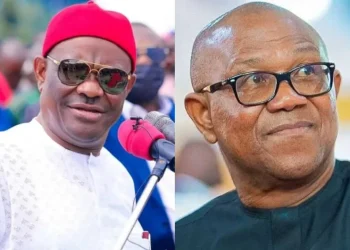


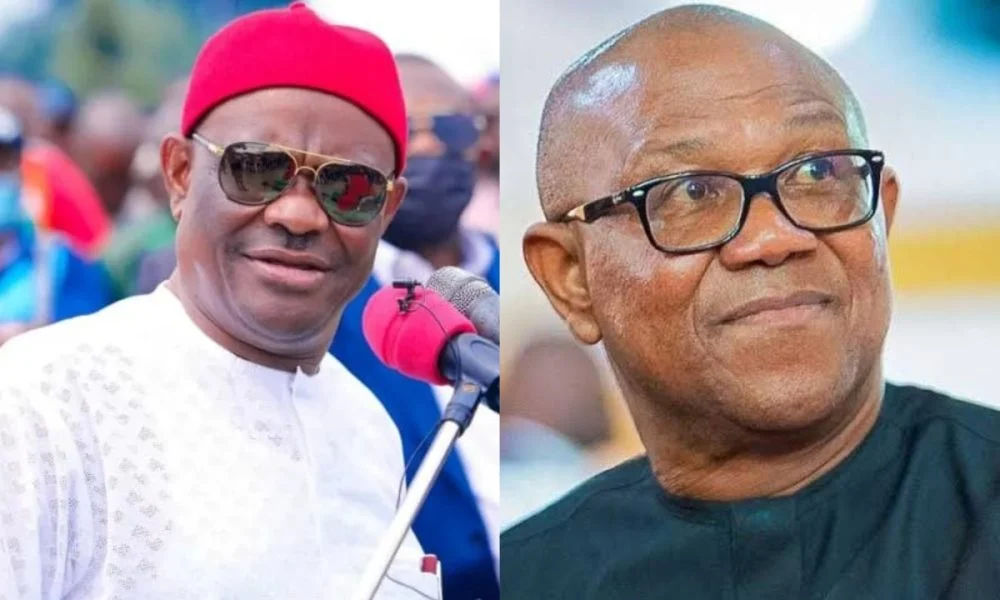
FCT Minister Nyesom Wike has explained why the five aggrieved Peoples Democratic Party (PDP) governors known as the G5 worked against Peter Obi’s presidential bid in Rivers State during the 2023 general election.
Wike made the disclosure while speaking during an interview on TVC’s Journalists’ Hangout, where he discussed the political calculations adopted by the G5 during the 2023 presidential election.
According to Wike, the G5 governors were primarily concerned about preventing the PDP’s presidential candidate at the time, Atiku Abubakar, from gaining an advantage in the South-South region.
He said the group identified states where the PDP had significant strength and decided to allow the Labour Party candidate, Peter Obi, to benefit from votes in some of those states.
Wike specifically mentioned Edo and Cross River, saying the strategy was designed to prevent Atiku from securing the advantage that could have come from the PDP’s strength in those states.
However, he said Rivers State was treated differently because the group was concerned about the political implications of an Obi victory in the state.
Wike stated that the G5 deliberately worked to prevent Obi from winning Rivers, arguing that such an outcome could send a political signal that the group did not want to create.
The G5 consisted of Wike, then-Rivers governor; Seyi Makinde of Oyo; Samuel Ortom of Benue; Okezie Ikpeazu of Abia; and Ifeanyi Ugwuanyi of Enugu. The governors had opposed Atiku’s 2023 presidential candidacy amid disagreements over the party’s leadership and zoning arrangement.
The 2023 presidential election results in Rivers showed Bola Tinubu of the All Progressives Congress (APC) winning the state, while Atiku and Obi finished behind him.
Wike also discussed the political circumstances surrounding Obi’s performance in the 2023 election. He argued that some issues that influenced voting patterns at the time, including the controversy surrounding the APC’s Muslim-Muslim ticket, no longer carried the same political weight.
The FCT minister further claimed that Obi does not currently enjoy the same level of support he had in the South-East during the 2023 election.
Wike questioned how Obi would replicate his previous performance across parts of the South-South in the 2027 election, specifically mentioning Cross River, Akwa Ibom and Delta states.
He also advised Obi to look beyond the 2027 presidential contest and prepare for the 2031 election, expressing his own view about the political landscape ahead of the next general election.
Wike’s latest comments have revived discussion about the role played by the G5 governors in the 2023 presidential election and their decision not to support Atiku, the PDP candidate.
The remarks also come as political parties and opposition groups intensify preparations for the 2027 presidential election, with questions over regional alliances and the political calculations that shaped the previous election continuing to feature in public debate.