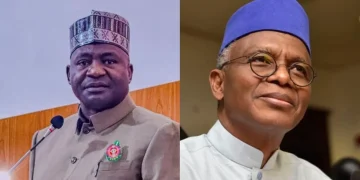


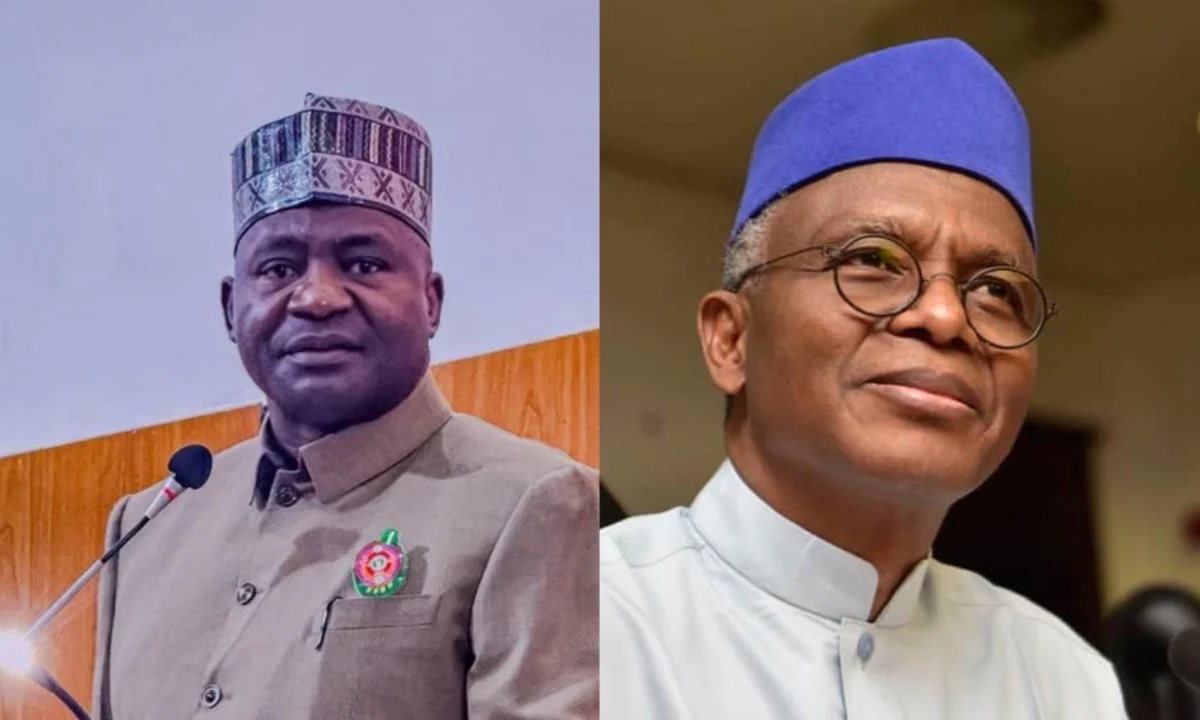
Nigeria’s Minister of Defence, General Christopher Musa (rtd.), has launched a fresh criticism of former Kaduna State Governor, Nasir El-Rufai, accusing his administration of aggravating communal tensions and contributing to the instability that affected the state during his time in office.
Musa made the comments on Thursday, September 3, 2026, during an appearance on Channels Television’s Politics Today. The minister used the interview to discuss the persistent security challenges experienced in Kaduna and the strained relationship between communities across different parts of the state.
According to Musa, Kaduna experienced significant social and political divisions under El-Rufai’s leadership. He claimed that the former governor’s approach to governance contributed to an atmosphere in which residents became increasingly separated along regional, ethnic and religious lines.
The defence minister alleged that the situation became so severe that people from Southern Kaduna found it increasingly difficult to travel to or establish themselves in communities located in the northern part of the state. At the same time, he claimed that some residents from northern Kaduna moved towards the southern areas because of concerns about their safety.
Musa described the atmosphere that existed in Kaduna during the period as highly poisonous, suggesting that the divisions created lasting mistrust among communities that had previously lived alongside one another.
He also addressed the resentment reportedly felt by some residents of Southern Kaduna over the numerous attacks and deaths recorded in the area during El-Rufai’s tenure. When asked whether people from the region remained dissatisfied with the former governor, Musa suggested that their feelings were much stronger than ordinary anger or disappointment.
The minister then made a particularly serious allegation, claiming that El-Rufai had deliberately taken steps that resulted in the deaths of people in Southern Kaduna. Musa did not, however, present specific evidence during the interview to substantiate the allegation.
Musa also referred to previous public comments attributed to El-Rufai concerning negotiations with armed groups. The defence minister alleged that the former governor had acknowledged making payments to bandits and suggested that the former governor had been open about such dealings.
Beyond the security situation, Musa accused El-Rufai of allegedly using government power against individuals who disagreed with him. He claimed that some buildings were pulled down because their owners had personal or political disagreements with the former governor.
Despite making strong accusations against El-Rufai, Musa said he did not regard the former Kaduna governor as his personal adversary. Instead, he described him as someone whose decisions had been misguided.
The defence minister further rejected the suggestion that his comments were influenced by his own connection to Kaduna. He explained that his position was based on his broader concern for Nigeria and the need to protect national unity.
Musa called on political leaders to avoid actions capable of increasing ethnic and religious tensions. He argued that politicians should focus on bringing Nigerians together rather than using differences in identity as instruments for political mobilisation.
He stressed that Nigeria’s security challenges cannot be addressed effectively if political actors continue to encourage divisions among communities. According to him, national leaders have a responsibility to promote peaceful coexistence, mutual understanding and cooperation among citizens.
El-Rufai governed Kaduna State from 2015 until 2023, before leaving office after completing two terms. He has yet to issue a public response to Musa’s latest allegations.
The accusations are therefore currently claims made by the defence minister and should not be regarded as established facts unless supported by independent evidence or further official findings.