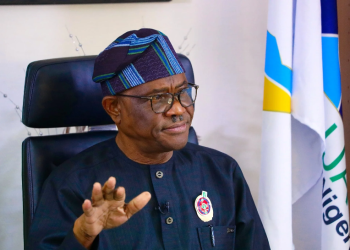



Lafia, Nigeria — Governor Abdullahi Sule of Nasarawa State has ordered the arrest and prosecution of health workers accused of selling equipment donated to Umaisha General Hospital in Toto Local Government Area, after a viral video exposed the alleged theft and sparked public outrage.
The controversy began on Saturday, August 22, when Sa’ad Ibrahim Abdullahi, a member of the Nasarawa State House of Assembly representing Umaisha/Ugya Constituency, visited the hospital to check on the condition of items he had personally donated weeks earlier. According to Abdullahi, the donation included more than 50 ceiling fans, about 40 standing fans, and 50 orthopaedic mattresses intended to improve conditions for patients and healthcare workers at the facility.
The lawmaker said the donations were meant to improve healthcare conditions at the facility and expressed frustration that patients were still experiencing poor conditions despite what he had provided. A video of the confrontation, in which Abdullahi questioned hospital staff about the missing items, circulated widely on social media, including on X, and drew sharp criticism from Nigerians online.
A hospital staff member reportedly explained that some of the mattresses had been temporarily given to discharged patients, but this did not account for the full scope of the missing donations, and hospital management did not offer a detailed public response at the time.
Speaking on Wednesday, August 26, during the inauguration of newly appointed commissioners, special advisers, permanent secretaries and board members in Lafia, Governor Sule addressed the allegations directly. Sule described the alleged sale of the items as a serious act of misconduct and corruption, saying such behaviour demonstrated a lack of concern for patients and the healthcare needs of residents.
Recounting the lawmaker’s donation and subsequent discovery, Sule said the honourable member from Umaisha/Ugya had bought mattresses, standing fans, ceiling fans and other items because he was concerned about the state of his local primary healthcare facility, but later returned to find that hospital officials had sold the donated items. “This is a terrible thing that will happen if you have people who do not mean well for Nasarawa State,” the governor said.
Sule directed the Commissioner for Health, Dr Gaza Gwamna, to investigate the allegations and ensure that anyone found culpable is brought to justice, and asked for a report on the matter by the end of the week. He also stressed that the move was not politically motivated, saying, according to one report, that his action was not intended to discredit the health ministry or any affiliated stakeholder.
Separately, some reports indicate the governor’s directive went further than an investigation alone — ordering the immediate dismissal and prosecution of the hospital staff allegedly caught selling the medical equipment and relief items.
Despite the public outcry, key details remain unconfirmed. It remains unclear who allegedly sold the items, when the sale occurred, how much money was realised from any such transaction, or whether any hospital official has been formally sanctioned, as the allegations have not yet been independently established by an official investigation.
The incident has reignited a broader conversation in Nigeria about accountability in the management of donations to public institutions, with social media users citing it as another example of resources meant for vulnerable citizens being diverted for personal gain.
Beyond the specifics of the Umaisha case, incidents like this keep surfacing a deeper, more uncomfortable question for many Nigerians: what happens when the pressure to appear successful outweighs the responsibility to do one’s job honestly?
Social media reaction to the story leaned heavily in this direction, with commentators tying the alleged theft to a broader culture of conspicuous consumption — the pressure on young men to be seen as “big boys” or “odogwu” regardless of how the money is made, and on young women to project the image of a “small girl, big God,” a lifestyle of ease and luxury attributed to divine favour rather than honest work. Critics argue that when status is measured almost entirely by visible wealth, and there is little social or institutional cost for acquiring it dishonestly, low-paid public servants — including hospital staff — become more vulnerable to exactly this kind of temptation: diverting resources meant for the vulnerable to fund a lifestyle they could not otherwise afford.
This is not a defense of the alleged conduct, nor a claim about the specific motives of anyone involved in the Umaisha case, which remains under investigation. It is, however, a reflection of a wider public sentiment: that Nigeria’s challenges with corruption and institutional accountability are inseparable from questions about what the society rewards, celebrates, and normalizes. A single prosecution — even a swift and well-publicized one — treats a symptom. Commentators argue the harder, longer conversation is about the incentives and values that make such choices attractive in the first place.
Reasonable people disagree on how much weight to put on “culture” versus poverty, weak enforcement, low public-sector wages, or lack of oversight as drivers of this kind of misconduct. All of these factors are commonly cited in discussions of corruption in Nigeria’s public institutions, and none of them excuses theft from a hospital serving vulnerable patients.
This report is based on developing coverage of an ongoing story; some details, including the exact scope of disciplinary action taken, may be updated as the state government’s investigation proceeds.