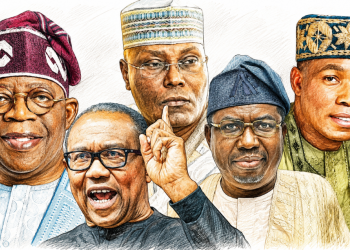


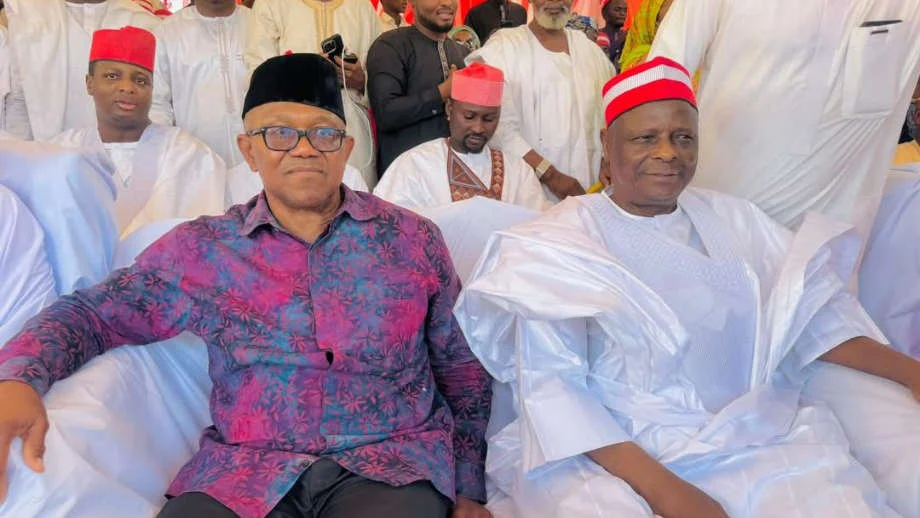
Former Kano State Governor and 2027 presidential running mate to Peter Obi, Rabiu Musa Kwankwaso, has explained that his decision to join forces with the Labour Party presidential hopeful was motivated by the desire to promote national unity, fairness and political transformation.
Kwankwaso said his partnership with Obi was not driven by personal ambition, but by what he considered the broader interests of Nigerians and the need for a new political direction.
Speaking during an interview with the News Agency of Nigeria in Abuja, the former governor said his experience during the 2023 election enabled him to understand Obi better and convinced him that they could successfully work together.
According to him, consultations involving members of the Kwankwasiyya Movement, supporters of the New Nigeria Peoples Party and the Obidient Movement contributed to the decision to establish the alliance.
He explained that the arrangement was designed to produce a politically balanced ticket capable of receiving support from citizens across the country.
Kwankwaso also pointed to insecurity, economic difficulties, declining agricultural output and poor infrastructure as some of the major challenges requiring urgent attention.
He argued that farmers, particularly those in Northern Nigeria, had been badly affected by insecurity and rising production costs, while infrastructure across several parts of the country had continued to deteriorate.
The former minister maintained that Nigerians were looking for meaningful political change and described the proposed Obi-Kwankwaso partnership as a combination of competence, regional representation and credibility.
He dismissed the idea that accepting the vice-presidential position represented a reduction in his political status, noting that he had previously occupied several important positions, including deputy speaker of the House of Representatives, governor, minister and senator.
Kwankwaso stressed that political office should be regarded as an avenue for service rather than a personal achievement.
He further disclosed that the agreement between him and Obi was based on a power-sharing understanding that would allow the South to retain the presidency for one term before power returns to the North.
The former Kano governor said he trusted Obi to honour the arrangement and expressed confidence that their administration would assign responsibilities based on competence.
Turning to Kano politics, Kwankwaso claimed that former governors Ibrahim Shekarau and Abdullahi Ganduje, alongside current Governor Abba Yusuf, had lost much of their political influence.
He particularly criticised Ganduje, who previously served as his deputy and later succeeded him as governor, alleging that their political relationship deteriorated after Ganduje began opposing him.
Kwankwaso also accused Yusuf of distancing himself from the political structure that helped him secure the governorship.
He recalled that members of his political camp worked extensively to support Yusuf’s emergence, including during the 2019 election, before the result was eventually overturned through legal proceedings.
According to Kwankwaso, the same political structure later helped Yusuf win the governorship in 2023.
He claimed, however, that Yusuf had subsequently moved away from the group and was attempting to establish himself as Kano’s dominant political figure.
Kwankwaso described political betrayal as a major reason some former allies eventually become irrelevant, arguing that political success built on disloyalty rarely lasts.
He also recalled discussing political reconciliation with President Bola Tinubu and cited former Lagos politicians Akinwunmi Ambode and Kofoworola Bucknor-Akerele as examples of how political relationships can change over time.
Despite the disagreements surrounding Kano politics, Kwankwaso noted that political rivalry and changing alliances were common across Nigeria, although he described Kano’s experience as particularly distinctive.