

A renewed leadership crisis has broken out within the Labour Party following disagreements between Abia State Governor Alex Otti and supporters of former National Chairman Julius Abure over the distribution of nomination forms for the 2027 elections.
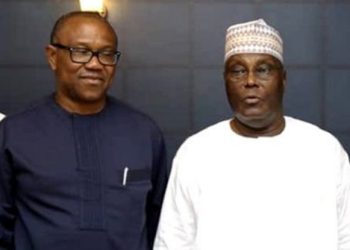
The dispute intensified after pictures circulated online showing Abure handing over what he claimed were official Labour Party nomination documents to former National Vice Chairman Ceekay Igara and other members in Abia State.
The development immediately sparked condemnation from the faction loyal to the party’s recognised national leadership, which accused Abure of disregarding judicial decisions and acting contrary to the directives of the Independent National Electoral Commission.
Speaking on Sunday, Labour Party National Publicity Secretary Ken Asogwa cautioned members and aspirants against purchasing forms from Abure or his allies, insisting that such documents carried no legitimacy.
According to Asogwa, Senator Nenadi Usman remains the authentic leader of the party and only the national secretariat in Utako, Abuja, possesses the authority to issue valid nomination forms ahead of the next general elections.
He described forms allegedly distributed by Abure as fake materials being circulated to mislead unsuspecting politicians and supporters.
The party also questioned why the alleged exercise appeared concentrated in Abia State and warned that Governor Otti would not be intimidated by political pressure or public drama orchestrated by rival factions.
In addition, the leadership accused Abure of unlawfully presenting himself as national chairman despite court judgments that recognised a different structure within the party.
Governor Otti’s camp had earlier criticised Abure’s actions through his Chief Press Secretary, Ukoha Ukoha, who argued that both the Federal High Court and the Court of Appeal had already affirmed Nenadi Usman as interim leader of the Labour Party.
Ukoha explained that INEC had complied with the rulings and adjusted its records accordingly, stressing that Abure’s continued activities amounted to disregard for the authority of the courts.
He maintained that any primary election or nomination process supervised by Abure would lack legitimacy because the electoral commission could not officially recognise such exercises.
Despite the criticism, Ceekay Igara defended the decision to distribute the forms, insisting that the move was necessary while legal battles over the party’s leadership continued.
Igara noted that two separate matters concerning the leadership dispute remained before the Supreme Court and the Federal High Court. According to him, party stakeholders were taking precautionary steps to avoid confusion should the apex court eventually rule in favour of Abure.
He argued that suspending political preparations entirely could create problems for party structures in several states if the final judgment restored Abure’s authority after deadlines for party primaries had passed.
Igara added that consultations among members were still ongoing and clarified that the forms were merely preparatory measures for future electoral activities.
Attempts to get Abure’s direct response were unsuccessful, as phone calls and text messages sent to him were not answered before the report was completed.
Meanwhile, spokesman for the Abure faction, Obiora Ifoh, insisted their group remained the lawful leadership of the Labour Party until the Supreme Court delivered a final verdict on the dispute.
He maintained that the Nnewi convention which produced Abure and members of the National Working Committee was still valid and that their tenure had not expired.
Ifoh also rejected allegations of contempt of court and disclosed that nomination forms were being sold nationwide, not only in Abia State.