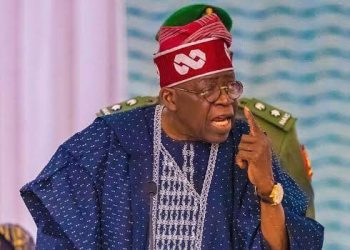



A former Deputy National Publicity Secretary of the All Progressives Congress (APC), Timi Frank, has alleged that President Bola Ahmed Tinubu is pursuing a plan to relocate Nigeria’s capital from Abuja to Lagos.
Frank made the claim in a statement where he criticised what he described as a “Lagos-centric agenda” under the current administration. According to him, several government actions and policy decisions appear to favour Lagos, suggesting a broader long-term strategy to concentrate political and economic power in the city.
He argued that recent developments, including infrastructure projects, federal appointments, and international agreements, indicate a pattern of centralisation that could shift national influence toward Lagos. Frank claimed that if such a trend continues, it may eventually lead to a formal relocation of the nation’s capital, especially if the president secures a second term in office.
The former APC spokesperson also raised concerns about what he described as uneven distribution of government initiatives across Nigeria’s regions. He questioned the absence of significant federal projects in key sectors such as agriculture in the North, industrial development in the South-East, and oil and gas expansion in the South-South.
Frank warned that such perceived imbalance could deepen regional divisions and weaken national unity. He stated that leadership at the federal level should reflect fairness and inclusiveness, ensuring that all parts of the country benefit from government policies and development programmes.
In addition, he criticised some of the government’s international agreements and loans, alleging that many of them are tied to projects concentrated in Lagos without equivalent development in other regions. He expressed concern that such arrangements could increase Nigeria’s debt burden without delivering balanced national growth.
Frank also pointed to the execution of certain infrastructure projects, claiming that deviations from original plans suggest political motivations rather than national priorities. He argued that decisions regarding major projects should reflect equitable development across the federation rather than regional concentration.
Despite the allegations, there has been no official confirmation or policy statement from the Federal Government indicating any plan to relocate Nigeria’s capital from Abuja. Analysts note that such a move would require significant constitutional, political, and administrative processes, making it a complex and highly unlikely undertaking without broad national consensus.
The claims have nonetheless sparked debate among political observers, with some viewing them as part of broader political tensions ahead of the 2027 general elections. Discussions around regional balance, governance, and equitable development continue to shape Nigeria’s political landscape as preparations for the next election cycle gradually intensify.
Frank concluded by urging Nigerians to remain vigilant and to demand transparency and accountability in government policies, stressing that national unity should remain a top priority for any administration.