


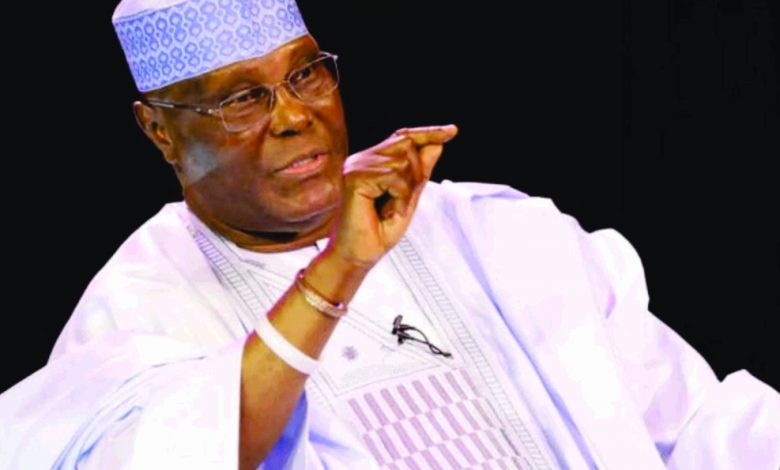
Former Vice President Atiku Abubakar has sharply criticized the outcome of the Federal Capital Territory (FCT Area Council elections, warning that the notably low voter turnout in the vote could signal deeper problems for Nigeria’s democratic health. Atiku, a senior leader of the African Democratic Congress (ADC), issued his remarks following the February 21, 2026 polls, where participation was recorded at under 20 per cent in most councils. According to official and media reports, voter turnout dipped below 20 per cent overall, with the Abuja Municipal Area Council (AMAC) recording a particularly low 7.8 per cent turnout.
In a statement released on February 22, 2026, Atiku described the weak civic engagement as more than ordinary apathy, saying it reflects a troubling verdict on the state of participatory governance in the country. He argued that the pattern demonstrates a political environment in which citizens have grown disillusioned and uncertain whether their votes carry value. “When citizens lose faith that their votes matter, democracy begins to die,” Atiku said, emphasizing that the decline in turnout was symptomatic of broader issues affecting national politics.
Atiku blamed what he characterized as intolerance and shrinking democratic space under the administration of President Bola Ahmed Tinubu for discouraging voter participation. He said the current political climate marked by perceived pressures on opposition voices, intimidation, and restrictions on free political activity — has contributed to public disengagement. In his view, these conditions weaken confidence in electoral processes and undermine the competitive platform essential to a functioning democracy.
The former presidential candidate warned that continued erosion of civic engagement could have long-term consequences for democracy in Nigeria. “This is not mere voter apathy. It is a direct consequence of an administration that governs with a chokehold on pluralism,” Atiku said, adding that sustained decline in participatory governance might inflict lasting damage on democratic institutions that have taken decades to build.
Atiku’s remarks were part of a broader reaction by political stakeholders following the FCT polls, where many observers focused on both the turnout figures and the political context surrounding the elections. Civil society groups and opposition parties have also raised concerns about voter confidence, citing structural issues like electoral law changes and political tensions as contributing factors to low engagement.
While Independent National Electoral Commission (INEC) officials noted that turnout represented a modest improvement compared with previous local polls and reaffirmed the peaceful conduct of the election, the low participation rate in a territory perceived as politically significant has drawn heightened scrutiny.
Atiku urged opposition parties and supportive civil society groups to close ranks and unite in efforts to protect and strengthen democratic norms ahead of the 2027 general elections. He suggested that the current moment points to a need for collective action to safeguard democratic space and revive public confidence in electoral processes.
The FCT Area Council elections also saw the APC winning a majority of chairmanship seats in the territory, a development that has sparked legal challenges and political debate. While the electoral results continue to be discussed and contested in some quarters, Atiku’s focus on voter participation highlights an ongoing dialogue about political engagement and governance in Nigeria.