

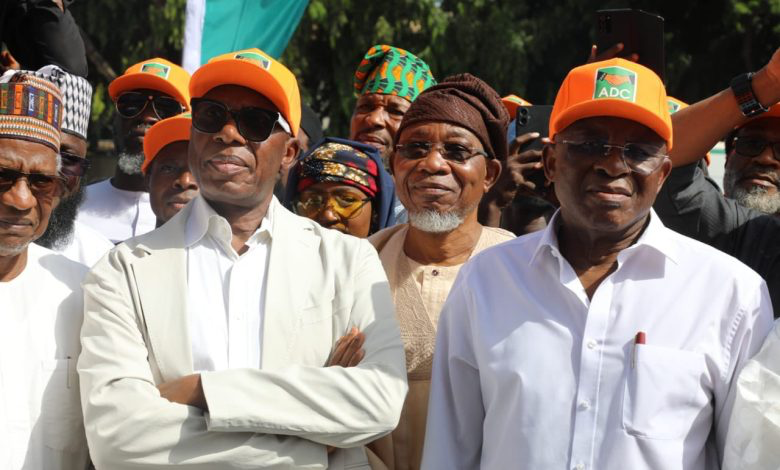
A prominent chieftain of the African Democratic Congress (ADC) has raised alarm over what he claims are plans by operatives of the Economic and Financial Crimes Commission (EFCC) to arrest Rotimi Amaechi, a former Minister of Transportation and influential political figure. The warning has stirred reactions in political circles, prompting calls for transparency in anti-graft enforcement.
The concern was voiced publicly on Friday, February 19, 2026, by Col. Austin Akobundu (retd.), a senior member of the ADC. In a statement shared with newsmen, Akobundu alleged that Amaechi — who also previously served as Governor of Rivers State — might be targeted due to what he described as politically motivated enforcement actions. He warned that such a move would be alarming and could undermine public confidence in Nigeria’s anti-corruption institutions.
According to Akobundu, the country’s law enforcement agencies should prioritise impartiality and due process rather than engaging in selective investigations that could be interpreted as politically influenced. He emphasised that any agency seeking to pursue criminal charges must do so lawfully, with evidence and respect for the rule of law.
Akobundu’s warning comes amid heightened scrutiny of Nigeria’s prosecution of high-profile figures in recent years, with critics often accusing enforcement bodies of missing clear legal standards in pursuit of political opponents. He described the alleged plans as “disturbing,” saying that they risk further eroding trust in governance and the nation’s democratic institutions.
While Akobundu did not provide detailed evidence supporting his claim about Amaechi’s impending arrest, he expressed concern that such developments could deepen political tensions across the country. He urged the EFCC and other relevant agencies to clarify their intentions, stating that perceived abuse of prosecutorial powers could erode public trust in anti-corruption efforts.
The ADC chieftain also cautioned political leaders against using anti-graft institutions for settling political scores, arguing that doing so could complicate the nation’s efforts to tackle corruption meaningfully. He urged stakeholders to allow institutions to operate independently, saying that justice should be blind and applied equally to all citizens, regardless of political affiliation.
Reactions to Akobundu’s warning have been mixed, with some observers emphasising the need for independent investigations into allegations of corruption, while others agreed that enforcement agencies must operate transparently to avoid perceptions of bias. Analysts note that allegations of politically influenced enforcement efforts are not new in Nigeria, where anti-corruption drives have periodically intersected with political rivalries.
The EFCC has not publicly responded to the specific allegation regarding Amaechi as of the time of publication. In past cases involving prominent individuals, the commission has often maintained that its actions are guided by available evidence and legal processes, although critics sometimes challenge this assertion.
Rotimi Amaechi, who retains significant influence within national politics, has previously faced scrutiny from anti-graft agencies, but no formal charges have been confirmed at this moment in relation to the latest warning. His supporters have described him as a statesman and development advocate, pointing to his tenure as governor and minister as marked by infrastructure and policy leadership.
Akobundu’s statement underscores ongoing national debates about the role of enforcement bodies in Nigerian politics and the delicate balance between holding leaders accountable and ensuring impartial application of the law. With growing public sensitivity to perceived selective prosecution, calls for clarity, fairness and adherence to due process are expected to remain central to discussions about governance and anti-corruption efforts ahead of the 2027 general elections.