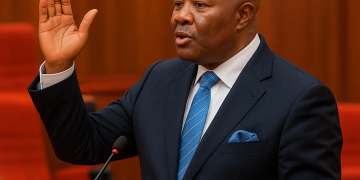


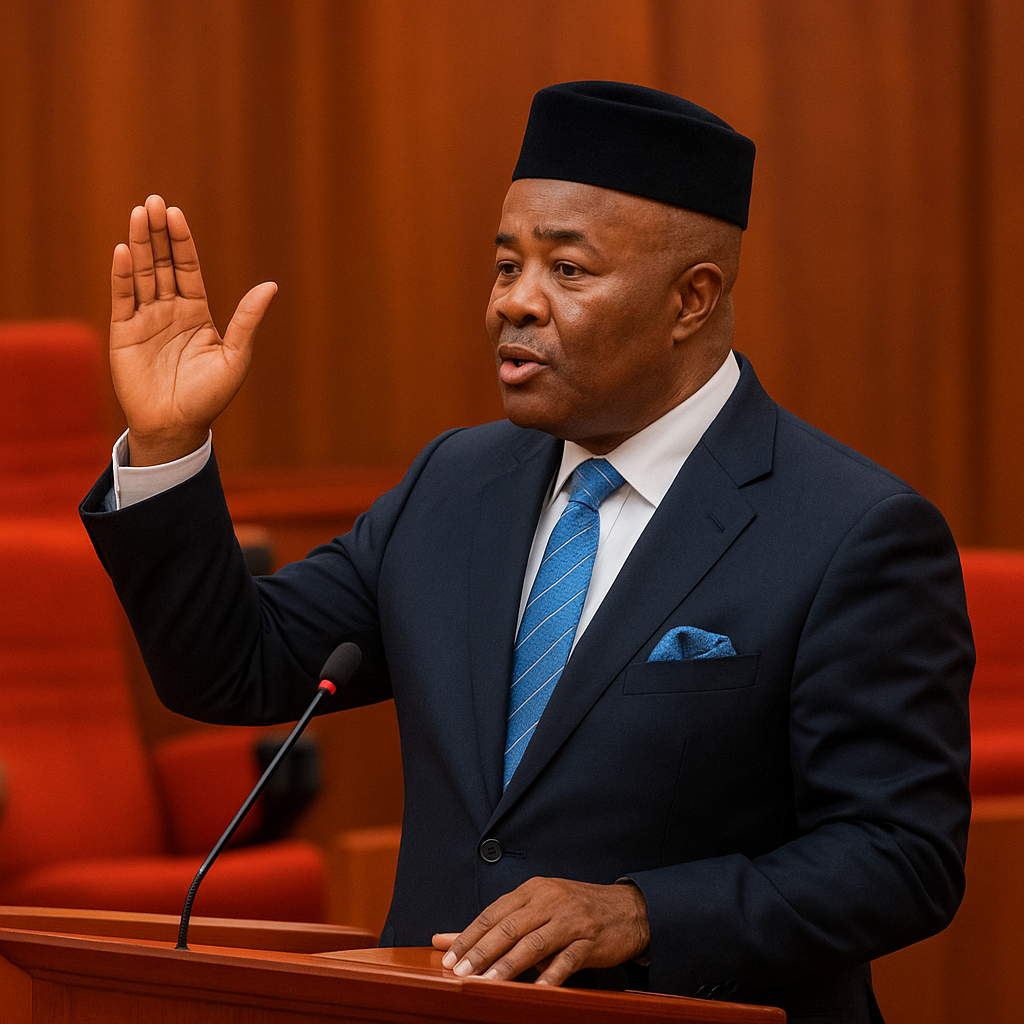
The Nigerian Senate on Thursday halted further debate on the Electoral Act (Repeal and Re-enactment) Bill, 2025, following confusion over the circulation of the document among lawmakers. The decision came after Senate President Godswill Akpabio intervened and directed that consideration of the bill be suspended until members receive full copies for review.
The proposed legislation, which seeks to repeal the Electoral Act 2022 and replace it with an updated framework, aims to improve Nigeria’s electoral system by enhancing transparency, strengthening the independence of the Independent National Electoral Commission (INEC), and introducing new technologies such as digital registers and QR-coded voter identification cards.
The debate initially began under the supervision of Deputy Senate President Jibrin Barau, who clarified that the second reading was meant to focus only on the general principles of the bill. However, several senators raised concerns that they had not yet received copies of the proposed law, making it difficult to discuss its contents effectively.
In response, Senate President Akpabio took the floor and ruled that the bill should be stepped down until all senators have access to the full document. “We cannot deliberate on what is not before us,” Akpabio stated firmly, stressing the importance of legislative transparency and procedure.
Senate Leader Opeyemi Bamidele thereafter moved a motion to defer further discussion on the bill to another legislative day, a proposal seconded by Minority Leader Abba Moro and unanimously adopted by the chamber.
The bill, sponsored by Senator Simon Lalong, Chairman of the Senate Committee on INEC, had earlier been presented as a comprehensive response to the lessons learned from the 2023 general elections. Lalong explained that the proposed reforms aim to close loopholes exposed during the polls, including issues with result transmission, funding delays, and enforcement of electoral offences.
“The essence of this amendment is to ensure efficiency, fairness, and credibility in our elections,” Lalong had noted, adding that the legislation would guarantee early release of election funds and continuous voter registration.
However, the session became tense after some lawmakers expressed concern that the Senate Committee on Electoral Matters had already held a public hearing on the bill even though it had not yet passed second reading. This, they argued, was procedurally premature and could undermine the credibility of the legislative process.
Senate President Akpabio also used the opportunity to reflect on his personal experience in past elections, warning that future reforms must hold INEC accountable for its actions. He further called for a review of Nigeria’s prolonged campaign timetable, noting that extended electioneering often distracts public officials from their responsibilities.
“In a four-year term, nearly one year is lost to campaigning, and that affects governance,” Akpabio said.
The Senate later resolved that the Electoral Reform Bill would be reintroduced after lawmakers have had adequate time to study its provisions and consult with relevant stakeholders.
For now, the delay signals the Senate’s intent to proceed cautiously on what many regard as one of the most consequential legislative reforms in Nigeria’s democratic journey.



**backbiome**
Mitolyn is a carefully developed, plant-based formula created to help support metabolic efficiency and encourage healthy, lasting weight management.